
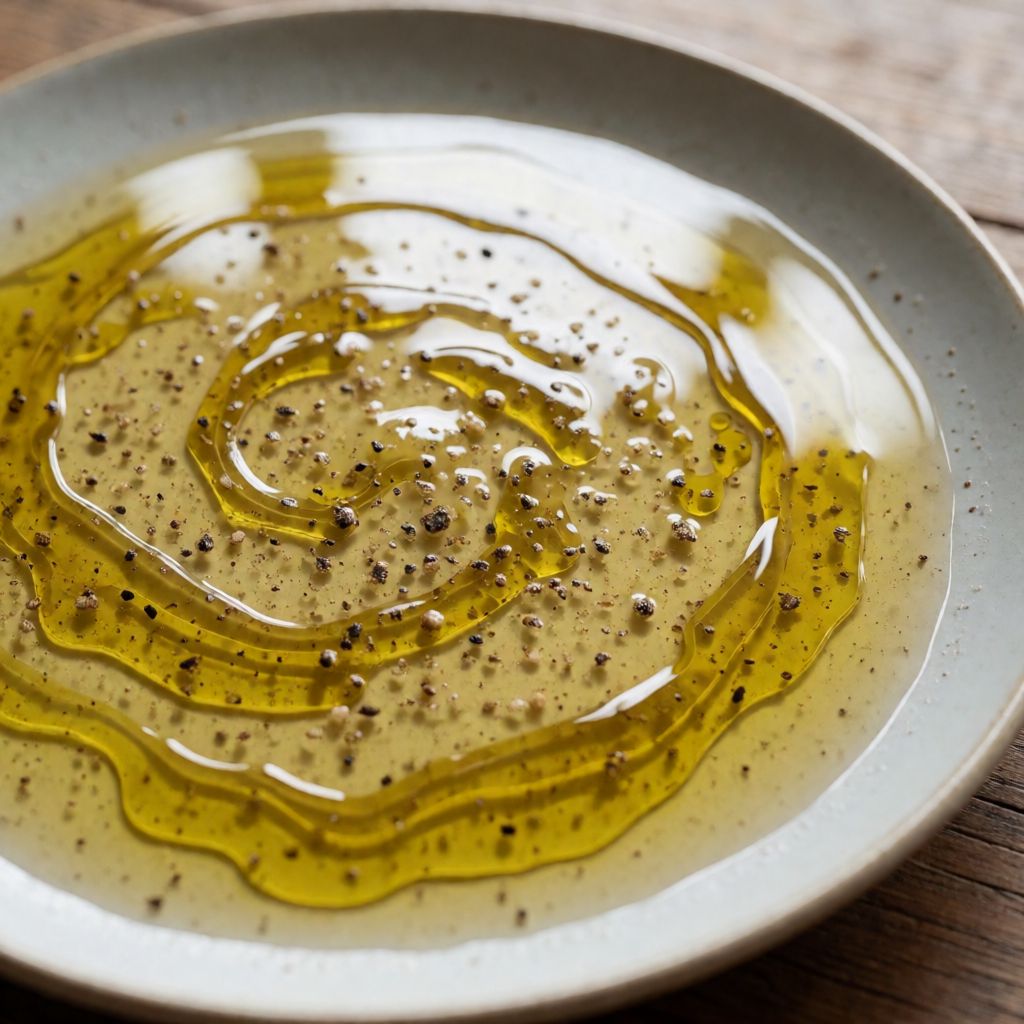
 AI photo
Vinaigrette Dressing
A simple basic vinaigrette dressing, whisked together from vinegar, olive oil, salt and black pepper.
Labels are worked out automatically from the ingredients and can be wrong. Check the packaging if it matters to you.
Ingredients
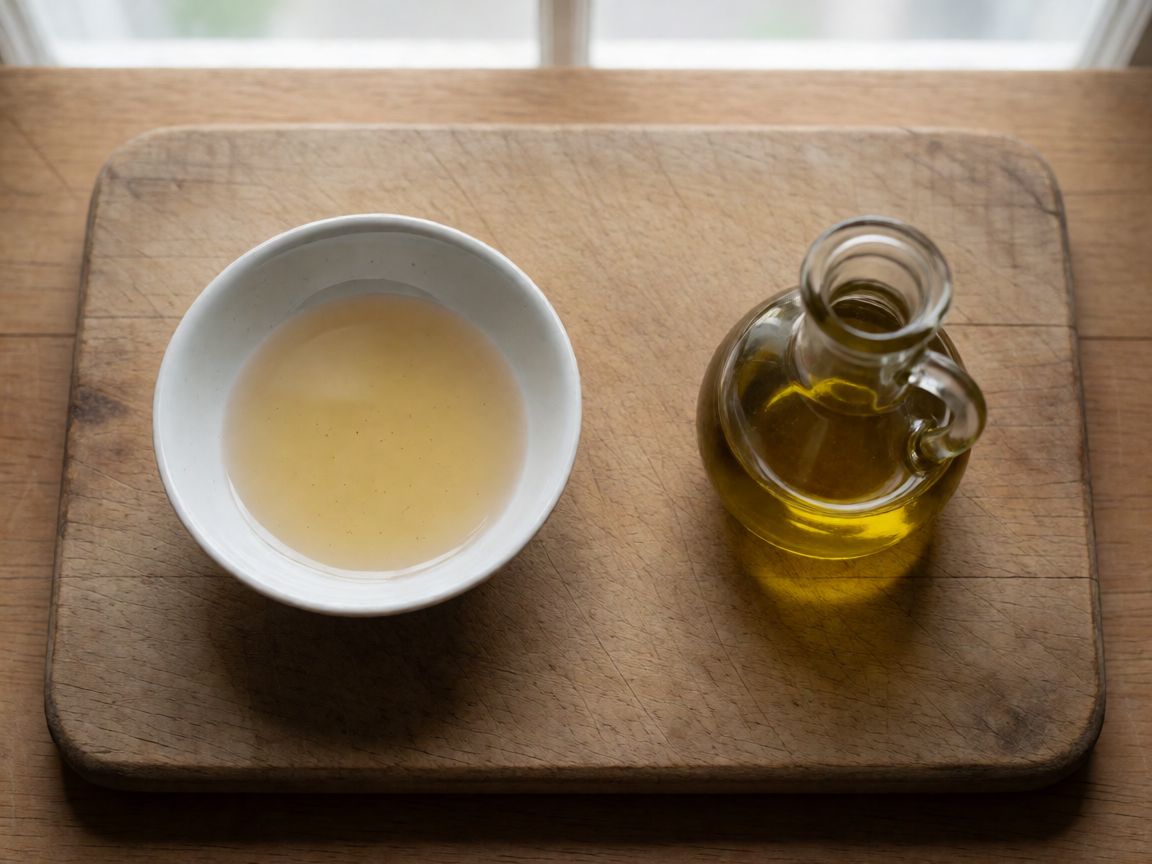
- 1.5 tbsp White wine vinegar
- 100 ml Olive oil
- Salt to taste
- Black pepper to taste




Steps
In a bowl, dissolve the salt in the vinegar, whisking with a hand whisk.
Add the black pepper and olive oil, then whisk everything together with a hand whisk or mixer.
Keep whisking until the dressing becomes smooth and well emulsified.
Vinaigrette isn't a mixture, it's a temporary truce. Oil and vinegar don't want to be together — one's fat, one's water-based acid, and left alone they'll always separate back into their own layers, same as they started. What you're doing with the whisk is forcing the oil into tiny droplets small enough to float, suspended, inside the vinegar. That's the whole trick. No chemistry beyond that.
What decides whether it works is order and effort. Salt goes into the vinegar first, on its own, because salt dissolves in a watery acid and does not dissolve in oil — add it last, into the oil, and you get gritty flecks sitting at the bottom of the bowl instead of a dressing that tastes seasoned all the way through. Then the whisking itself has to be real: enough strokes, enough speed, to break the oil into droplets fine enough to stay up. A lazy stir with a spoon gives you oil slicks on top of sour vinegar, not a dressing.
Some say if your vinaigrette splits after five minutes on the table, you did something wrong. No — it splits because that's what it does, always, given time. The whisking buys you a window, not a cure. Dress the salad while it's still cloudy and unified, and don't worry about what happens to the leftover in the jar an hour later.
The vinegar isn't just acid, it's the stage the whole emulsion stands on — everything else gets suspended inside it, so its flavour is the backbone of the dressing, not a side note. White wine vinegar is chosen for being sharp without being loud. Malt vinegar, which is the one sitting in most British kitchens next to the chip shop salt, is too blunt and too brown-tasting for this; it'll flatten the oil instead of lifting it. Lemon juice works as a substitute on the same logic — it's an acid that dissolves salt and holds an emulsion — but it brings its own citrus note, so the dressing changes character, not just strength.
The oil is where the actual taste lives, because there's almost nothing else in the bowl to carry flavour. So the usual rule — use an oil with no smell of its own — doesn't apply here; you want the opposite. A peppery, grassy extra virgin olive oil will make itself known in every mouthful. A milder, more refined olive oil gives you a quieter background, useful if the salad itself is already busy with strong ingredients — cheese, cured meat, bitter leaves. Either way, taste the oil on its own before you commit it to the bowl. If it tastes of nothing, the dressing will taste of nothing.
Salt dissolving only in the vinegar, never in the oil, is the reason the order in the method matters at all — it's not ritual, it's solubility. Skip that step and salt it after the oil goes in, and you'll be chewing tiny crunchy grains instead of tasting a seasoned dressing.
The pepper is finishing seasoning, not a structural ingredient — freshly cracked gives you a sharper, more fragrant hit than pre-ground, which goes dull sitting in a tin. Either works; freshly cracked just works better.
This is a dressing with a history written by economics, not romance: oil and vinegar were both things a French household already had — oil from the pantry, vinegar as the thing wine turns into if you don't drink it fast enough — and somebody worked out you could turn two cheap staples into a sauce with nothing but salt and arm effort. No kazan, no stove, no special kit needed here; cook time is zero because there's nothing to cook. A bowl and a hand whisk does it, or a small jar with a tight lid if your arm would rather shake than stir — same physics, different container.
And the patience is in the whisking itself, not in waiting. Rushing the emulsion — a few half-hearted swirls — is the single most common reason people end up with an oily puddle on top of sour vinegar at the bottom. Keep going until it looks uniform and slightly thickened, cloudy rather than two distinct liquids. That visual change is the only doneness cue you need; there's no clock for it. This quantity dresses a salad for four lightly — if you're drowning the leaves rather than coating them, you'll run short.