
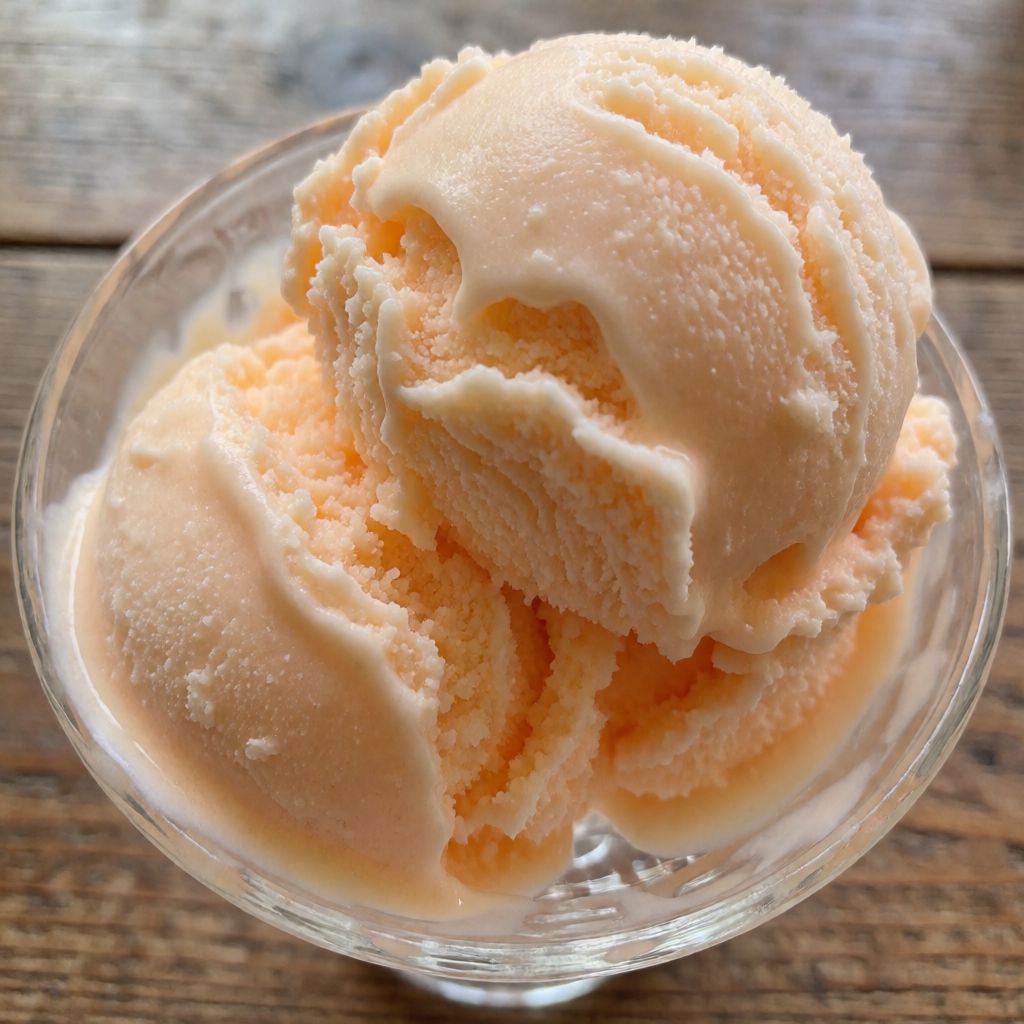
 AI photo
Melon Gelato in an Ice Cream Maker
A refreshing melon gelato made with cream and lemon juice, churned in an ice cream maker.
Labels are worked out automatically from the ingredients and can be wrong. Check the packaging if it matters to you.
Ingredients
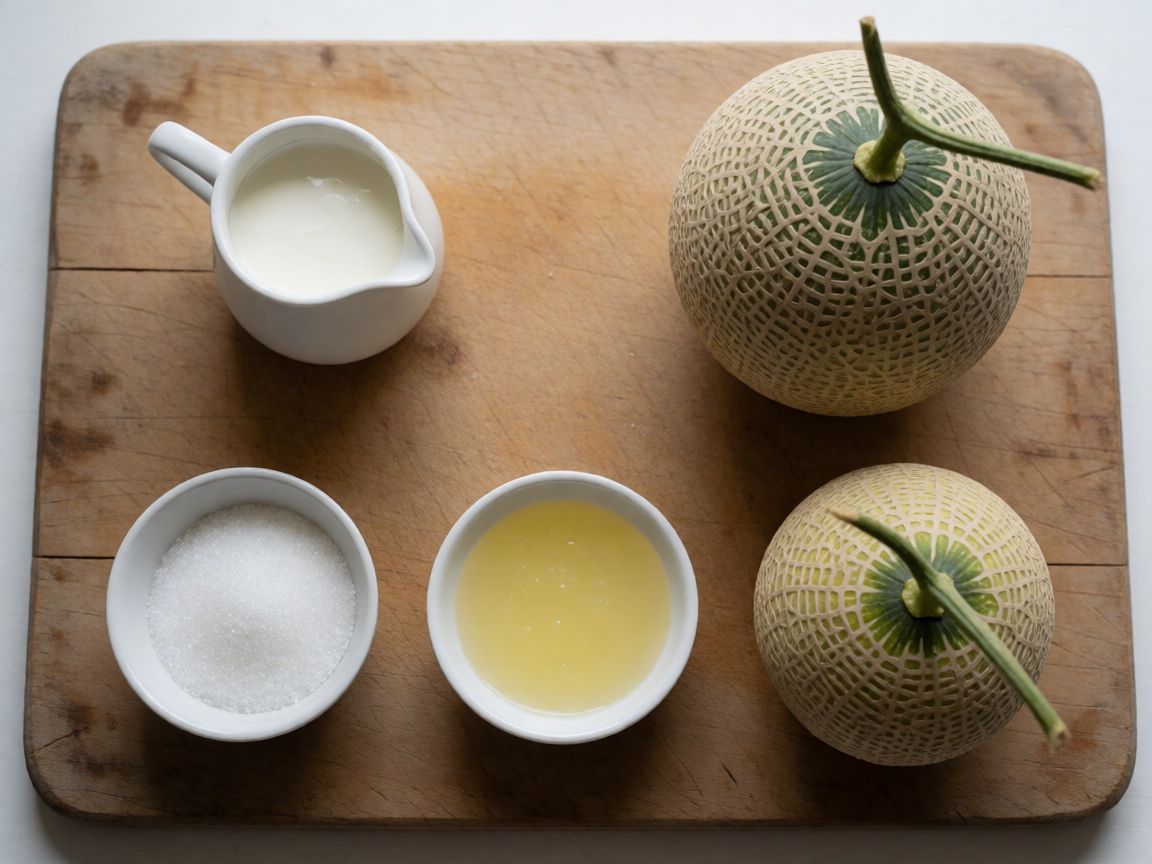
- 2 pcs Melon
- 400 g Double cream
- 120 g Caster sugar
- 1 pcs Lemon juice juice of 1 lemon



Steps
Peel the melons: cut off the skin with a knife, scoop out the seeds with a spoon, remove the flesh and cut it into small pieces.
Put the melon flesh in a bowl, add the sugar and lemon juice, and mix well.
Leave to macerate.
60 minWhip the double cream with an electric mixer until thick and holding its shape.
Blend the melon flesh in a blender until smooth.
Fold the whipped cream into the melon purée.
Pour the mixture into the ice cream maker and churn.
30 minTransfer the churned gelato to a container and place in the freezer until ready to serve.
This is a fruit gelato without eggs — no custard, no stove, no risk of scrambling yolks. The whole thing stands on two mechanisms: sugar pulling water and flavour out of the melon by osmosis, and whipped cream folding air into that purée so the churn freezes something light instead of a brick of flavoured ice. Get the melon ripe and get the cream right, and the machine does the rest. Get either wrong, and no amount of churning saves you.
Some say gelato needs egg yolks — no, because that's custard-based gelato, the kind you make for vanilla or chocolate, where yolks give body to a liquid that has none of its own. Fruit gelato never worked that way, even in Italy: melon, peach, strawberry — sugar and pulp and air, nothing else, because the fruit already has the water and the sugar does the thickening work that eggs do elsewhere. This recipe adds cream on top of that old method for richness. It's a home compromise, not a betrayal of anything.
The maceration isn't a waiting room, it's where the work happens. Sugar draws juice out of the melon cells and dissolves into it — you want to see actual liquid pooling at the bottom of the bowl before you move on, not just damp fruit. Skip this and you blend half-stiff flesh with undissolved sugar sitting inside it, and your gelato freezes with gritty sugar crystals you'll feel on your tongue later, not sweetness, grit.
Melon: buy by nose, not by eye. A ripe one smells of itself at the stalk end and feels heavy for its size — if you can't smell melon through the skin, it won't taste of much once frozen, because freezing mutes flavour and you need to start strong. Cantaloupe or Charentais types are fragrant and give a gelato with real character; honeydew is milder and watery, usable but you'll want the lemon juice a touch more generous to wake it up. Two whole melons for four people sounds like a lot until you remember how much of that weight is skin, seeds and water that cooks off in the maceration — you're really working with maybe half that weight in usable flesh.
Sugar here is doing three jobs, not one: sweetening, yes, but also drawing the juice out in maceration, and — just as important — lowering the freezing point of the mix so the churned gelato stays soft and scoopable instead of setting like a block of melon-flavoured ice. Caster sugar dissolves faster than granulated because the grains are finer, which matters in a cold, barely-stirred maceration where you're relying on time, not heat, to dissolve it. If you've only got granulated, give it longer, or dissolve it in the lemon juice first before it meets the melon.
Lemon juice isn't there to make it taste lemony — it's there because melon on its own, once frozen, tastes flatter and sweeter than it did in the bowl; freezing dulls aromatics and leaves sugar more exposed. A little acid corrects that balance back towards something that tastes alive rather than just sweet and cold. If you're out of lemon, any sharp citrus does the same corrective work — lime, even a spoon of orange with a pinch more acid elsewhere — the criterion is sourness with no competing flavour of its own strong enough to fight the melon.
Double cream is chosen for fat content, not tradition — it's the fat, whipped full of air, that coats the ice crystals forming in the churn and keeps them small and smooth instead of sharp and gritty. This is also why you fold the cream into the purée rather than stir it in: folding keeps the air bubbles intact, stirring collapses them, and collapsed air means a denser, icier result with nothing to soften it. Any cream with enough fat to hold air when whipped will do this job — the UK's double cream is simply the easiest version of that to buy.
On the machine itself: be honest about what a domestic ice cream maker is. The bowl-freezer type needs to live in your freezer a full day beforehand or it won't be cold enough to do anything in the thirty minutes given — that thirty minutes is a lower bound assuming a properly frozen bowl, not a guarantee. Watch for the mixture thickening to the texture of softly whipped cream and starting to pull away from the paddle rather than clinging to the sides; that's doneness, the clock is just there to stop you checking every ten seconds. And after churning, it still needs real time hardening in the freezer before it's proper gelato and not soft-serve — patience here isn't optional, it's the last ingredient, and it's one you can't rush by turning the freezer down.