
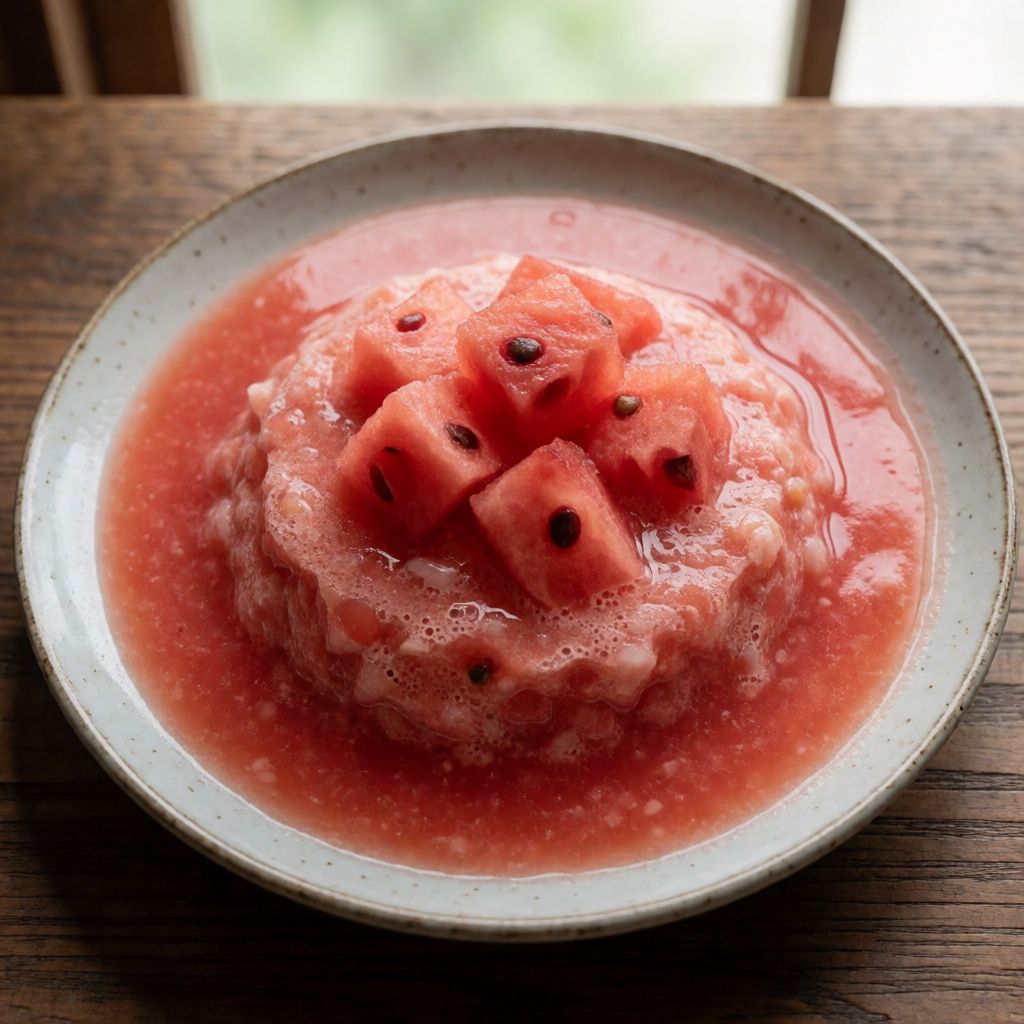
 AI photo
Watermelon Smoothie
A refreshing chilled watermelon and lemon smoothie, blended until smooth.
Labels are worked out automatically from the ingredients and can be wrong. Check the packaging if it matters to you.
Ingredients
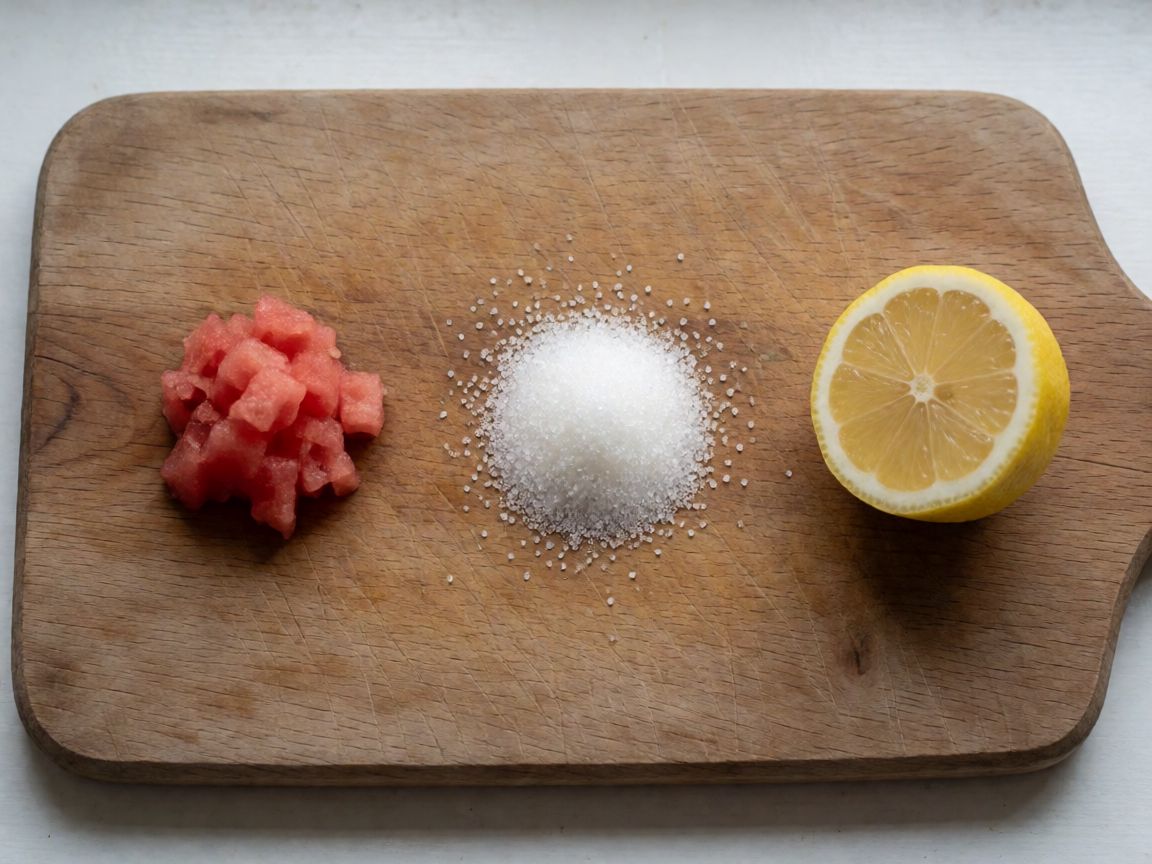
- 300 g Watermelon
- 2 tbsp Sugar
- 1/2 pcs Lemon


Steps
Cut the watermelon, remove the seeds and dice the flesh into cubes (300 g).
In a bowl, mix the watermelon cubes with the lemon juice, then add sugar to taste.
Chill in the fridge.
60 minTransfer the chilled cubes to a blender and blitz until smooth.
This is a thirst-quencher, not a dessert. Three ingredients, no flame involved, and the whole craft sits in a melon you didn't grow and a fridge you already own. That tells you something: this drink has no technique to hide behind. If it's thin and flat, the melon was the problem, not your blender.
What decides it: the sugar in the melon itself, not the two spoons you add. Two tablespoons of sugar can rescue a pale, watery melon from being undrinkable, but they can't make it taste like a good one. And the order matters more than people think — the cubes sit in lemon juice and sugar before they go cold, not after. That hour in the fridge isn't just chilling, it's the sugar pulling juice out of the fruit's own cells and the acid cutting through what would otherwise be one flat sweet note. Skip the wait and you've made cold watermelon puree, which is a different, duller thing.
Some say: throw in a handful of ice to get it properly cold. No — because watermelon is already about ninety percent water, and ice just adds more water with none of the flavour. Chill the fruit, not the drink. That's the only reason the fridge step exists before the blender, not after.
Doneness here isn't a stopwatch question. It's smooth enough to pour but thick enough to sit on a spoon for a second before it slides off. No flecks of unblended pulp, no foam sitting on top from a motor that ran too long and too fast.
Watermelon: this is the whole recipe, really, everything else is seasoning. Don't choose by colour of the rind — choose by weight and sound. A ripe one feels heavier than its size suggests, because the flesh is dense with sugar and water, not air. Thump it: a dull, deep sound means tight, juicy flesh; a sharp, hollow sound means it's underripe or already drying out inside. If you can see the melon whole, look for the yellowish patch where it sat on the ground — that's the spot that ripened last, in contact with soil and sun, and a good deep yellow there means it stayed on the vine long enough to build sugar naturally, not just size. Cut it open and the flesh should be a deep, almost wine-dark pink, not the pale pink of a melon picked too early and ripened in transit. Pale flesh means you'll need more sugar to compensate, and sugar can sweeten but it can't deepen flavour the way the fruit's own ripening does.
Sugar: here it's a correction tool, not a flavour of its own, which is why the recipe says "to taste" instead of a fixed amount. Taste the melon cubes before you add any — a really good melon in season needs barely a spoon, an early or late-season one bought because it was the only melon left might need both. Any sugar that dissolves cleanly works: caster sugar vanishes faster than granulated because the crystals are smaller, which matters since nothing here gets heated to help it along. Honey or a light syrup will do the job too, but they bring their own smell, so taste as you go.
Lemon: its job is to stop the drink being one-note sweet, and to help break down the fruit a little during that chilling hour so it blends smoother. Half a lemon, juiced, is a small enough amount that it won't fight the melon — it should lift it, not turn it sour. Lime does the same work and is arguably closer in character to melon's own brightness. In a British kitchen, lemon is the one that's always there, which is probably the only reason it's the default and not some culinary law.
On the blender: a home blender's motor makes heat through friction if you run it too long, and that fights the entire point of the hour you just spent chilling the fruit. Blitz in short bursts, check, blitz again — don't hold the button down for a continuous minute hoping for extra-smooth. You're not trying to aerate it into a foam, you're trying to turn solid cubes into liquid with the least extra warmth and the least extra air.
On quantity: 300 g of melon flesh for four servings is not four full glasses — it's four small ones, the kind you'd hand round after a hot afternoon, not instead of a drink with lunch. Don't scale it up assuming it behaves like a jug of squash; taste and adjust lemon and sugar again if you double the melon, because ripeness doesn't scale with weight.