
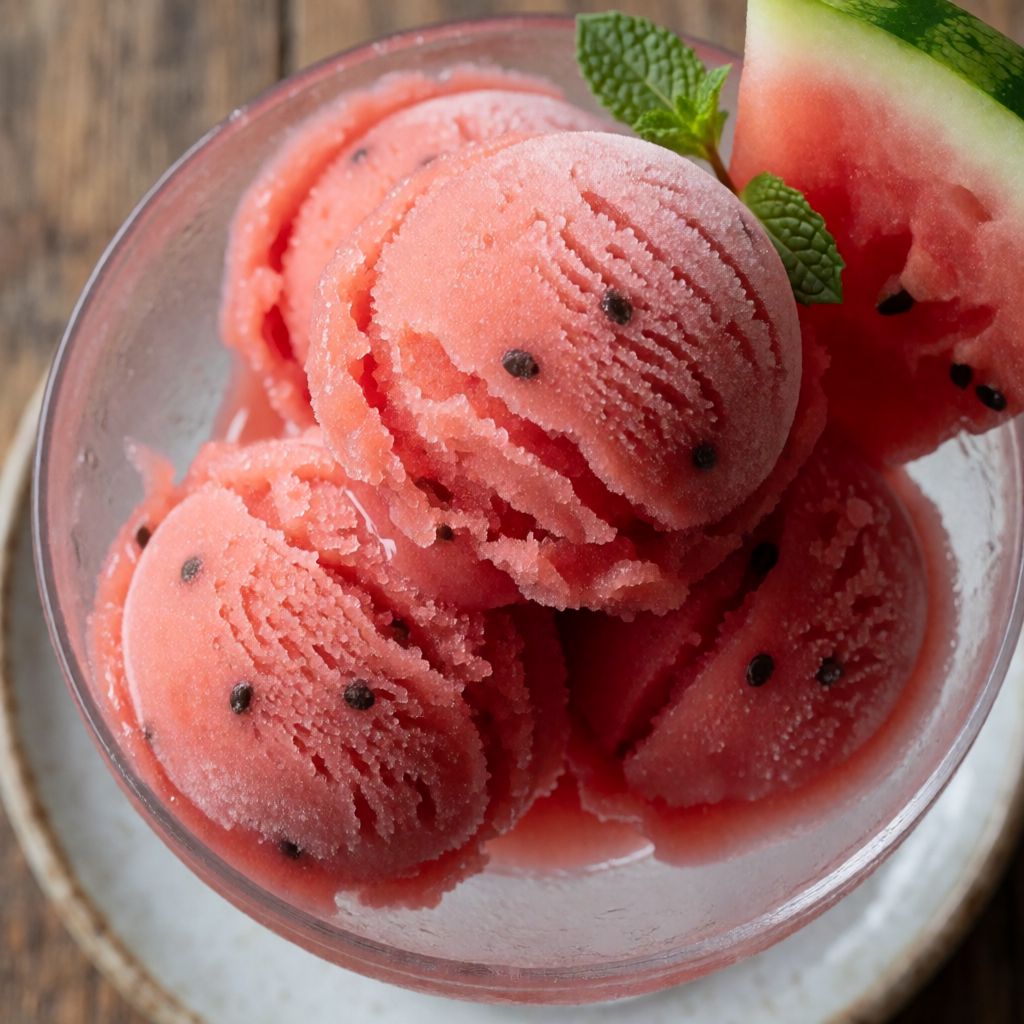
 AI photo
Watermelon Sorbet
A refreshing watermelon sorbet, perfect for cooling down on a hot day.
Labels are worked out automatically from the ingredients and can be wrong. Check the packaging if it matters to you.
Ingredients
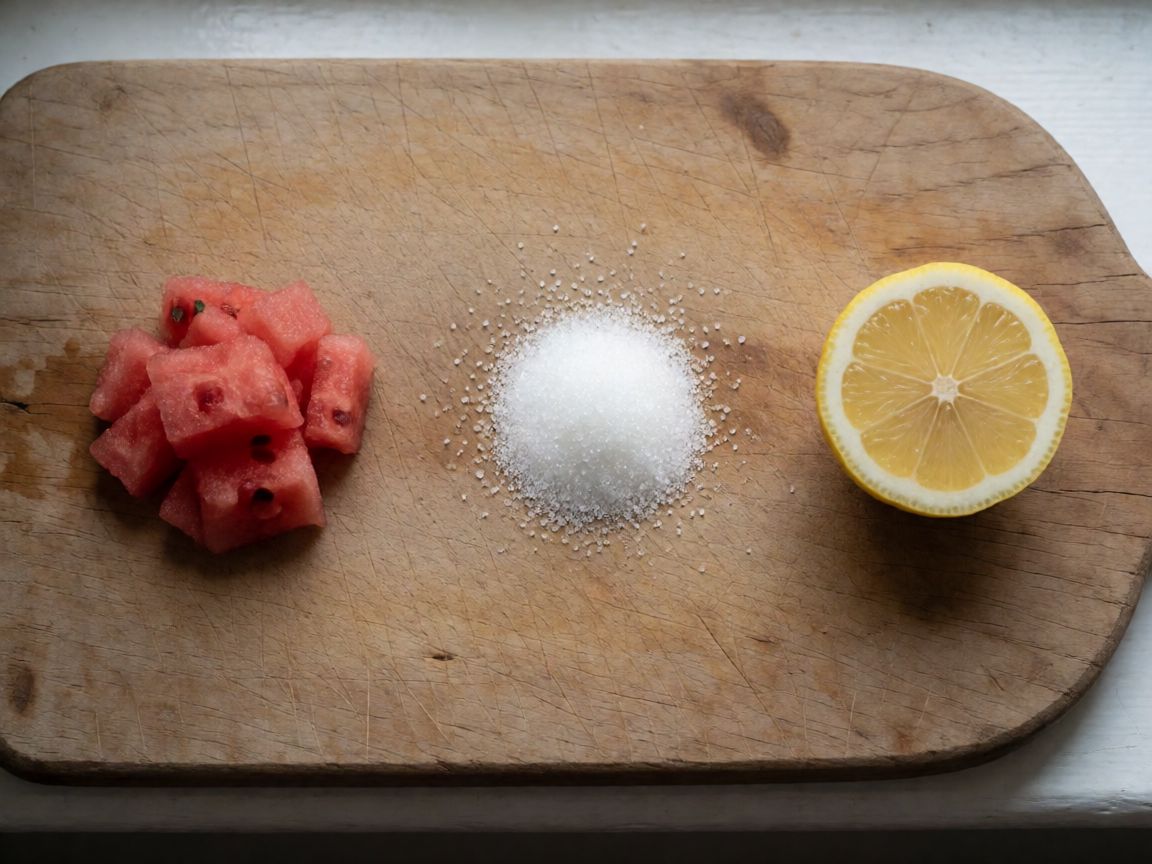
- 500 g Watermelon
- 70 g Caster sugar
- 1/2 pcs Lemon juice juice of half a lemon

Steps
Cut the watermelon into large chunks and blend into a purée.
5 minPour the purée into a tall non-stick pan, add the sugar and simmer over the heat.
10 minRemove from the heat, pour into a container and let it cool, stirring with a spoon, then stir in the lemon juice.
10 minOnce the mixture has cooled, place the container in the freezer.
Take the sorbet out, tip it onto a board and cut it into diamond shapes.
5 minBlend the pieces again, pour the mixture into a mould and return it to the freezer.
5 minSpoon the sorbet into glasses and serve.
5 min
This isn't ice cream at all — no cream, no eggs, nothing to thicken it. It's just watermelon's own water turned into flavoured ice, and the whole dish stands or falls on how small you keep the ice crystals. Everything else — the sugar, the lemon — is there to support that one job.
A home freezer sits at about minus eighteen and gets there slowly, nothing like the blast freezers restaurants use. Slow freezing gives water time to find its neighbours and grow into big, crunchy shards — that's the grainy texture you get from a sorbet that's melted a little and been refrozen. The fix here isn't a fancy machine, it's purely mechanical: freeze, break it up, blend it again, freeze again. Each pass tears the growing crystals apart before they get the chance to turn into flakes, so what lands in the glass is smooth, not an ice cube with ambitions.
Some say sorbet needs a churning ice cream machine — no, because a churn does exactly what your hands and a blender do here in stages: agitate the half-frozen mixture so the crystals can't organise themselves into something coarse. Slower, done in batches, but the same job.
500g of watermelon is roughly a quarter of a small melon and gives you four small glasses — this is a dessert portion, not a bowlful. What decides whether it works is timing the first freeze: too solid and you fight the blender for nothing, too soft and you've made slush, not sorbet. You want it firm enough to hold a diamond shape on the board, giving just slightly under the knife.
Watermelon: choose by weight and sound, not by the pale patch on the skin. Some swear by that field spot telling you ripeness — no, it just shows where the melon sat on the ground, and tells you almost nothing about the sugar inside. A melon that's heavy for its size, with a dull, hollow knock rather than a sharp ring, is the one with the sugar you want. If yours has seeds, push the purée through a sieve after blending — the blender breaks seeds small but not invisible, and a gritty, faintly bitter bite in an otherwise smooth sorbet is a defect you'll notice every spoonful.
Caster sugar's job is to dissolve completely before the mixture ever sees the freezer. Undissolved sugar leaves its own kind of crunch, different from and worse than an ice crystal — more like biting sand. Caster works because it's fine and dissolves fast; the gentle simmer finishes the job and drives off a little water too, which concentrates the watermelon's flavour — ripe watermelon is mostly water, and raw purée can taste thinner than you'd expect. Any sugar that dissolves clear in a warm liquid without lumps will do the same work — golden caster shifts the colour slightly, a glucose or corn syrup softens the scoop a touch more, since more dissolved sugar lowers the freezing point and keeps the texture a little less rock-hard.
Lemon juice isn't there for sourness as such. Watermelon on its own can taste flat, one sweet note and nothing else — the acid is what wakes the rest of the flavour up, the way salt does in a stew. Done right, you won't taste lemon, you'll taste watermelon more clearly than before. Use it fresh-squeezed; bottled juice carries a slightly cooked, bitter edge from processing that fights the fruit instead of lifting it. Lime juice is a fair substitute if you want a sharper, greener accent — same function, different voice.
The pan being non-stick and tall isn't about convenience for its own sake. A thin layer of sugary purée against bare metal scorches fast — the sugar touching the hot surface caramelises, then burns, while the rest of the batch below is still watery and untouched. Non-stick, plus stirring, keeps that from happening and keeps a bitter, burnt note out of the finished sorbet. The tall sides are just there to contain the splash as the mixture comes up to a gentle, breaking-surface bubble — nothing to do with heat, everything to do with not wearing purée.
No ice cream machine, as already said — a blender for the purée and a board for cutting diamonds is all the equipment this needs, and if you haven't got a board, any flat freezer-safe dish does both jobs at once, which saves a transfer.
Patience sits in three places here, and skipping any of them shows. Let the purée go properly cold before the lemon juice goes in — hot acid loses some of its brightness, so the lift you're after gets dulled before it even starts. Then there's the first freeze, and the second after reblending — rush either one and you serve something between a drink and a dessert, never quite sorbet. There's no shortcut through the waiting, only through doing it in the right order.