
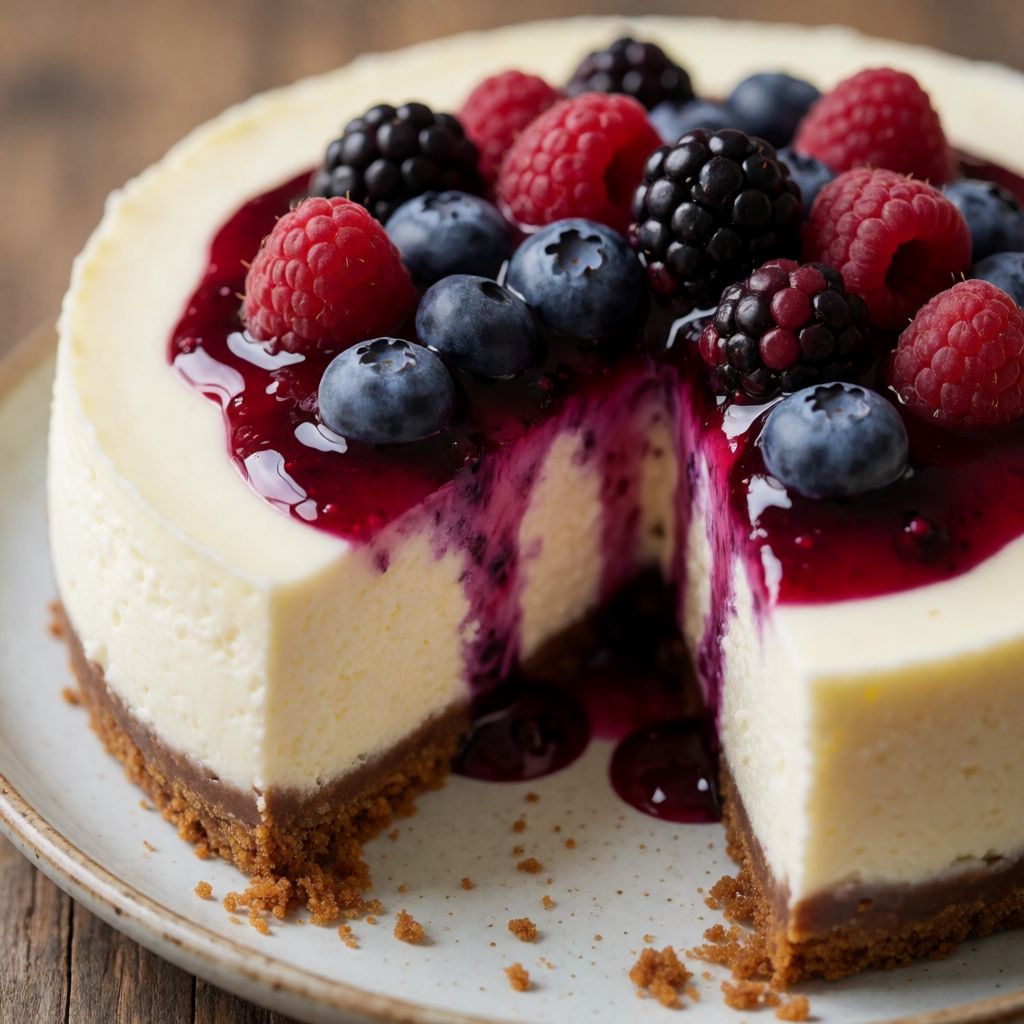
 AI photo
White Chocolate and Mixed Berry Cheesecake
A no-bake white chocolate cheesecake with a biscuit base and a layer of mixed berry purée.
Labels are worked out automatically from the ingredients and can be wrong. Check the packaging if it matters to you.
Ingredients
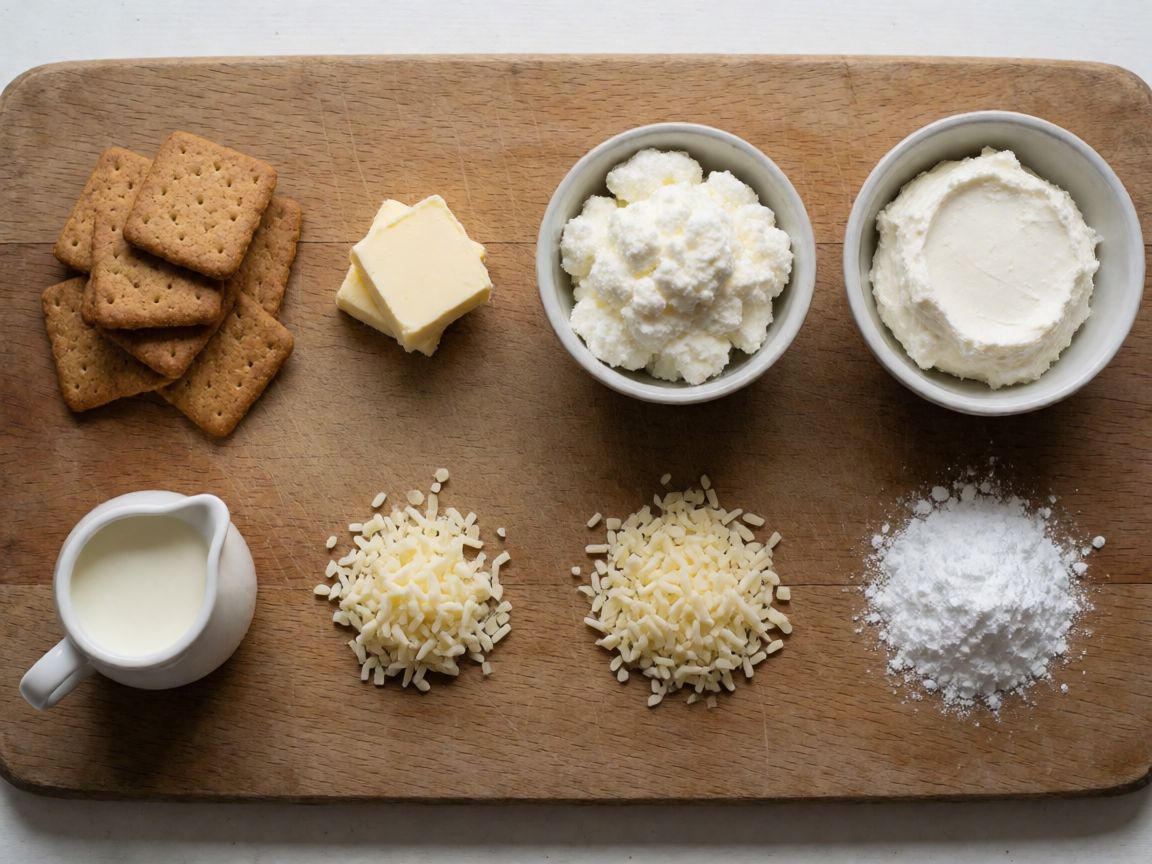
- 320 g digestive biscuits
- 150 g butter melted
- 300 g ricotta
- 250 g cream cheese
- 150 g double cream
- 15 g gelatine
- 250 g white chocolate
- 70 g icing sugar
- 300 g mixed berries
- white chocolate to taste, for decoration
- mixed berries to taste, for decoration









Steps
Drain the ricotta in a sieve to let the whey run off, then chill it in the fridge.
Blitz the biscuits in a blender and mix with the melted butter until even.
Press the mixture into a 22cm springform tin, flattening the base evenly.
Chill the base in the fridge to set.
30 minPut the berries and 20 g of icing sugar in a pan and cook gently until puréed.
Strain the berry purée through a sieve and leave to cool.
Break the white chocolate into pieces and melt it over a bain-marie.
Add the double cream to the chocolate and cook gently.
10 minSoak the gelatine in cold water.
10 minSqueeze out the gelatine and stir it into the cream and chocolate mixture.
Strain the ricotta, add the white chocolate cream and cream cheese, and mix well.
Stir 50 g of icing sugar into the cream.
Divide the cream into two parts, mix the berry purée into one part, and spread it over the base.
Chill in the fridge.
20 minSpread the second layer of cream and smooth it with a spatula.
Decorate with mixed berries and chill in the fridge to set.
240 min
This is a no-bake cheesecake, which really just means: a cold-set custard sitting on a biscuit shortbread, held together by gelatine instead of an oven. There's no baking because there's no egg structure to cook — the thing that sets it is chemistry at fridge temperature, not heat. That's the whole trick, and it's also the whole risk: if the gelatine doesn't bloom properly, or the cream is still warm when it goes in, you get a cheesecake that slumps the moment you cut it.
What decides whether this works is temperature control at two points — melting the chocolate, and folding the gelatine in. White chocolate scorches if you rush it; it's mostly cocoa butter and sugar with very little of the solids that give dark chocolate its heat tolerance, so a bain-marie isn't fussiness, it's the only way to melt it without it seizing into a grainy paste. And the gelatine has to go into a mixture that's warm but not hot — hot enough to dissolve it fully, cool enough that it doesn't cook the gelatine's setting power out of it. Some say gelatine just needs "a quick stir in" — no, because if the liquid is too hot you weaken the very protein that's meant to hold your cheesecake up, and it never fully firms in the fridge.
The ricotta draining at the very start is not a formality either. Ricotta is a wet cheese by nature — it's made by reheating the whey left over from another cheese, so it carries moisture the final set can't afford. Skip that drain and you dilute the gelatine's job, and the layers go soft and weep at the edges days later.
Biscuits and butter are your base, and here it's simple arithmetic: crumb needs enough fat to glue it, not so much that it turns greasy once chilled. Digestives work because they're already slightly sweet and slightly salted — shortbread or ginger nuts do the same job if that's what's in the cupboard, since what you actually need is "a biscuit sturdy enough to blitz to sand and hold butter," not any specific brand. Melted butter, not softened — softened butter leaves pockets of unmixed fat that turn patchy when cold.
Ricotta and cream cheese are doing two different things, not the same thing twice. Cream cheese brings the tang and the firmness you expect from a cheesecake; ricotta lightens it so the whole thing doesn't eat like a block of cold butter. If you can't get ricotta, a well-drained cottage cheese blitzed smooth gets you close — the test is the same: no visible liquid left when you tip it into a sieve.
Double cream and white chocolate, cooked together gently, aren't being "melted" so much as being turned into a ganache — the cream carries heat into the chocolate evenly so it doesn't catch at the edges of the pan the way direct heat would. Any cream you use here needs to be full-fat; the lower-fat ones split when gelatine goes in, because there isn't enough fat to hold the water phase together once it cools.
Gelatine itself is the part people distrust most, usually for no reason — "it makes things rubbery" is the common complaint, but that only happens with too much, or with powder that's been dumped in dry and gone lumpy. Soaking it in cold water first (what's called blooming) lets each granule swell evenly so it dissolves clean into the warm cream rather than clumping. If you're using leaf gelatine instead of powder, the principle is the same — soak till floppy, squeeze out the excess water, then melt it into warmth, not fire.
The berries get cooked down with sugar and strained — not because raw berry would taste wrong, but because raw fruit carries seeds, skin, and unpredictable water content that would stop the cream setting evenly where it meets that layer. Cooking breaks the fruit down and lets you control exactly how much liquid goes back in; straining takes out everything that isn't flavour or colour. Frozen mixed berries work just as well here, sometimes better — they're usually picked riper, and since they're getting cooked anyway, texture doesn't matter.
Icing sugar rather than caster is about dissolving without grit — caster sugar stirred into a cold cream mix can stay sandy under the tongue, where icing sugar, being finer, vanishes into it.
The long final chill — four hours — is the one step you cannot shortcut with a colder fridge or a freezer blast. Gelatine sets by slowly forming a protein network through the whole volume, not just at the surface; rush it and you get a cheesecake that's firm on top and soft in the middle, which looks fine until you slice it. Patience here isn't a virtue, it's an ingredient, same as the butter or the cream — leave it be.
In a UK kitchen without a proper water bath set-up, a heatproof bowl sitting in a pan with a couple of centimetres of simmering water underneath does exactly the same job as a bain-marie — the only rule is the bowl's base shouldn't touch the water, or you've just built yourself direct heat again with extra steps. And a 22cm springform tin is worth having rather than improvising around — a normal cake tin won't let you get this out in one piece, since the sides of a set custard like this won't release from a solid tin the way a baked sponge will.