
 AI photo
White Fish on a Bed of Vegetables
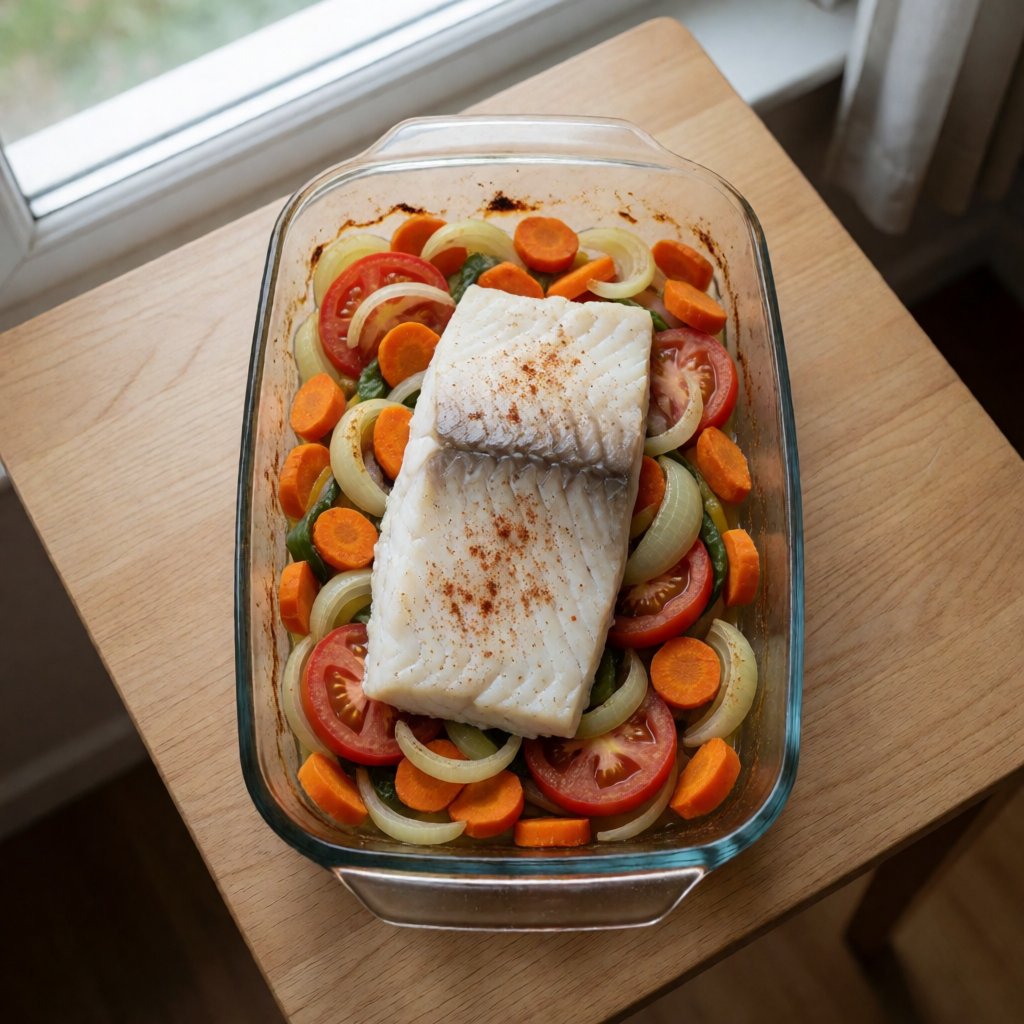
Baked white fish fillet served over a simple vegetable bed of carrot, onion and tomato.
Labels are worked out automatically from the ingredients and can be wrong. Check the packaging if it matters to you.
Ingredients
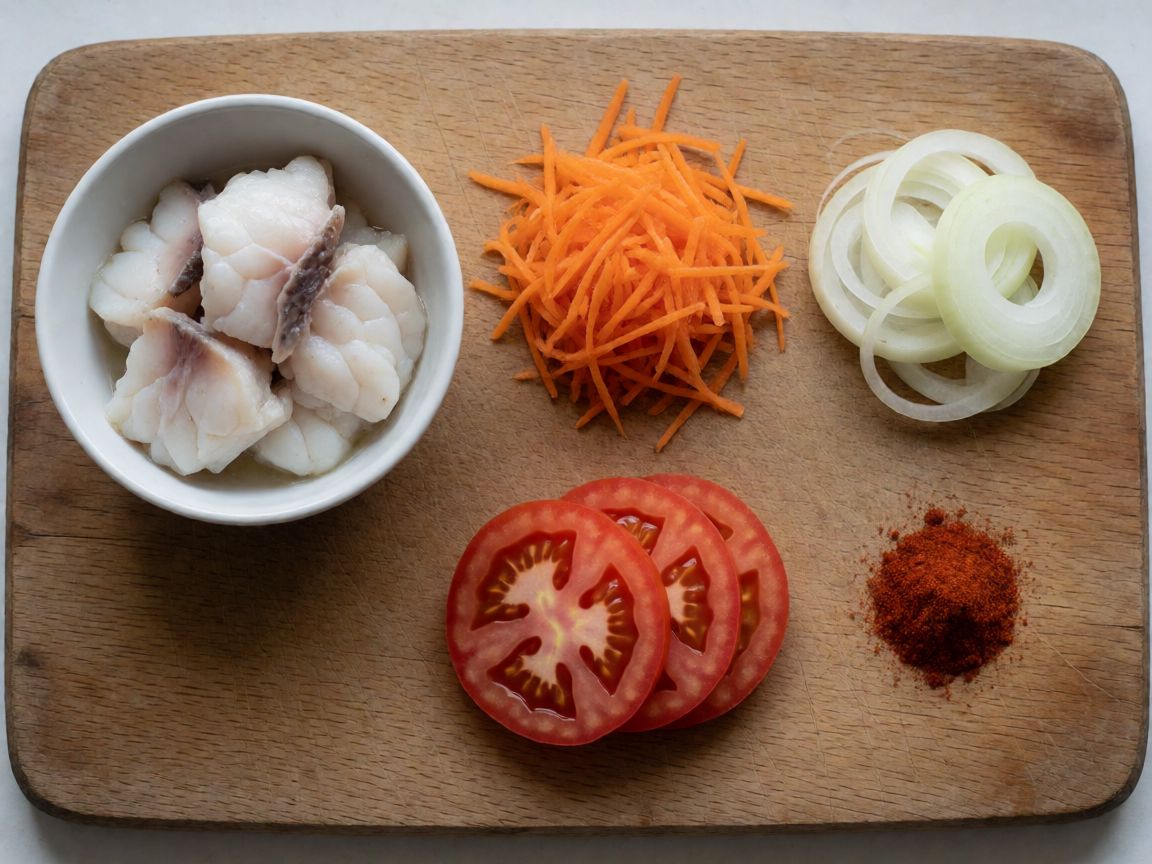
- 400 g white fish fillet (hake or cod)
- 1 pcs carrot grated
- 1 pcs onion sliced into half-rings
- 1 pcs tomato sliced into rounds
- 1 tbsp sunflower oil
- 1 pinch salt or to taste
- 1 pinch black pepper or to taste
- 1 pinch paprika or to taste





Steps
Grate the carrot, slice the onion into half-rings, and spread them over the bottom of an oiled baking dish.
Place the fish on top, season with salt and pepper, sprinkle with paprika, then lay the tomato slices over it.
Put the dish into an oven preheated to 200°C for 25 minutes, until the fish reaches 63°C inside.
25 minRemove the dish from the oven.
This is not fish-with-a-garnish. It is fish cooked by proxy — the vegetables underneath do the actual work of protecting it from the oven floor, and the tomato on top does the work of protecting it from the dry air above. Take either layer away and you are baking fish directly on hot metal with nothing between it and 200°C, which is how you get a rubbery underside and a chalky top in the same piece.
Here is the mechanism. Grated carrot and sliced onion, once they go into a hot oven, start giving up their water almost immediately — that is why you grate the carrot rather than slicing it, more cut surface means faster release. That water has nowhere to go but up, so it sits as steam between the vegetables and the fish and cooks the underside gently while the top of the oven dries everything above it. The tomato slices on top do the mirror job: as they soften and collapse they weep juice down onto the fish, basting it without you lifting a spoon. Between the two, the fish never actually touches bare metal or bare hot air for the whole 25 minutes.
Some say fish needs a foil tent to stay moist in the oven. No — because foil traps all the steam evenly over everything, vegetables included, and you end up with limp, pale onion that never had the chance to pick up any colour or sweetness at the edges. The vegetable-and-tomato sandwich does the same moisture job as foil but only where the fish actually is, leaving the vegetable edges free to soften properly rather than stew.
On the fish itself: hake and cod are named because they are lean, firm-fleshed, and hold their shape in a dish without a bone structure getting in your way. The rule for substituting is not "any fish" but any fish that is white, lean, and firm enough to sit on a bed of vegetables without falling apart into it — haddock, pollock, coley, basa all qualify. Oily fish like salmon or mackerel are a different mechanism entirely: they carry their own fat and baste themselves, and putting them under a tomato lid would just steam off flavour they were going to give you for free. Don't swap one for the other and expect the same result from the same method.
Carrot and onion are not there for colour, though you'll get some. They are there as both moisture source and as a physical rack, lifting the fish a centimetre off the hot base of the dish so it cooks in trapped steam rather than direct contact. This is also, by the way, the economic logic behind the dish generally — in a kitchen without a steamer or a proper lidded pan, vegetables that release their own water do the steamer's job for nothing. A domestic baking dish with no lid is not a limitation here; it's actually what the method is built around. If you only have a roasting tray and a sheet of greaseproof paper loosely over the top instead of a proper lid, that's close enough — you're not trying to seal anything, just slow down how fast the top dries.
The tomato wants to be ripe enough to collapse, not the hard, pale supermarket kind that holds its shape through anything. If your tomatoes are underripe, a spoonful of their own juice or a splash of passata laid over the fish instead will do the same basting job — the point is liquid sitting on top of the fish that has somewhere to go but down.
Salt and pepper on the fish, not on the vegetables, because fish muscle is short-fibred and open — it takes up seasoning in minutes, not the hours meat would need, so there's no marinating step here and you don't need one. Paprika is for a faint warmth and colour on the surface, not heat — sweet or mild paprika does that; if you only have hot paprika, use half as much and don't worry, you won't ruin it.
The oil is there purely so nothing sticks to the dish while the vegetables give up their water — it has no job in the flavour of the finished plate, so any oil with no smell of its own does the work. Sunflower, a flavourless vegetable oil, even a light groundnut oil — not extra virgin olive oil, which would leave its own taste sitting under everything else.
Patience here is short but real: fifteen minutes of prep is mostly knife work, grating and slicing thin enough that the vegetables actually cook through in the fish's own window rather than coming out of the oven half-raw underneath a perfectly cooked fillet. Slice the onion thick and the carrot coarse, and you'll have crunchy vegetables and overdone fish by the time they catch up — the whole dish is built on both finishing together, so give the knife work the same attention you'd give the oven.
·