
 AI photo
White Sangria
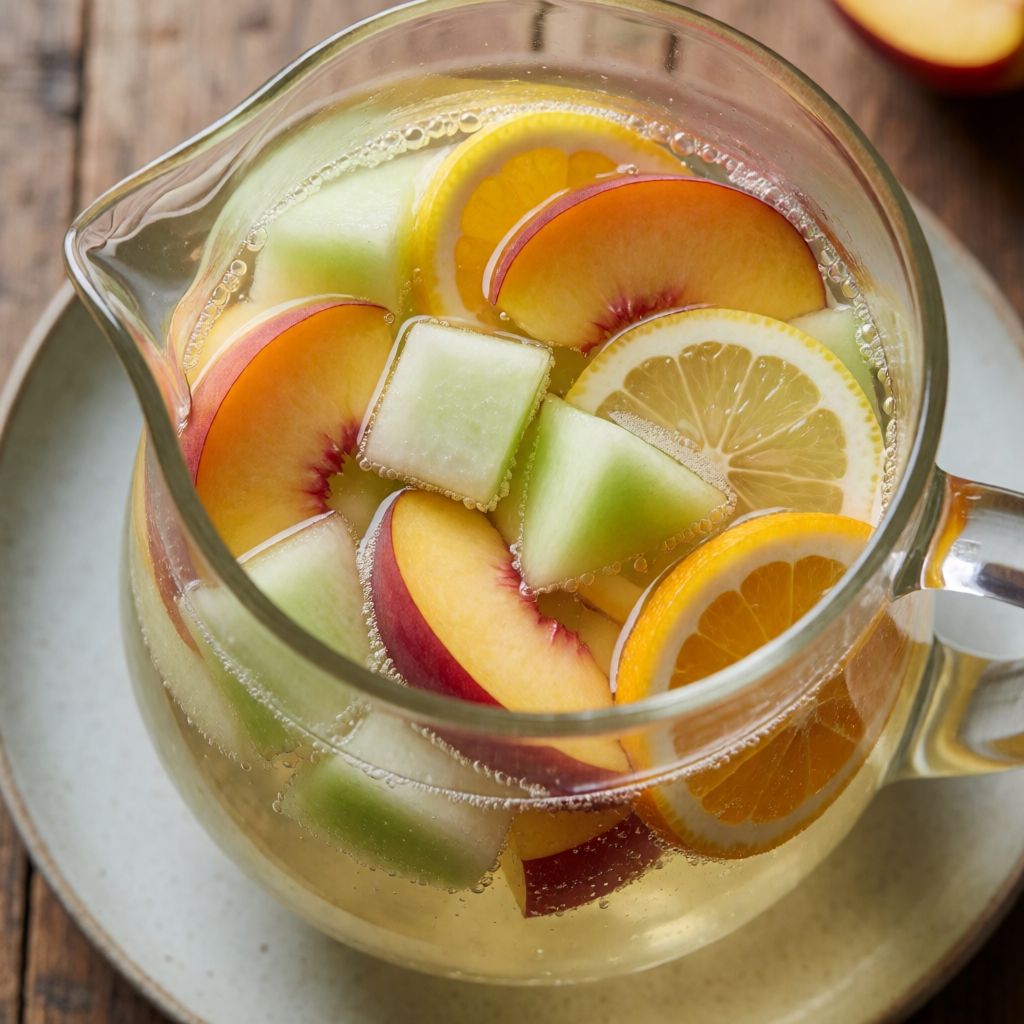
A refreshing white sangria made with prosecco, melon, nectarines, citrus and warm spices.
Labels are worked out automatically from the ingredients and can be wrong. Check the packaging if it matters to you.
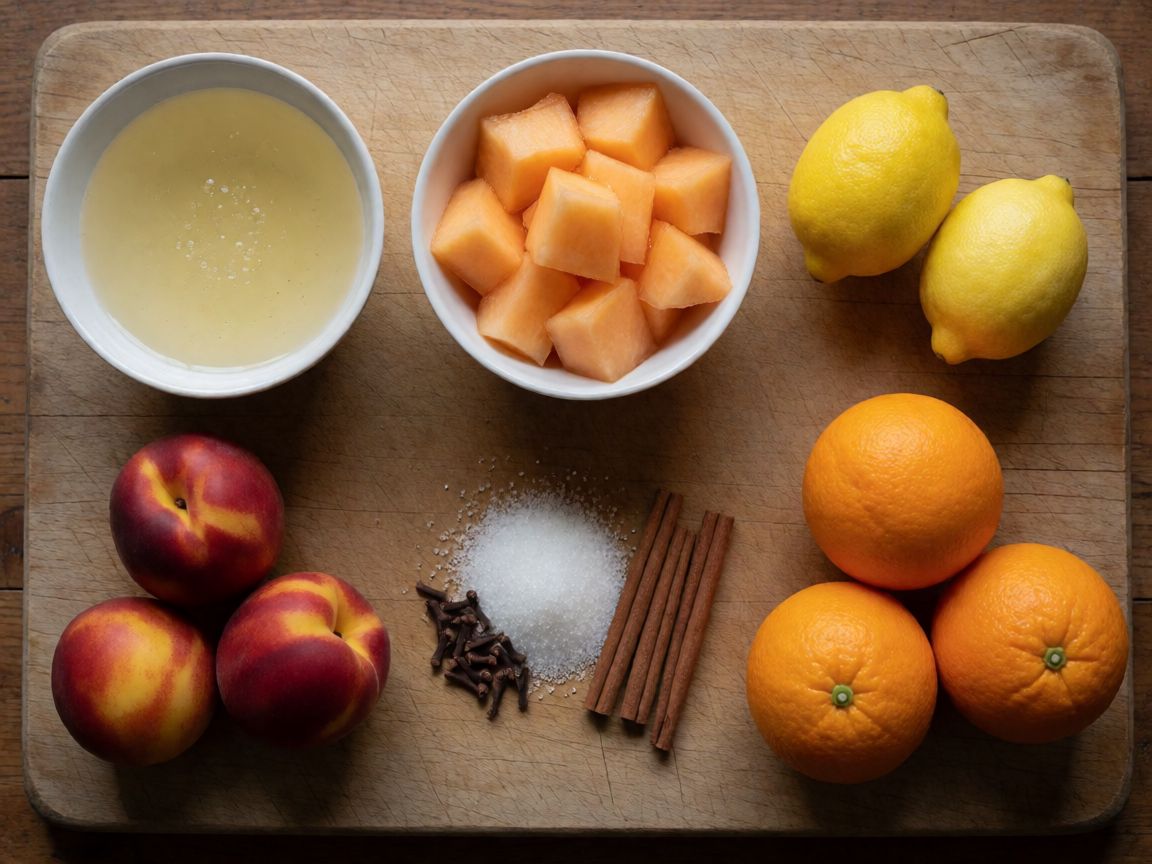
Ingredients









Steps
Squeeze the juice from one lemon and one orange, then strain through a fine sieve.
Cut the second lemon and second orange with the skin on: half into thin slices, half into small cubes.
Wash the nectarines, remove the stones and cut into small cubes.
Cut the melon in half, remove the seeds, peel, and cut out the flesh.
Pour the prosecco into a large bowl, add the sugar and stir until fully dissolved.
Add the cloves and cinnamon sticks, stir, then pour in the strained juice.
Add all the cut fruit and stir.
Pour in the vodka and stir for a few minutes.
Chill the sangria in the fridge for 5-6 hours.
360 minServe chilled in glasses, distributing the fruit and liquid evenly.
White sangria isn't a cocktail, it's a macerated fruit punch wearing Prosecco. The whole mechanism is osmosis and time: sugar, citrus juice and spiced wine pull flavour out of melon, nectarine and orange peel over hours, and the wine pulls flavour back the other way, into itself. That's why it goes in the fridge for the better part of a day before anyone drinks it — rush it and you just have fruit floating in fizzy wine, not sangria.
What decides whether it works is the sugar dissolving properly before anything else goes in. Sugar won't dissolve in cold, already-fizzy wine the way it dissolves in warm tea — the bubbles get in the way and sugar sits at the bottom as grit. Stir it in first, patiently, while the wine is calm, and only then add everything else. Some say you can just dump sugar in with the fruit and let the fridge sort it out — no, because six hours of cold slows dissolving right down, and you'll end up crunching sugar in your glass instead of tasting it.
The second thing that decides it is why you cut the citrus two ways: slices for looks and for the bitter edge the pith gives off slowly, cubes for fast juice release. Half the peel goes in as decoration that happens to leak a little; half goes in as a flavour source. If you only slice, the sangria stays timid. If you only cube, you lose the look of it in the glass — and sangria is as much a drink for the eyes as the tongue.
Prosecco is the base because it's cheap, reliably dry-ish, and its bubbles give the drink lift without asking you to think about tannins the way a still white wine would. Any dry sparkling wine with no strong personality of its own works the same way — cava, an English sparkling if you want to be patriotic about it, even a decent Cremant. Don't reach for a sweet sparkling wine; the sugar's already measured in separately, and doubling up just makes the whole jug cloying and flat-tasting once the fruit's had its hours to infuse.
The vodka is there to do a job gin or rum wouldn't: it has no flavour of its own, so it raises the alcohol content and helps carry the fruit's aromatics into solution without adding a competing taste. That's the test for any substitute — "no smell of its own" — so a neutral grain spirit works, but swapping in whisky or dark rum changes the drink into something else entirely, not an upgrade, a different drink wearing this one's name.
Melon and nectarine are chosen for texture as much as taste: both go soft and sweet rather than mushy when steeped cold, and both release juice slowly rather than all at once, which keeps the sangria getting better hour by hour instead of turning to mush by hour three. If melon's out of season or sad-looking, a ripe pear does a similar slow-release job; nectarine's closest stand-in is a peach, skin on, same cube cut.
The lemon and orange split into juice-and-peel is the backbone of the whole acid balance. The juiced ones give you clean sourness without bitterness — straining matters here, because pulp and pips clouding the jug isn't rustic charm, it's just grit at the bottom of someone's glass. The second lemon and orange, cut skin-on, are there for the oils in the peel, which is why you want unwaxed fruit if you can get it — supermarket wax coating doesn't poison you, but it sits on the surface and blocks the oil from reaching the wine, so you're cutting peel for nothing.
Sugar at 140g for a litre of wine plus all that fruit juice isn't really there to make it sweet — taste the wine on its own and it already isn't, Prosecco's dosage does some of that work. It's there to balance the acid from two lemons' worth of juice and however much the fruit adds as it steeps, and to feed that slow osmotic pull between fruit and liquid. If you're cutting sugar for diet reasons, know that you're also slowing down how much flavour the fruit gives up — a trade, not a fix.
On patience: this is the one ingredient with no substitute. Five to six hours isn't a suggestion with wiggle room downward — it's roughly how long it takes sugar and alcohol to draw flavour out of solid fruit at fridge temperature, and no amount of stirring speeds that up. Make it in the morning for an evening Sunday roast crowd, or the night before if you're having people round for lunch — but don't make it twenty minutes before the doorbell goes and expect the same drink.