
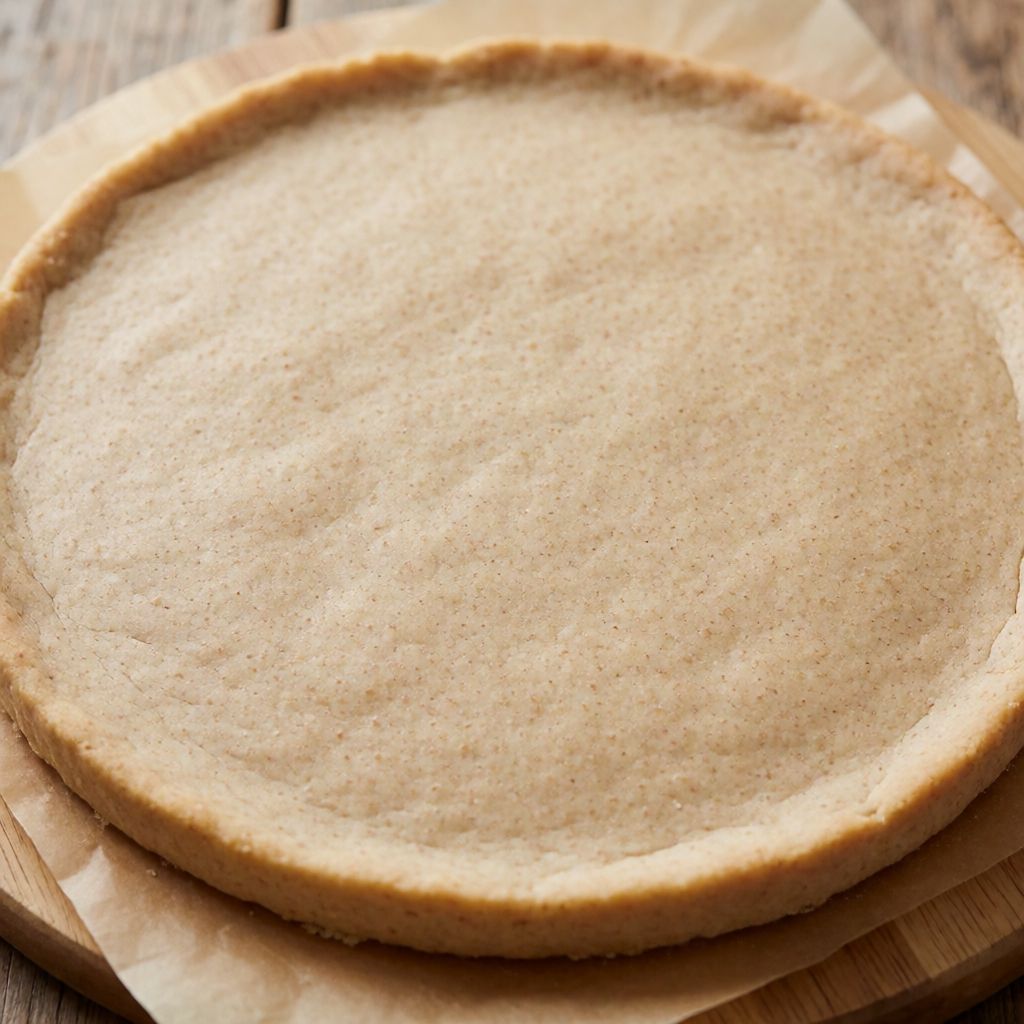
 AI photo
Wholemeal Shortcrust Pastry
A simple wholemeal shortcrust pastry, ideal as a base for tarts and biscuits.
Labels are worked out automatically from the ingredients and can be wrong. Check the packaging if it matters to you.
Ingredients
- 300 g Wholemeal flour
- 100 g Butter cold
- 100 g Sugar
- 1 pcs Egg
- 1 pcs Egg yolk
- 1 tsp Baking powder
- 0.25 tsp Vanilla extract a few drops






Steps
Tip the wholemeal flour onto a work surface into a mound and make a well in the centre, then add the egg, egg yolk, baking powder, sugar and vanilla extract.
Mix by hand, then add the cold butter cut into small cubes.
Quickly knead the dough by hand until you get a smooth, compact ball.
Wrap the dough in cling film and place it in the refrigerator.
30 min
What was changed
Vanilla baking powder is replaced with Baking powder, since flavoured baking powder isn't available in British shops.
Despite the ingredient list looking like it belongs under a steak and kidney pie, this isn't that pastry. Egg, extra yolk, sugar, vanilla — that's a sweet dough, closer kin to the Italian pasta frolla than to anything that goes under a Sunday roast. It's built to be a tart shell or a sweet pie base. Decide that before you start, because how hard you knead it depends on what you're asking it to do later.
What decides whether it holds together or turns into something tough and biscuit-sad in the oven is temperature, and that gets decided long before the oven is even involved. The butter has to go in cold and stay in small, separate pieces right up to baking. Warm it too long in your hands and it stops being butter and starts being grease — grease coats the flour evenly instead of sitting in little lumps through it, and evenly-coated flour bakes tough, not short. "Short" means it breaks clean when you bite it, not that it's small.
The second thing that decides it is time, but less of it, not more. "Quickly knead" in the method isn't filler. Every extra minute you spend working the dough builds more gluten, and gluten is what you want in bread, not here. Wholemeal flour already fights that a little on its own — the bran acts like tiny blades cutting through the gluten strands as they try to form, which helps you here, though it also means the dough drinks more liquid than white flour would and can feel drier and less obliging under your hands.
Wholemeal flour instead of white isn't a health swap grafted onto an old recipe — it's closer to what flour actually was before industrial milling learned to sieve out the bran and germ cheaply enough to sell white flour as the everyday choice. Wholemeal carries more fibre, more flavour, and more thirst for liquid, and that bran does double duty: it cuts gluten as it forms, which helps keep the dough short, but it can also make the crumb feel coarser if you overwork it. If you want something lighter without losing the nutty taste entirely, cut it with an equal amount of plain white — that's a method, not a rule you're breaking.
Butter has one job here and it's a physical one, not a flavour one: it has to stay solid, in small distinct pieces, right up until the oven melts it and leaves little pockets behind — that's what gives shortcrust its break. The criterion for substituting it is simple: any firm fat that holds its shape at room temperature and carries little water. A hard block margarine will behave similarly; a soft spreadable one won't, because it's already behaving like grease before it even touches the flour.
Sugar is doing two jobs, not one. Obviously it sweetens, but it's also pulling water away from the flour alongside the fat, which is part of what keeps this tender rather than bready. Caster dissolves into the quick knead more evenly than granulated; granulated will work, it just leaves the faintest grit, which matters not at all in a dough this short.
The whole egg and the extra yolk aren't doing the same work. The whole egg's protein is what lets the dough hold as a ball at all, stopping it from being just buttery crumbs that won't bind. The extra yolk brings fat and a natural emulsifier that helps marry the egg to the butter, plus the colour — without it the pastry will be a shade paler and a touch less rich, not a failure, just a different dough. Baking powder here is doing a modest job too: just enough lift to stop the pastry sitting heavy, not a proper rise, since the fat is already carrying the structure — measure it flat, not heaped, because a heaped teaspoon in a dough this dense will taste of itself.
Vanilla is background, not headline. The criterion for swapping it: anything aromatic that doesn't bring a competing flavour of its own — a little lemon zest works the same way, or vanilla sugar used in place of a spoon of the plain sugar, whatever's already open in the cupboard next to the tea caddy.
Some say you need a food processor to keep pastry cold enough. You don't — bakers were doing this on cold stone slabs with quick hands long before any machine existed, and speed matters more than the tool. What's true for a British kitchen is that a laminate worktop doesn't hold cold the way marble does, so if your kitchen's warm — oven already going for the roast, hob on for tea — chill the bowl, run your hands under cold water first, and work away from anything that's generating heat. And once it's wrapped and in the fridge, leave it be for the full thirty minutes even if the kettle's boiled and you're itching to get on — that's the step quietly doing its work while you're not watching it.