
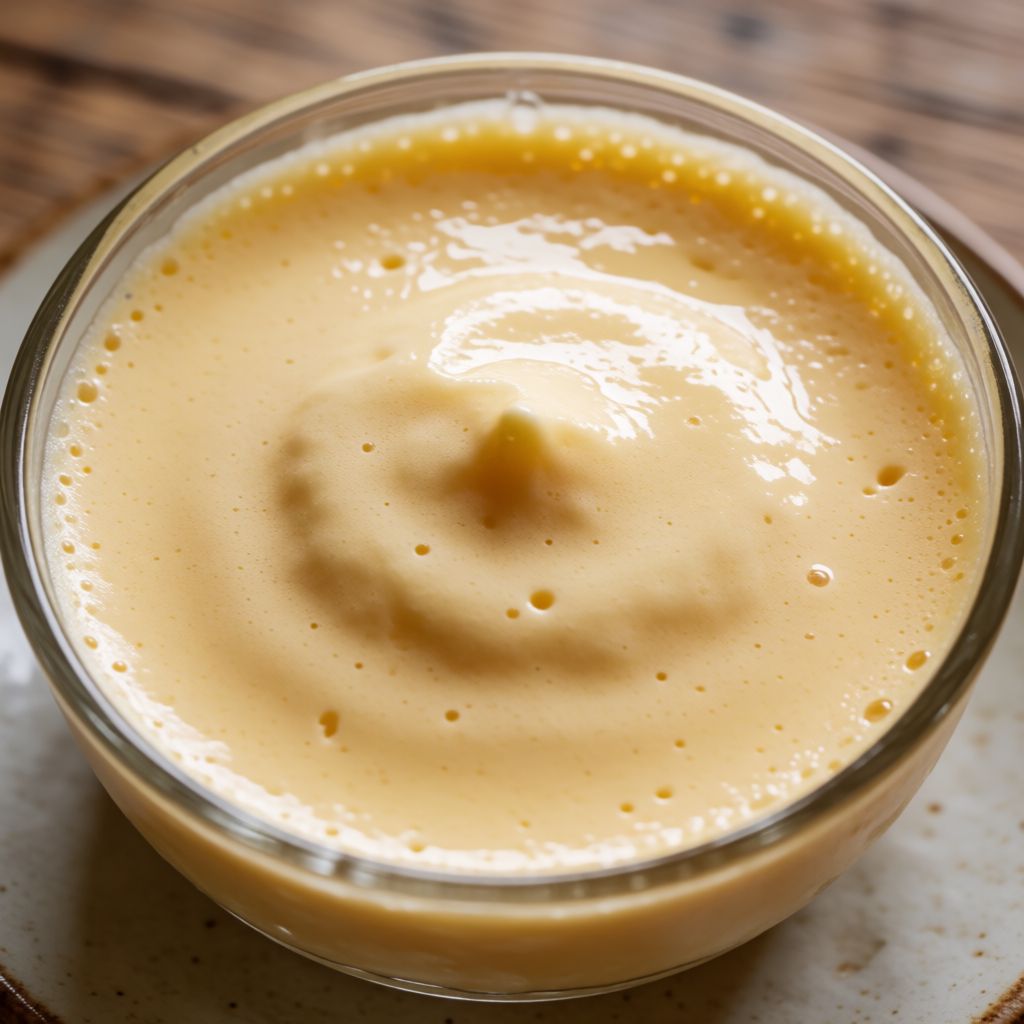
 AI photo
Zabaglione with Moscato
A light, airy Italian custard of egg yolks, sugar and Moscato wine, whisked over a bain-marie until frothy.
Labels are worked out automatically from the ingredients and can be wrong. Check the packaging if it matters to you.
Ingredients
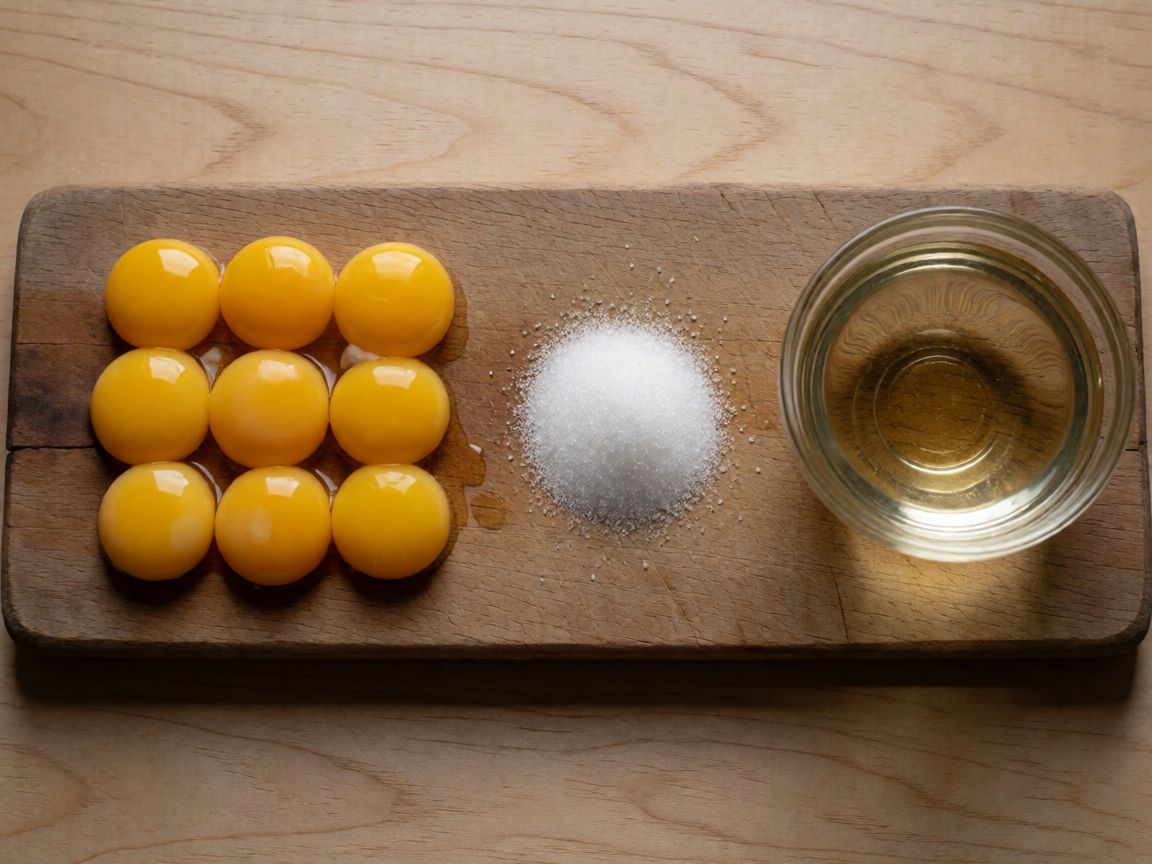
- 9 pcs Egg yolks
- 180 g Caster sugar
- 250 ml Moscato d'Asti


Steps
Pour the egg yolks into a small saucepan, add the caster sugar and whisk together without heating.
Pour in the Moscato and stir to combine.
Set the saucepan over a bain-marie and cook, whisking constantly, until the mixture is thick, frothy and pale.
12 minServe the zabaglione warm in a wine glass with biscuits.
Zabaglione is yolks, sugar and wine turned into a warm foam by whisking air into them while heat very gently sets the proteins around that air. Nothing is added to thicken it — no flour, no gelatine, no cream. The structure is entirely eggs holding bubbles, the way a soufflé is, just without an oven. That's the whole dish, and it's why it collapses within the hour: once you stop whisking and it cools, the air starts leaking out and the foam weeps back towards liquid. You eat it standing up, so to speak.
What decides whether it works is heat control, nothing else. The yolks need enough warmth to set lightly and trap the air you're beating in — too little, and you've made sweet wine-flavoured raw egg with bubbles that collapse in two minutes. Too much, and the proteins seize into grains before the foam forms, which is scrambled egg wearing a dessert's name. The bain-marie exists to put a ceiling on the heat: water under a bowl can't get hotter than it is, boiling or not, so the yolks never see a direct flame or a hot pan base that would cook one spot before the rest. That ceiling buys you the minutes you need to whisk.
Egg yolks are the whole structure here, so buy accordingly — fresh, large, and at room temperature if you can manage it, because a cold yolk straight from the fridge takes longer to warm through evenly and gives you more time at the edge of curdling before the centre has caught up. You need only the yolks; keep the whites for something else, meringue or an omelette, don't waste them. If a recipe or habit nags at you about raw egg — it isn't raw by the end, the heat does cook it, just gently and briefly, which is the entire point of the bain-marie.
Caster sugar does two things at once: it sweetens, obviously, but it also protects the yolk proteins. Dissolved sugar gets between protein molecules and slows down how fast they clump together under heat, which is part of why whisking the sugar into the yolks before any heat touches them matters — you're pre-armouring the eggs against curdling before the real test starts. Caster sugar specifically because it dissolves fast into the yolks without grittiness; granulated will work if you whisk longer, icing sugar will dissolve fastest but can make the foam a touch denser.
Moscato d'Asti is doing more than flavouring. Its liquid dilutes the yolks, which — same logic as the sugar — makes it harder for proteins to find each other and clump, buying you a wider margin before curdling. It's low in alcohol and gently sweet with a grapey, floral lift, which is why it suits a dish this plain: there's nowhere for a heavy or bitter wine to hide. The traditional partner for zabaglione is actually Marsala, a fortified wine from Sicily, stronger and nuttier — if that's what's in your cupboard, use it, it's not a compromise, it's the older version of this dish. For a substitute with no wine at all, look for the same criterion — something sweet, aromatic, and not aggressively alcoholic, like a light Riesling with a spoon more sugar added, or a splash of sweet sherry cut with water. What you want to avoid is anything dry or tannic; without the sugar and bulk of a proper dessert wine, the eggs have less protection and you'll fight the curdle the whole way.
The bain-marie itself needs no special kit. A small saucepan sitting in a slightly larger pan with an inch of water in it, water kept at a bare simmer rather than a rolling boil, does exactly what any Italian zabaglione pot does — the water is the thermostat, not the vessel. If your water boils hard enough to rattle the inner pan, pull it back; a boil doesn't cook the eggs faster, it just means more steam and a less steady heat at the base, which is exactly the uneven warmth that produces lumps.
Patience is the real ingredient missing from the ingredient list. Twelve minutes of constant whisking by hand is a proper arm workout, and there's no shortcut — an electric whisk over a bain-marie is clumsy and the bowl can slip, so most people do this by hand, slowly, watching the mixture change rather than the clock. Serve it straight into the glass while it's still warm and full of air; biscuits alongside — ladyfingers are traditional, but any plain, not-too-sweet biscuit for dipping does the job, shortbread fingers work fine in a British kitchen.