
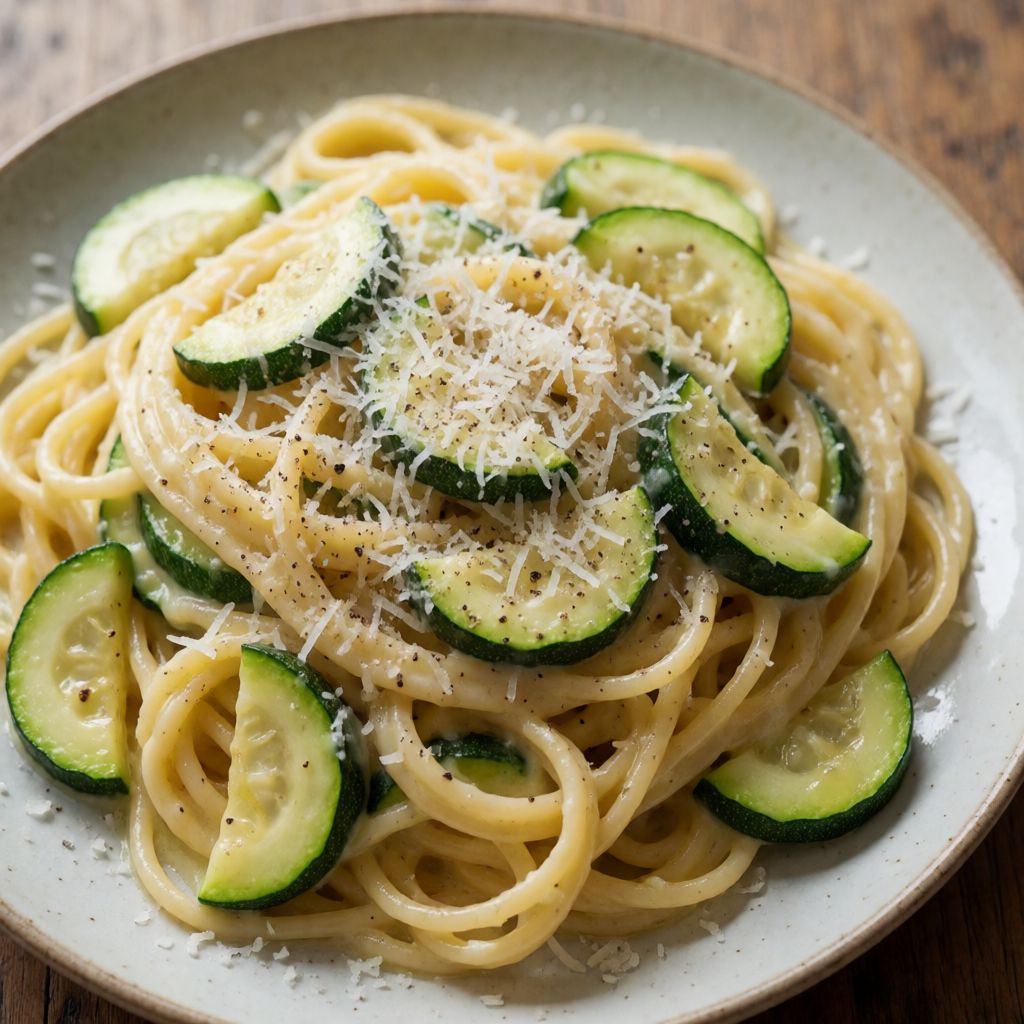
 AI photo
Courgette Carbonara – A Summer Twist on Classic Carbonara
A lighter, summertime take on classic spaghetti carbonara, with courgette standing in for the usual pancetta.
Labels are worked out automatically from the ingredients and can be wrong. Check the packaging if it matters to you.
Ingredients
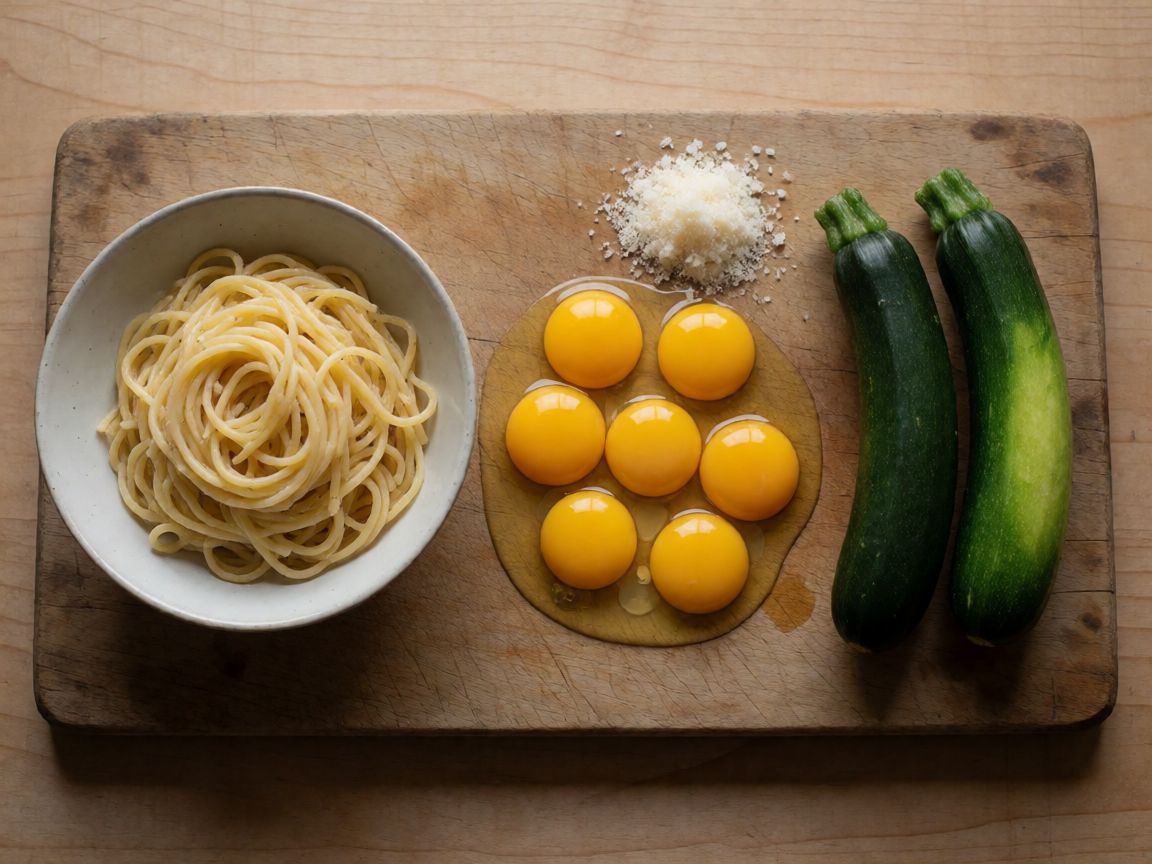
- 400 g Spaghetti or linguine
- 7 pcs Egg yolk
- 100 g Pecorino Romano
- 2 pcs Courgette
- Olive oil to taste
- Salt to taste
- Black pepper to taste







Steps
Bring a large pot of lightly salted water to the boil.
Separate the egg whites from the yolks and put the yolks in a bowl. Add the pecorino and mix thoroughly.
Heat the olive oil in a frying pan and fry the peeled, diced courgette over high heat.
10 minSeason with salt and black pepper and set aside.
Cook the spaghetti or linguine.
Thin the egg yolk mixture with a little of the pasta cooking water, stirring until smooth.
Drain the pasta al dente, add it to the courgette and cook for a further 1-2 minutes.
2 minRemove from the heat, add the egg yolk and pecorino mixture, stir and serve immediately.
This is carbonara with the pork taken out and the water put in its place as the thing you have to fight. Classic carbonara gets its silk from rendered guanciale fat meeting hot pasta and raw yolk. Here there's no fat rendering out of anything — courgette is nearly all water — so the whole dish stands or falls on two things: driving that water out of the courgette before it meets the sauce, and keeping the yolks just this side of scrambled.
Some say carbonara needs bacon or it isn't carbonara. No — what carbonara needs is heat, starch and fat in the right order, so that raw egg yolk turns into sauce instead of omelette. Swap the pork for courgette, swap the pork fat for olive oil, and the mechanism holds as long as you respect it. The courgette isn't standing in for meat here; it's standing in for the thing that makes the sauce cling.
The pan work decides this. Courgette over high heat isn't about colour for its own sake — it's about getting the water out fast, before the dice go soft and start weeping into the pan. Slow heat here is the real enemy: it steams the courgette from the inside, and you end up with grey, slippery cubes swimming in their own juice, which then dilutes your sauce and stops the yolk mixture from gripping the pasta at all. High heat, short time, until the edges catch a little colour and the cube still has a bit of resistance when you bite it — that's the cue, not a clock.
Spaghetti or linguine — either works because what matters is a strand thin enough for egg and cheese to coat it without pooling. A fat shape like penne would just collect the sauce at the bottom of the bowl instead of carrying it. 400g for four is a normal dry-weight British portion, nothing fancy there.
Egg yolks, seven of them, no whites. Whites coagulate at a lower temperature than yolks and turn rubbery fast — that's the texture people mean when they complain a carbonara "scrambled." Yolks alone give you fat and protein with almost no watery white to seize up, so you get more working room before things go wrong. Seven yolks for four people is a generous ratio precisely because this version has no rendered pork fat backing it up — the richness has to come from somewhere, and here it comes entirely from the egg.
Pecorino Romano is salty and hard because it was made by shepherds a long way from a larder, in a hot country, with no reliable way to keep fresh cheese. Salt and long ageing were the preservation, not a flavour choice first. That saltiness is doing seasoning work in this dish, not just taste — it's part of why you barely need extra salt once it's in. If you haven't got pecorino, look for a hard, aged, salty cheese with very little moisture left in it — a mature Parmesan will do, though it's milder, so taste before you add more salt on top.
Courgette: pick ones that feel heavy and firm for their size — a soft, spongy one has already started losing structure and will collapse faster under heat, giving you less control over the water-driving-off stage. Dice them evenly; uneven pieces mean some catch colour and crisp while others are still raw in the middle, which is the usual cause of a sauce that's part soggy, part scorched.
Olive oil here just needs to carry heat and not fight the pecorino's flavour — any oil with no strong smell of its own will do the job; a neutral vegetable oil is a fine stand-in if that's what's in the cupboard, though you lose a little of the roundness olive oil gives the courgette.
On a domestic hob, forget the idea of a lid holding in steam the way a heavier pot might — a plate over the pan or nothing at all is honest for this dish anyway, because you don't want the courgette steaming, you want it drying out and colouring. And don't tip all the pasta water down the sink out of habit: that starchy cupful is what lets the yolk mixture loosen into a sauce instead of clumping — treat it as an ingredient, because that's what it is.