
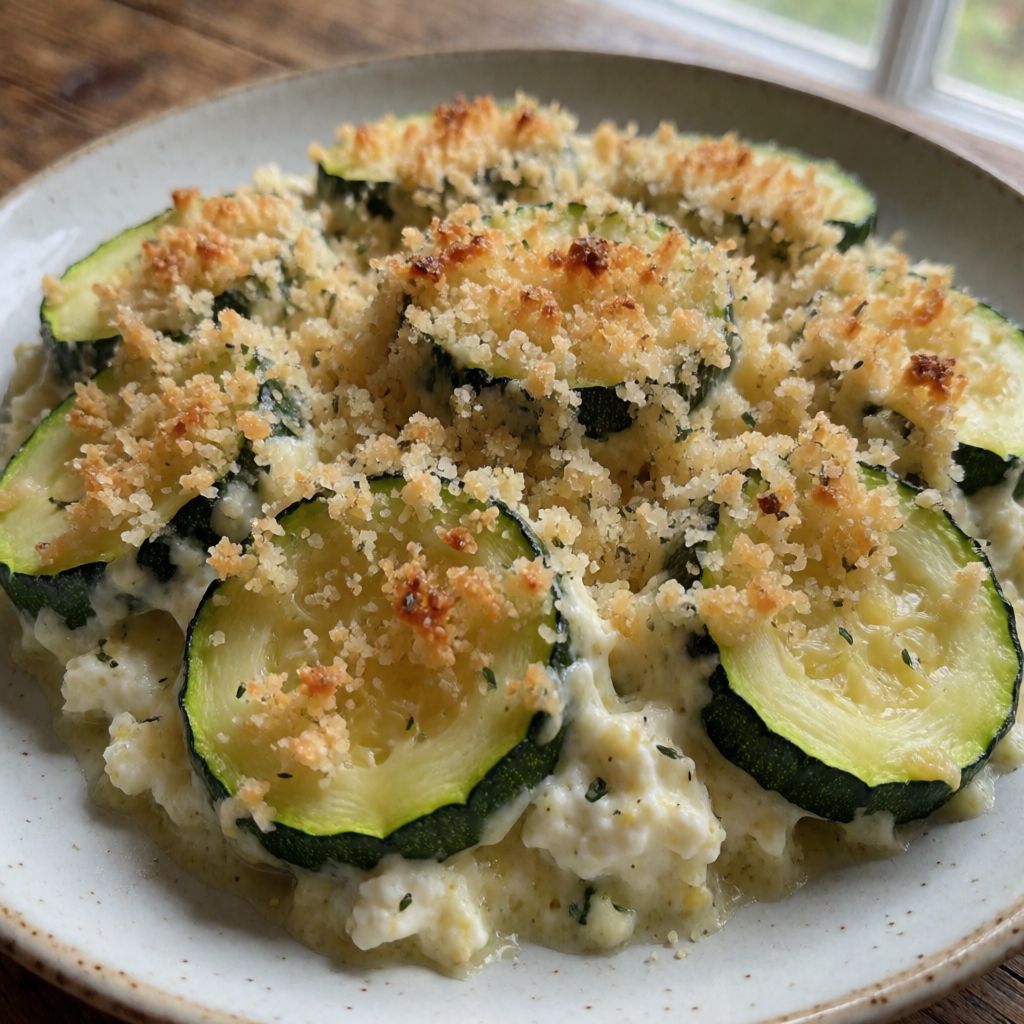
 AI photo
Courgette Casserole
A simple baked courgette casserole with ricotta and Parmesan, finished with a crisp breadcrumb topping.
Labels are worked out automatically from the ingredients and can be wrong. Check the packaging if it matters to you.
Ingredients
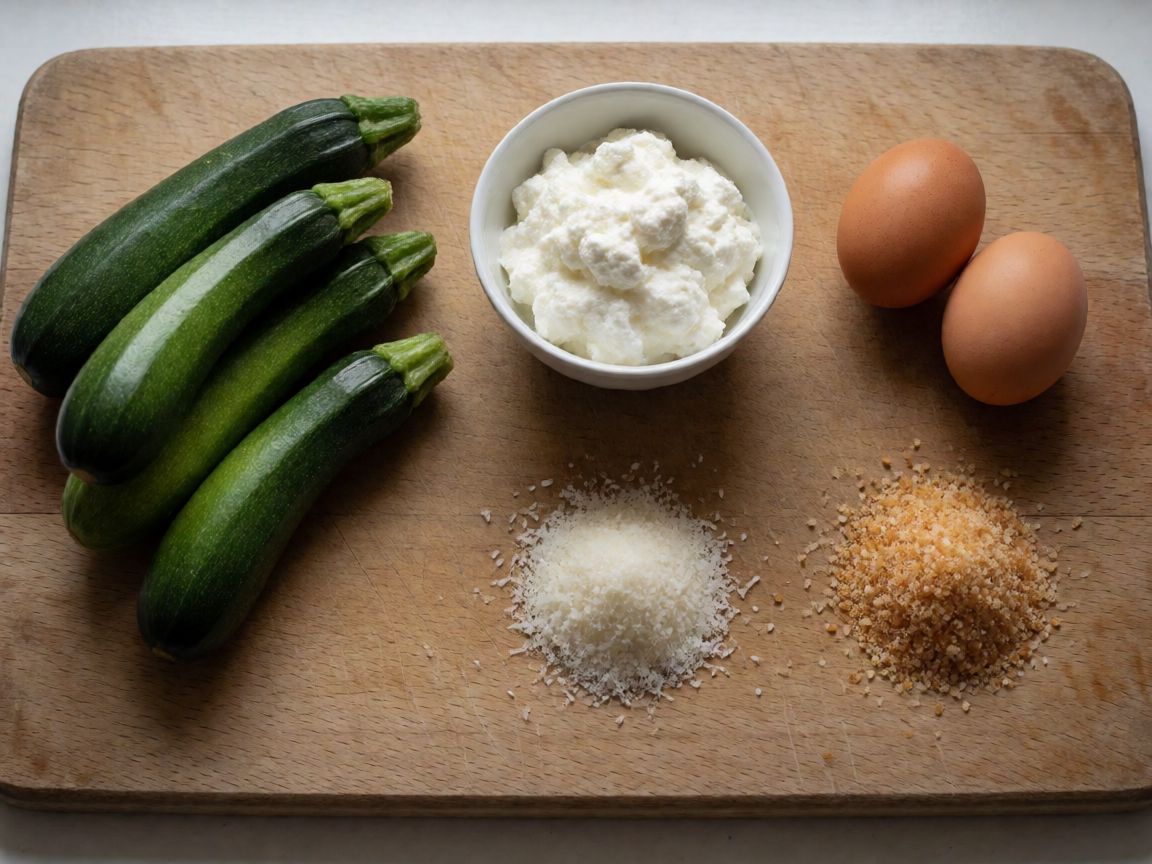
- 800 g Courgette
- 250 g Ricotta
- 2 pcs Eggs
- 100 g Parmesan
- 100 g Breadcrumbs
- Salt to taste
- Black pepper to taste
- Olive oil to taste







Steps
Wash the courgettes, trim the ends and grate them using the coarse side of a grater.
Heat a little olive oil in a frying pan, add the courgettes and sauté.
5 minRemove from the heat and set aside.
In a separate bowl, whisk the ricotta with the eggs.
Add the Parmesan and breadcrumbs, and mix until smooth.
Stir in the courgettes, then season with salt and pepper to taste.
Transfer the mixture to a baking dish and smooth the surface.
Sprinkle breadcrumbs over the top and drizzle with olive oil.
Bake in an oven preheated to 200°C.
27 min
A courgette casserole like this one isn't a gratin and it isn't a quiche with a crust cut off — it's closer to a savoury custard with vegetable running through it. The courgette is the filling, the egg and ricotta are the glue, and the whole thing lives or dies on how much water you've driven out of the courgette before it ever meets the egg.
Courgette is almost all water. Grate 800 g of it and you've essentially grated most of a pint of liquid with a bit of green flesh holding it together. That water has to go somewhere, and if it leaves the courgette after the custard has already set in the oven, it pools at the bottom of your dish and you end up with something that slides off the spoon instead of holding a cut edge. So the frying-pan step before mixing isn't really there for flavour — it's there to boil that water off fast, on your own hob, while you can still see it happening, rather than letting it seep out slowly inside a sealed oven dish.
Some say you have to salt grated courgette and leave it in a colander or wrung in a tea towel for half an hour, the way you'd prep it for fritters. No — not wrong, just one of two ways to the same end. Salting pulls water out by osmosis, over time; frying does the same job with heat, in a few minutes, and you keep more of the courgette's own sweetness instead of draining it away with the salted liquid. Patience or heat — pick one, but don't skip both and tip wet raw courgette straight into the egg, or you're baking a casserole and a courgette soup at the same time in the same dish.
Ricotta's job in this mixture is texture, not structure — it's a soft, barely-held curd with no backbone of its own, and left alone it would never set into anything you could cut a square out of. The eggs are what give it backbone: egg protein starts linking and firming as it heats, and that's the actual mechanism turning a bowl of grated courgette and soft cheese into slices rather than a spoonable mush. If you've no ricotta, look for the same thing under another name — a soft, mild, barely-sour fresh curd. Well-drained cottage cheese works, or quark pushed through a sieve so it isn't carrying extra whey. The test is "soft curd, quiet flavour", not the label on the tub.
Parmesan and the breadcrumbs mixed into the filling are quiet damage control, not seasoning for its own sake. The crumbs act like a sponge baked right into the structure, soaking up whatever moisture the fried courgette and the ricotta still hold, so it doesn't collect as a puddle at the base once the dish is cut. Parmesan brings salt and a savoury backbone, and being dry and granular it helps the mixture firm up rather than stay loose and custardy. Without it, reach for any hard, aged, salty cheese that grates to a fine powder — Grana Padano is the obvious stand-in; mature Cheddar, which most UK kitchens have anyway, will do at a push, though it melts oilier and milder, so taste before you add the full amount of salt the recipe expects from Parmesan.
The crumbs on top and the oil drizzled over them do a different job from the ones folded in — that's your crust. A plain oven surface browns a moist top slowly and unevenly; a thin film of oil conducts heat into the crumb faster than hot air alone, so the surface colours and crisps while the custard underneath is still setting, not drying out. Leave the oil off and you get a pale, slightly leathery top instead of a short, golden one — same oven, same time, worse result, because the mechanism that makes the colour was missing.
On the courgette itself: choose firm ones with tight skin, medium-sized, not the enormous marrows that show up free from an allotment with seeds the size of broad beans. The bigger they get, the worse the ratio of water to actual flesh, and no amount of frying rescues that balance — you'll just be evaporating for longer and still landing with a wetter mix.
200°C is the point where surface moisture on top flashes off and browns before the custard underneath has had time to overcook and start weeping — that's the whole balance of this bake. Home ovens, especially ones that have spent the morning doing a Sunday roast and are still finding their feet, often run cooler or hotter than the dial claims, so trust the top of the dish over the number: deep gold at the edges and across the centre, not pale, not scorched at the corners where a baking dish tends to get hottest first.
And once it's out, give it the ten minutes everybody skips. The custard is still finishing its set from residual heat even after the oven's off; cut it straight away and it collapses into something that looks like a mistake, when really it just needed patience, the same as the dish needed patience earlier when you were frying the water out rather than rushing the pan. It sits quite happily on a table already busy with a roast, going from too-hot-to-touch to properly sliceable while you deal with everything else.