
 AI photo
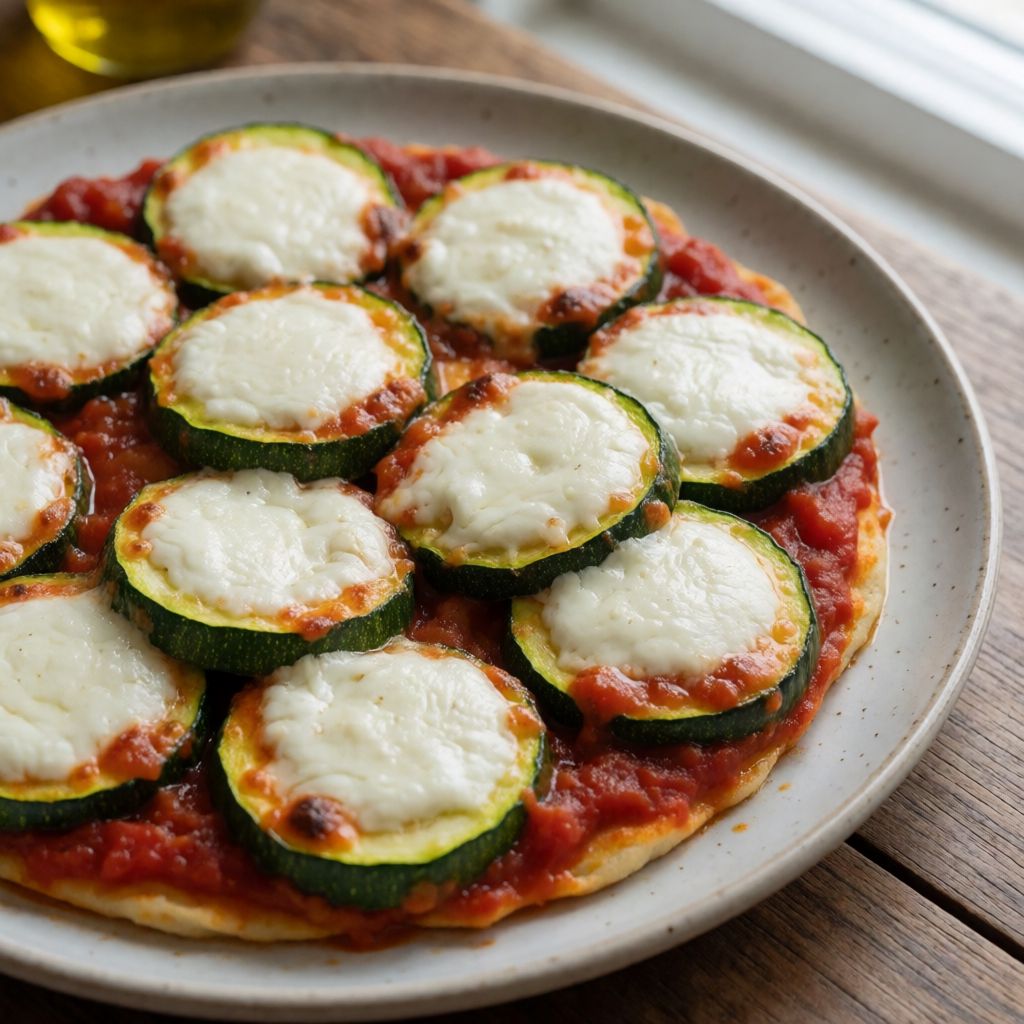
Mini Courgette Pizzas
Mini courgette pizzas topped with tomato sauce and melted cheese, a quick antipasto for sharing.
Labels are worked out automatically from the ingredients and can be wrong. Check the packaging if it matters to you.
Ingredients
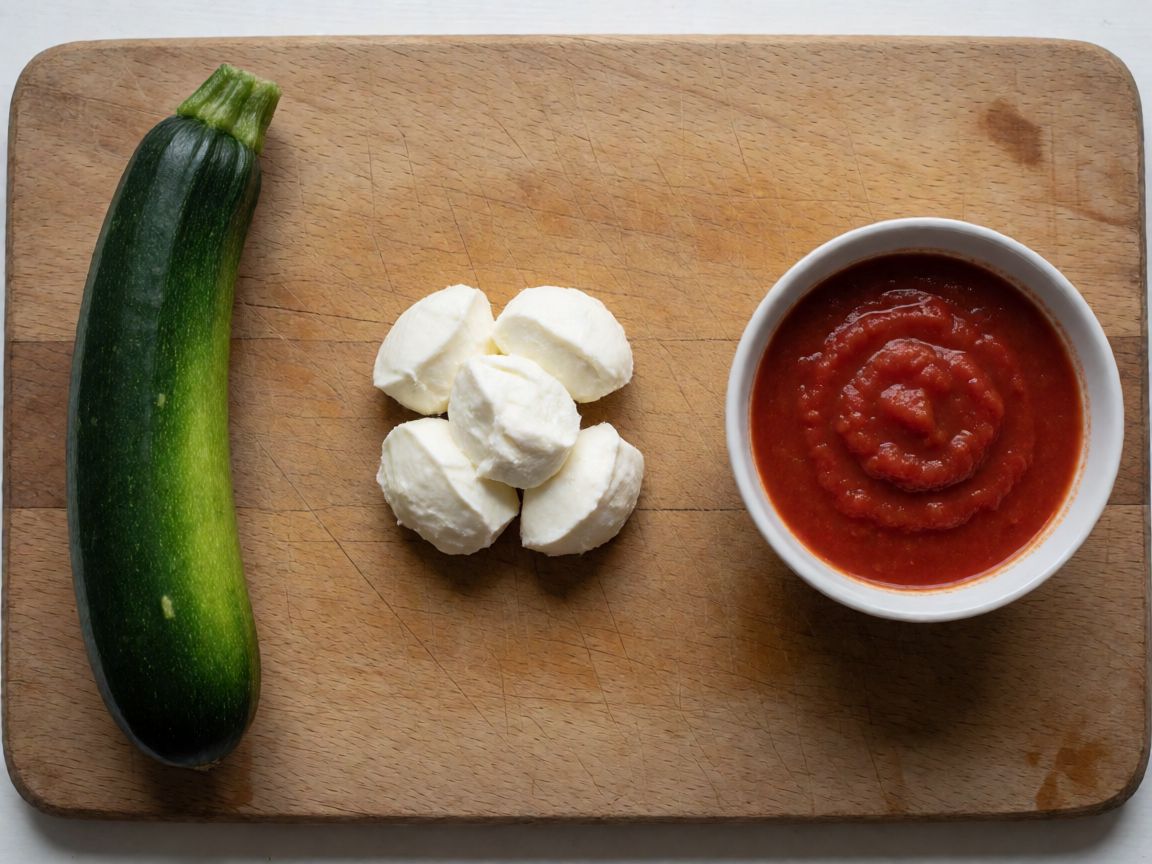
- 1 pcs Courgette
- Cheese, sliced or mozzarella, to taste
- Tomato sauce to taste
- Salt to taste
- Olive oil to taste




Steps
Slice the courgette into rounds at least 1 cm thick.
Heat a little olive oil in a frying pan and fry the courgette slices on both sides until soft, seasoning lightly with salt.
Arrange the cooked slices on a baking tray lined with parchment paper, then top with tomato sauce and slices of cheese.
Bake at 180°C until the cheese has melted.
Serve immediately.
This isn't really pizza — it's a workaround for pizza. Someone looked at a courgette, saw a round slice, and thought: that's a base. No dough, no proving, no yeast economics. The whole dish stands or falls on one thing: does the courgette stay a disc you can pick up, or does it collapse into a wet green puddle under the cheese. That's decided before the oven ever comes into it.
Courgette is mostly water held in a loose cellular sponge. Heat it and the water comes out — that's not a flaw, that's physics, the same reason a courgette "sweats" in a bag in the fridge. The frying step isn't there to cook the vegetable through, it's there to drive that water off the surface and let a bit of browning seal what's left. Skip it, put raw rounds straight under cheese and into the oven, and you get exactly what you'd expect: a tray of cheese swimming in courgette juice, slices that fall apart when you lift them.
Some people, remembering moussaka or ratatouille, will tell you to salt the slices first and leave them to weep for twenty minutes before you do anything else. No — not here. That trick exists because aubergine holds its water stubbornly and needs persuading. Courgette gives its water up readily to direct heat; the frying pan does in a few minutes what salting-and-draining does slowly and with an extra sink full of paper towels. One mechanism, one step, no need to double it.
Pick the courgette by weight and firmness, not size. A courgette that's gone soft at the stem end or feels light for its size has started turning its flesh into watery pith — fine for soup, wrong here, because you need the slice to hold a shape under a layer of sauce and cheese. A firm, medium one gives you a round with tight flesh right out to the skin.
The thickness in the recipe — at least a centimetre — isn't a random number, it's a structural minimum. Thinner than that and the slice has nothing left once the water cooks out of it; it goes from disc to rag. Think of it the way you'd think of a pizza base needing some body to carry toppings without going limp — courgette has no gluten network to give it strength, so the only strength it has is however much flesh you leave it with before you start.
Cheese: "sliced, or mozzarella, to taste" sounds vague but there's a real criterion hiding in it — you want something that melts by stretching and slumping, not by splitting into oil and rubber. Mozzarella does this reliably because it's a fresh, high-moisture cheese; that moisture is exactly what keeps it from turning greasy under heat. A semi-firm melting cheese like a mild cheddar works too, but watch it — past its melting point it keeps cooking, the fat separates out, and you get a slick rather than a pull. Full-fat, low-maturity cheeses behave better here than anything sharp and aged, which tends to break.
Tomato sauce needs to be thick, not saucy-thin. You've just spent the frying step driving water out of the courgette — a watery passata straight from a jar puts it right back. A reduced tinned tomato, or even a good thick ketchup if that's what's in the cupboard, does the job; what matters is body, not brand.
For the frying oil, the rule is simpler than people make it: anything that can sit in a hot pan without smoking and burning before the courgette softens. Olive oil is the obvious choice and gives a flavour that actually belongs with tomato and cheese, but a flavourless vegetable or sunflower oil works fine too if that's what you reach for — you're not relying on the oil to carry taste, the tomato and cheese do that.
One practical warning for a domestic hob: don't crowd the pan. A pan packed edge to edge with courgette slices traps the steam they're giving off, and trapped steam means the slices stew instead of sear — the opposite of what the frying step is for. Do it in batches even if it takes longer; this is a dish with patience built into the method, not around it. And once it's out of the oven, eat it straight away — the moment it cools, whatever water is still inside the courgette starts finding its way back out onto the plate, and the structure you worked for in the pan starts to go soft again.