
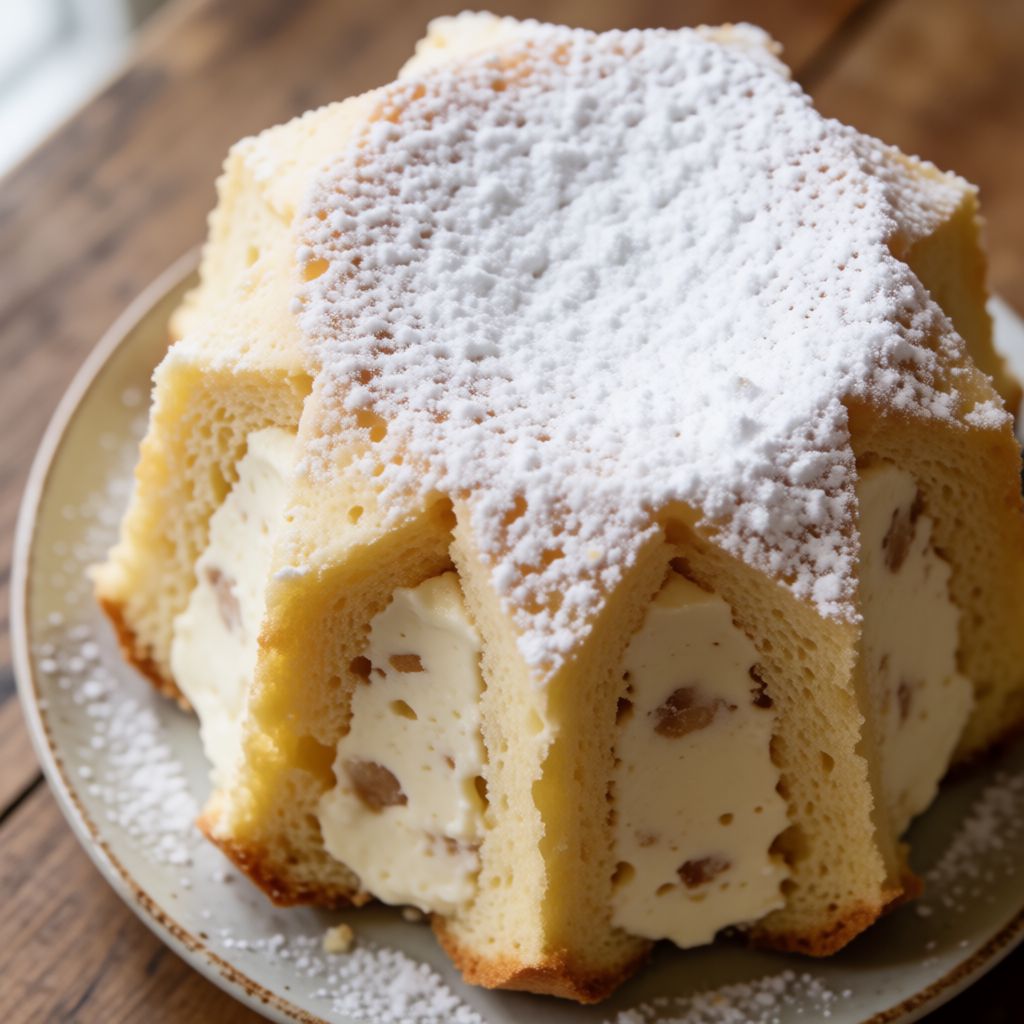
 AI photo
Pandoro and Nougat Cream Zuccotto
A rich Italian-style dessert of pandoro soaked in milk, layered with a creamy nougat filling and chilled until set.
Labels are worked out automatically from the ingredients and can be wrong. Check the packaging if it matters to you.
Ingredients
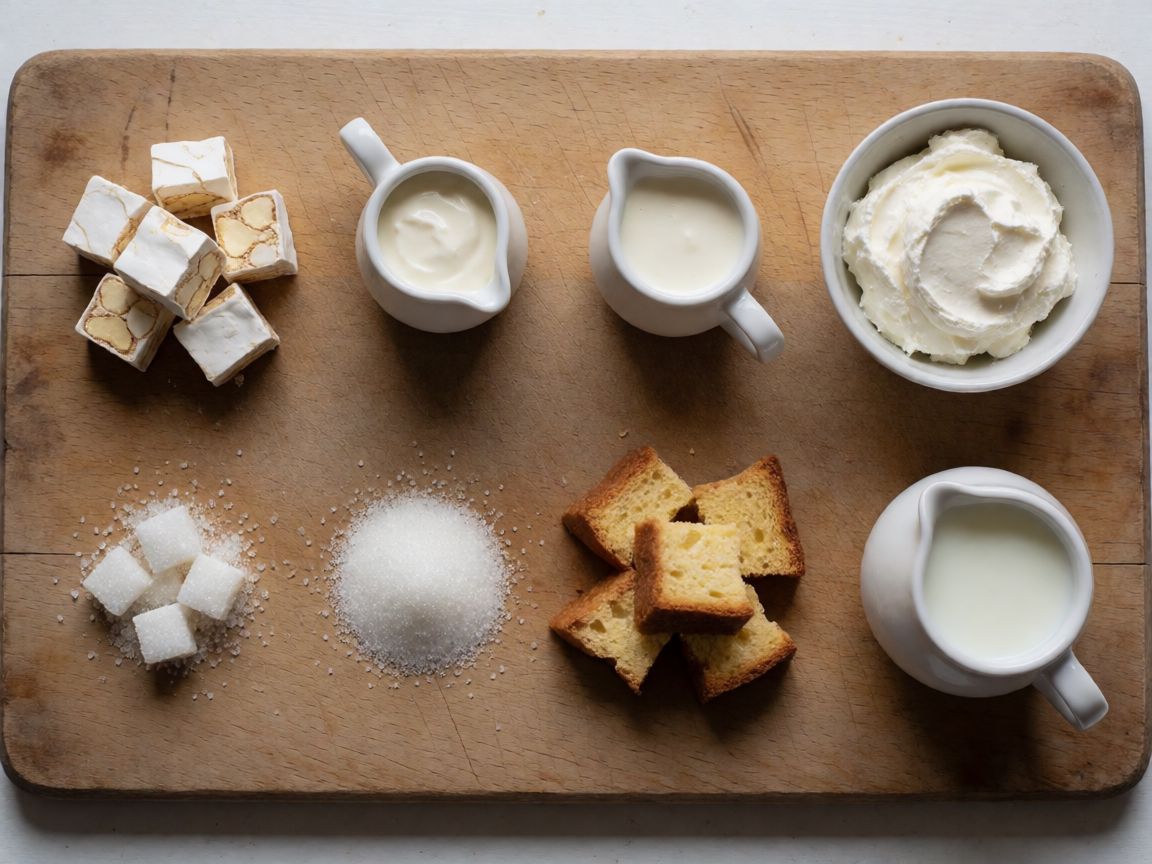
- 250 g Nougat
- 200 ml Double cream
- 600 ml Double cream
- 150 g Cream cheese
- 60 g Caster sugar
- 400 g Pandoro
- Milk for soaking






Steps
Chop the nougat with a knife, put it in a pan with 200 ml of double cream and melt over low heat, stirring occasionally.
Add the cream cheese and mix until smooth. Leave the mixture to cool.
Whip 600 ml of double cream with the caster sugar until thick and fluffy.
Fold the cooled nougat cream into the whipped cream and mix gently.
Line a 20 cm zuccotto mould with cling film.
Cut the pandoro into slices about 1 cm thick, dip them in milk and line the base and sides of the mould.
Pour about two-thirds of the cream into the mould and smooth the surface.
Cover the top with a slice of pandoro and brush it with milk.
Place the zuccotto in the freezer.
25 minTake the mould out of the freezer, turn the dessert out onto a plate and lift off the mould.
Cover the whole surface with the remaining cream and serve.
Zuccotto is a shape wearing a disguise. It's a dome, originally bread and liqueur-soaked, invented in Florence to use up stale cake and leftover cream — cooks have always built desserts around what's already drying out in the larder, and pandoro, with its star-shaped slices, happens to be the leftover of choice for the week after Christmas. This version swaps the liqueur for milk and the usual sponge for nougat cream, which means the whole thing lives or dies on temperature control in two very different places: the melting pan and the freezer.
What decides whether it works is the nougat cream not seizing and the whipped cream not collapsing. Nougat is mostly sugar and nuts bound in a way that goes stiff and grainy if you rush it over high heat — melt it low and slow, stirring, until it loosens into something pourable, not caramelised. Some say nougat "doesn't melt properly," but that's usually someone who had the hob too hot and watched it scorch at the edges instead of softening evenly. Let it cool properly before folding it into the whipped cream — fold hot cream into whipped cream and you don't get zuccotto, you get a bowl of cream cheese soup with nougat lumps in it, because the fat separates and the air you beat in collapses.
Nougat here is doing the job sponge normally does in a zuccotto — giving the filling body and a flavour anchor — but it also brings its own problem: it's dense and sticky, which is exactly why you chop it small before it goes anywhere near heat. Big chunks melt unevenly, soft outside, hard core, and you end up stirring forever to break up lumps that have already started to caramelise on the pan's surface. Any nougat with almonds or hazelnuts works; the soft, chewy torrone-style bars melt more willingly than the very hard brittle kind, which can refuse to loosen at all and just toast instead.
Double cream, split across two uses, does two different jobs and that's worth noticing. The 200 ml goes in warm to carry and loosen the nougat — it needs the fat content of double cream (at least 48% in the UK) to stay stable near heat without curdling, so don't reach for single cream or anything labelled "whipping" as a substitute here; it hasn't got the fat to survive the pan. The 600 ml is whipped cold and provides the air and lightness that makes the whole thing a mousse rather than a block of fudge — whip it to soft-to-medium peaks, because cream that's gone stiff and grainy before you fold anything in will only get stiffer, and you'll end up with a dessert that cuts like cheese rather than a dome that yields to a spoon.
Cream cheese is the stabiliser, not a flavour statement — it's there to give the nougat-cream base enough body that it doesn't just dissolve back into the whipped cream when folded. Any full-fat cream cheese works; low-fat versions carry too much water and will thin the mixture, risking a filling that weeps once it's unmoulded. Caster sugar rather than granulated is the right call purely for how it dissolves — fine crystals disappear into whipping cream without the grainy bite granulated sugar leaves behind, since there's no cooking step here to melt it properly.
Pandoro itself is a star-shaped, egg-rich sweet bread from Verona, traditionally the less-fussy cousin of panettone — no candied fruit, so it won't fight the nougat's flavour. If you can't get hold of pandoro (it's a Christmas-season supermarket item in the UK, easy to find in December, harder in June), a plain brioche loaf or madeira cake, sliced about a centimetre thick, gives you the same dry, absorbent crumb that needs a milk dip to soften rather than something already moist like a Victoria sponge, which would just go soggy and collapse the mould's walls.
The milk for soaking is doing a precise, narrow job: hydrating the pandoro's crumb just enough to make it pliable without breaking it down. Full-fat milk gives a richer result, but any milk you have in for your tea will do the job — it's wetting the bread, not flavouring it, so don't overthink this one. Patience is the real ingredient missing from the written steps: don't rush the nougat off the heat, don't rush the fold, and don't skip giving the whole thing time in the cold before you try to turn it out, or you'll be chasing a collapsed dome around a plate with a spatula.