
 AI photo
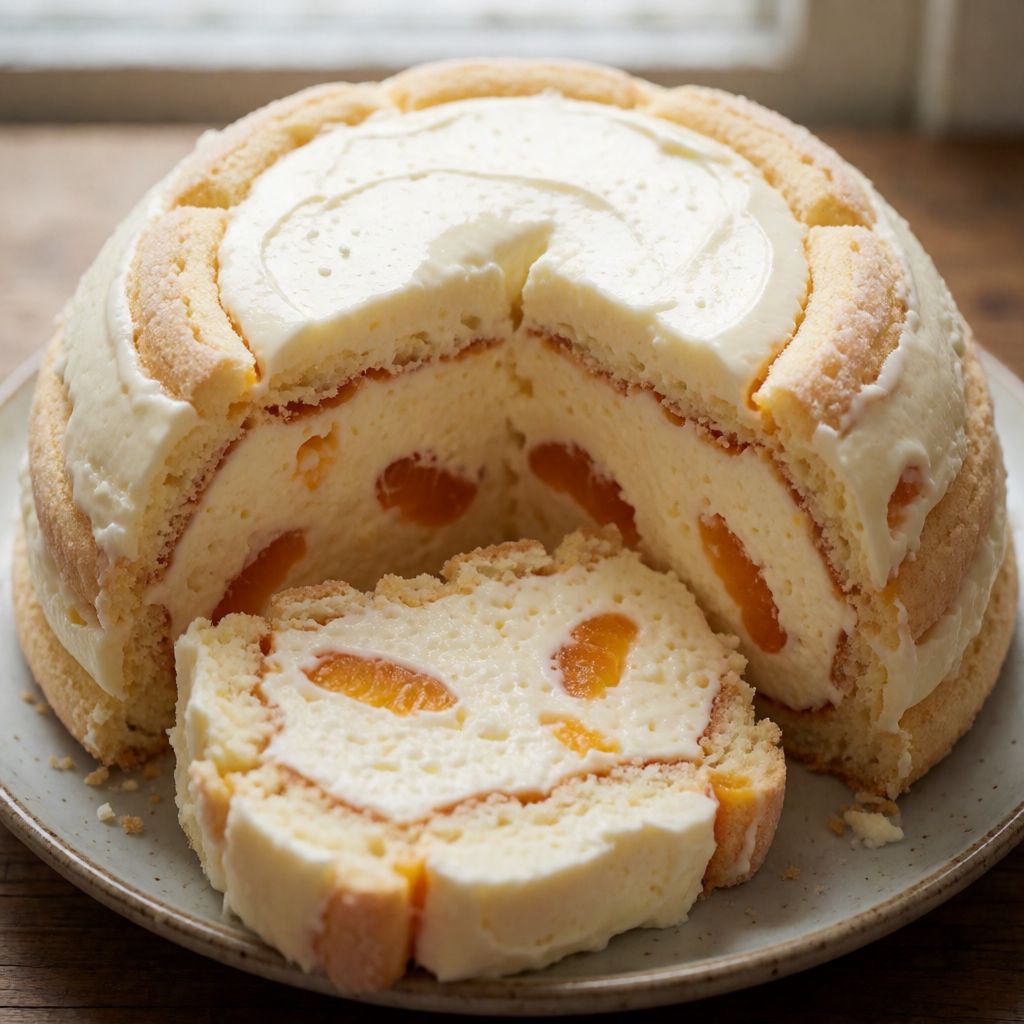
Zuccotto with Apricots
A chilled Italian-style dome dessert of soaked sponge biscuits filled with a mascarpone and apricot cream.
Labels are worked out automatically from the ingredients and can be wrong. Check the packaging if it matters to you.
Ingredients
- 200 g Savoiardi sponge finger biscuits cocoa-flavoured, if available
- 100 ml Milk
- 250 g Mascarpone
- 80 g Cream cheese
- 100 ml Double cream fresh or whipping, unsweetened
- 60 g Icing sugar
- 4-5 pcs Apricots







Steps
Line a zuccotto mould with cling film, leaving a few centimetres hanging over the edges.
Quickly dip the savoiardi sponge finger biscuits in the milk and use them to line the base of the mould.
In a separate bowl, mix the mascarpone with the cream cheese and icing sugar.
Gently fold in the whipped double cream and the apricots, cut into small pieces.
Transfer the cream to a piping bag and pipe the first layer of cream.
Continue alternating layers of soaked biscuits and cream.
Finish with a layer of biscuits.
Fold the edges of the film inward and chill in the refrigerator for at least 4 hours.
240 min
What was changed
Savoiardi sponge finger biscuits were used instead because they are easier to find in British shops.
Zuccotto is a dome you build, not bake — a Florentine idea from the days before ovens were reliable enough to trust with cream. The name comes from zucca, pumpkin, because of the shape; some say it's named after a cardinal's skullcap, which tells you the same thing twice: round, unbroken, closed on top. Either way, it's not baking that gives it shape. It's a bowl, and then the fridge.
What decides whether it works is the balance between two textures that want to fight each other: a dry biscuit and a wet cream. The biscuit has to take on just enough milk to go soft without losing its backbone — because the backbone is what holds the dome up once you turn it out. Too long in the milk and the savoiardi collapses into paste, and your dome becomes a puddle with biscuit memories. Too short, and you get a dry crust that cracks when sliced instead of giving way cleanly. The dip is quick for a reason — a second or two, not a swim.
The cream, meanwhile, has to set without ever going near heat. No eggs, no gelatine, no stove. It sets because of fat: whipped cream for body and air, mascarpone and cream cheese for structure that holds its own weight once chilled hard. That's the whole trick of this dessert — everything that gives it shape is temperature, not cooking. Cold is the only heat source here, if you can call it that.
Savoiardi are chosen because they're dry and rigid — built to survive dunking without falling apart, unlike a soft sponge which would turn to soup in the same milk. If you only have soft sponge fingers or leftover Victoria sponge, it'll still work, but dip it for less time than you think, because it's already halfway to collapse before it touches the milk.
The milk soak is plain here, not a syrup, because the cream carrying mascarpone, cream cheese and sugar is already rich enough on its own — adding sweetened liquid on top would tip the whole thing into cloying. If you want a grown-up version, swap some of the milk for strong coffee or a spoon of amaretto, but that's your choice, not a correction to the recipe.
Mascarpone alone used to be the whole cream in older versions, but it's expensive and quite dense, so cream cheese does some of its job for less money and a touch more tang — a sensible economy, not a shortcut that costs you anything in texture. Choose a full-fat soft cheese with little visible liquid in the tub; a low-fat version holds water instead of structure, and water is exactly what a zuccotto cannot afford, because it never gets the chance to cook off.
The double cream needs whipping to soft peaks before it meets the cheese mixture — folded in as a foam, not poured in as a liquid. Pour it in liquid and you dilute the fat structure that's meant to hold the dome's shape; whip it first and you're folding in air and body at once. Icing sugar dissolves into that mixture without a trace, which is the point — caster sugar would leave a faint grit you'd feel on the tongue, wrong in something this smooth.
Apricots bring acid to cut through all that fat, which is the only thing stopping this dessert from being one long note of richness. Fresh ones, cut small, release a little juice as they sit — that's fine, it seasons the cream rather than drowning it. Out of season, use tinned apricots in juice, drained properly and patted if you're fussy, because any extra liquid here works against the same structure you've just spent all this effort building.
The four hours in the fridge are a minimum, not a target — this isn't a dish you can rush by wishing. The cheese and cream need that time, undisturbed, cold, to firm up enough to hold their own weight the moment you peel back the film. Press the top gently before you unwrap it: if it gives like a ripe peach, give it longer; if it holds a dent and springs back slowly, it's ready. Patience is the only active ingredient in this recipe — everything else just sits there being delicious while you wait.