
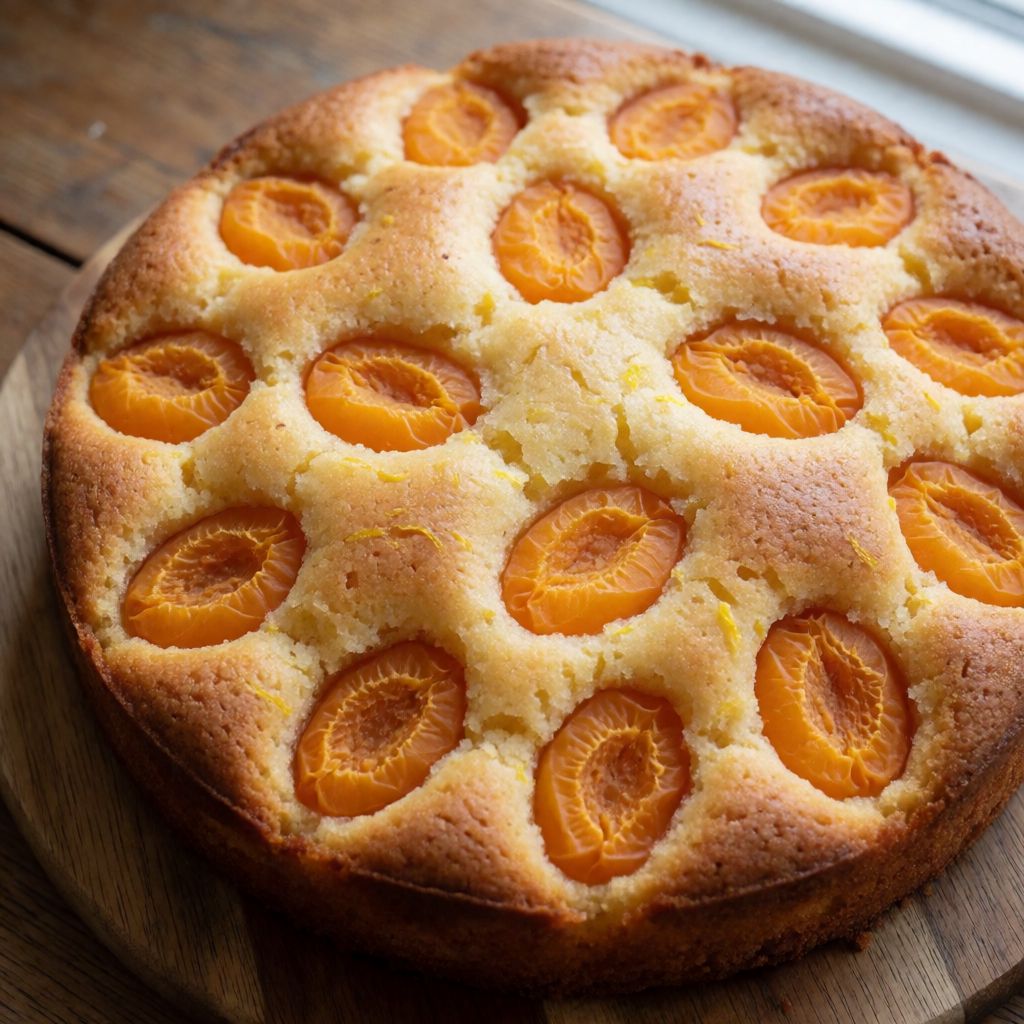
 AI photo
Apricot Cake
A simple apricot cake with a buttery sponge batter, topped with fresh apricots and a dusting of icing sugar.
Labels are worked out automatically from the ingredients and can be wrong. Check the packaging if it matters to you.
Ingredients
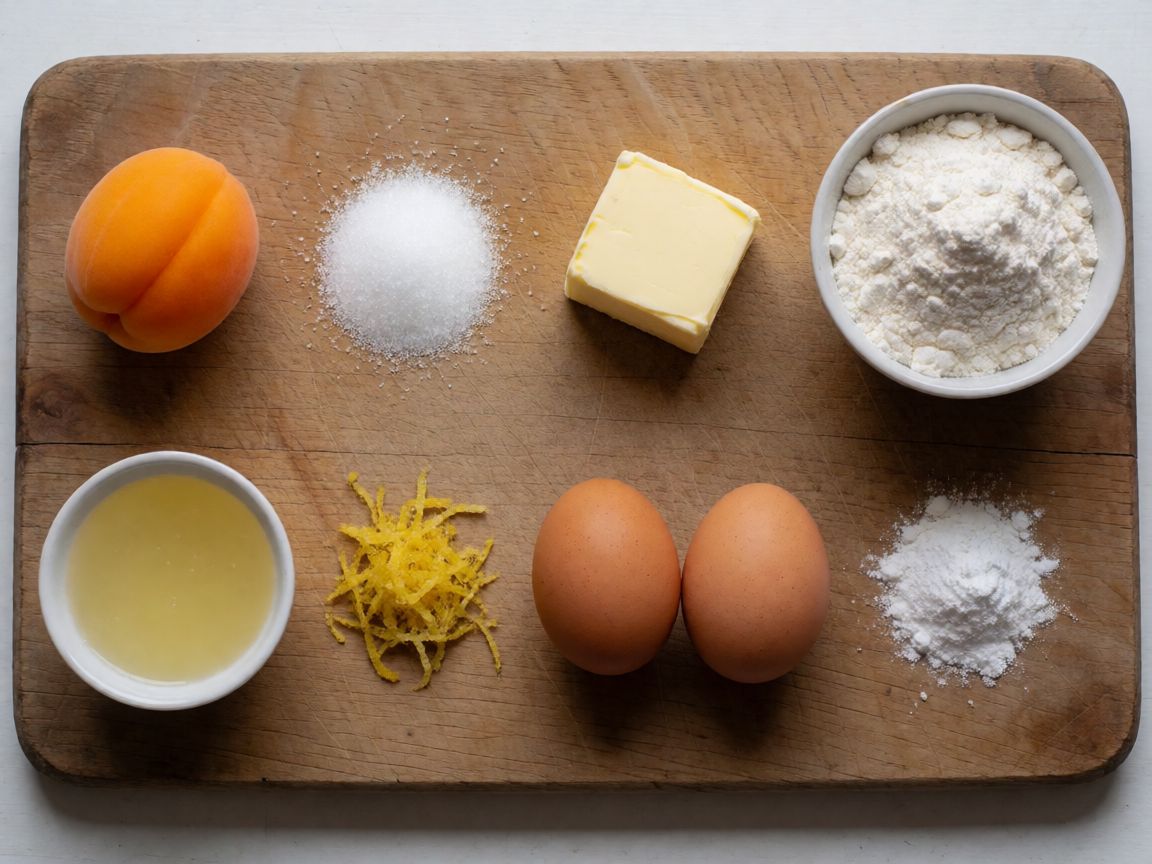
- 600 g Apricots
- 80 g Caster sugar plus more to taste
- 90 g Butter
- 180 g Plain flour
- 2 pcs Eggs
- 1 pcs Lemon zest from one lemon
- 1/2 pcs Lemon juice from half a lemon
- 1/2 pcs Baking powder
- 1 pinch Salt
- Icing sugar to taste










Steps
In a large bowl, combine the eggs and sugar and whisk until smooth.
Add the melted butter, sifted flour and the grated zest of one lemon, continuing to mix the batter.
Pour in the juice of half a lemon, add the baking powder and a pinch of salt, and mix until smooth.
Pour the batter into a 26 cm tin, greased and dusted with flour, and smooth the surface.
Arrange the apricots on top, sprinkle with sugar and bake at 170°C for 35 minutes.
35 minLet the cake cool before removing it from the tin, then decorate with icing sugar.
This is not really a sponge with fruit on top — it's closer kin to a clafoutis that got ambitious with flour. A thin, eggy batter goes into the tin, apricot halves sit on top like sunbathers, and the whole thing bakes until the batter has caught up with the fruit. What decides whether it works is that relationship: can the batter set through before the apricots dump their juice and turn the middle gluey? Get the fruit's ripeness wrong either way and you lose.
Apricots that give a little under your thumb but don't collapse are what you want. Too firm and they stay sour, release almost no juice, and sit on the cake like decoration rather than becoming part of it. Too ripe and they flood the batter underneath before it has set, so you get a crust on top and soup in the middle. A 26 cm tin matters for the same reason — shallow enough that heat reaches the fruit and the centre of the batter at close to the same time. Deeper, and you'd get a ring of cooked edge round a raw middle.
170°C is a figure, not a magic number, but it is doing a job: slow enough that the egg-and-butter batter sets by gentle coagulation rather than crusting hard on the outside while the inside stays wet, and warm enough that the sugar sprinkled on the apricots has time to caramelise into that gold-going-on-ginger edge before the crumb is done. Fan ovens, common in UK kitchens, run hotter than their dial says — treat 170°C and 35 minutes as the floor, not the finish line, and judge by the cake, not the clock.
Eggs whisked with sugar first aren't just "step one" — that whisking dissolves the sugar crystals properly, so you don't get a gritty top later, and it starts a loose foam the egg proteins will later set around, which is most of the lift you get in a cake with no creamed butter behind it. Mix past smooth into vigorous and you knock that foam back out for no gain.
Melted butter instead of creamed is the whole character of this cake: a soft, moist, almost custardy crumb rather than an airy one. If you've no butter with a flavour you want, use any neutral fat that's liquid or meltable — a mild vegetable oil works, but the cake turns more tender and plainer, because butter's flavour was doing quiet work you'll miss. Plain flour, not self-raising, is deliberate too: the lift is controlled separately by the baking powder, so you're not relying on flour's own rising agent plus an added one fighting each other, and you mix only until smooth so the gluten stays loose enough to hold apricots up without turning chewy.
Lemon zest carries its oil into the fat, where flavour actually travels, which is why it goes in with the butter rather than being an afterthought; the juice afterwards is there to cut the apricots' sweetness with a thin edge of sourness, not to do any structural work — there's too little of it, and no acid-sensitive rise to protect, unlike in a proper soufflé. The pinch of salt is the same idea in miniature: without it, a cake this sweet tastes flat, one-note, like it's shouting the same word over and over.
Sugar sprinkled over the apricots, separate from the sugar whisked into the batter, is doing a specific job: it draws juice out of the fruit by osmosis as it bakes, which is exactly how you get that thin syrupy ring around each half instead of dry fruit sitting on dry cake. Apricots are the obvious fruit here because they hold their shape and have enough acid to balance the sugar, but the real criterion is: any stone fruit that softens without disintegrating under heat — halved plums, quartered nectarines, even firm peaches — will do the same job by the same mechanism.
Icing sugar at the end is finishing, not baking — it has no job in the crumb. Dust it only once the cake is properly cool; on a still-warm surface the moisture coming off the cake melts it into a wet, translucent film instead of the dry snow you're after. That's patience doing its one last bit of work after the oven's finished — the cake also needs a full cool before you try to get it out of the tin, or the crumb, loosened by all that apricot juice, will tear rather than lift.
This feeds six as a modest wedge each — it's not a show cake, more the kind of thing that turns up with tea rather than after a Sunday roast, which is really a question of economics as much as taste: a simple batter, one fruit, no icing to speak of, built to use up apricots while they're good rather than to impress.