
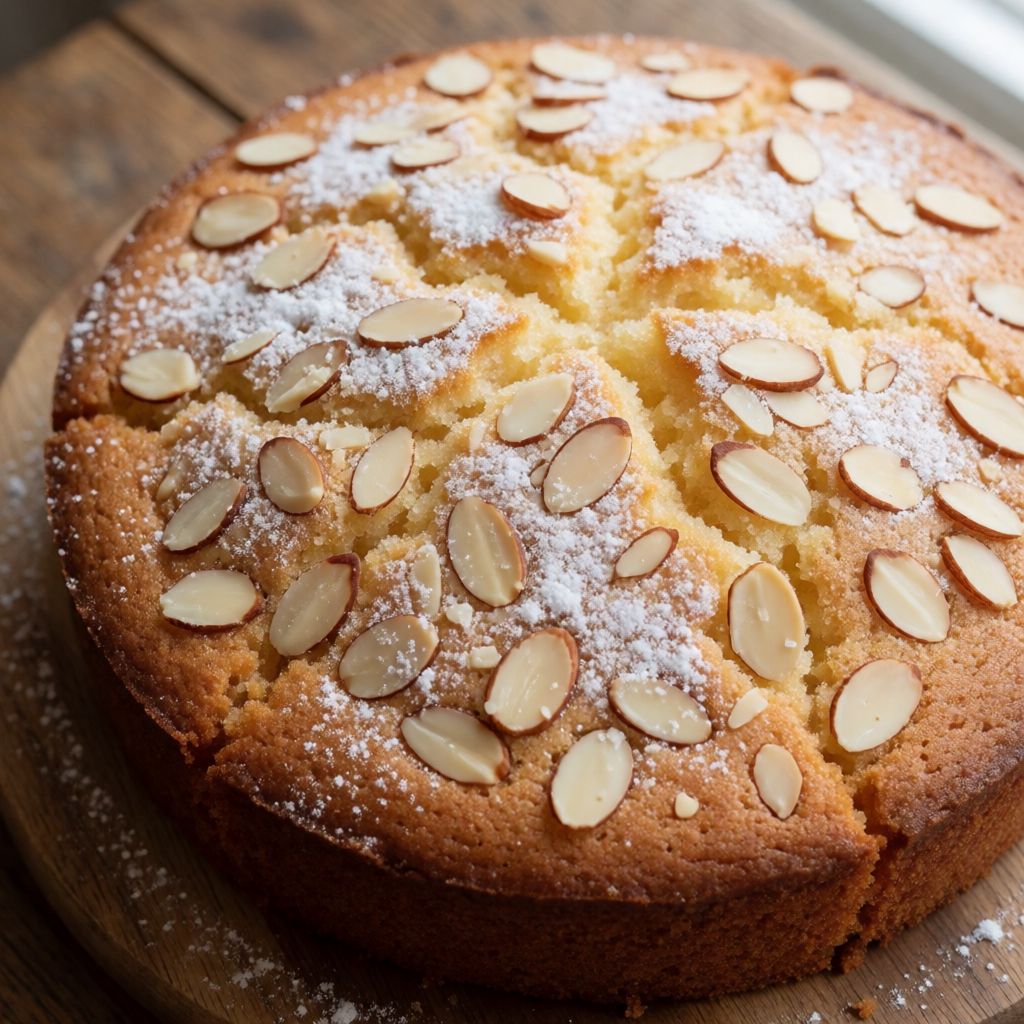
 AI photo
Almond Cake
A light almond cake with lemon zest, lightly dusted with icing sugar and decorated with almonds.
Labels are worked out automatically from the ingredients and can be wrong. Check the packaging if it matters to you.
Ingredients
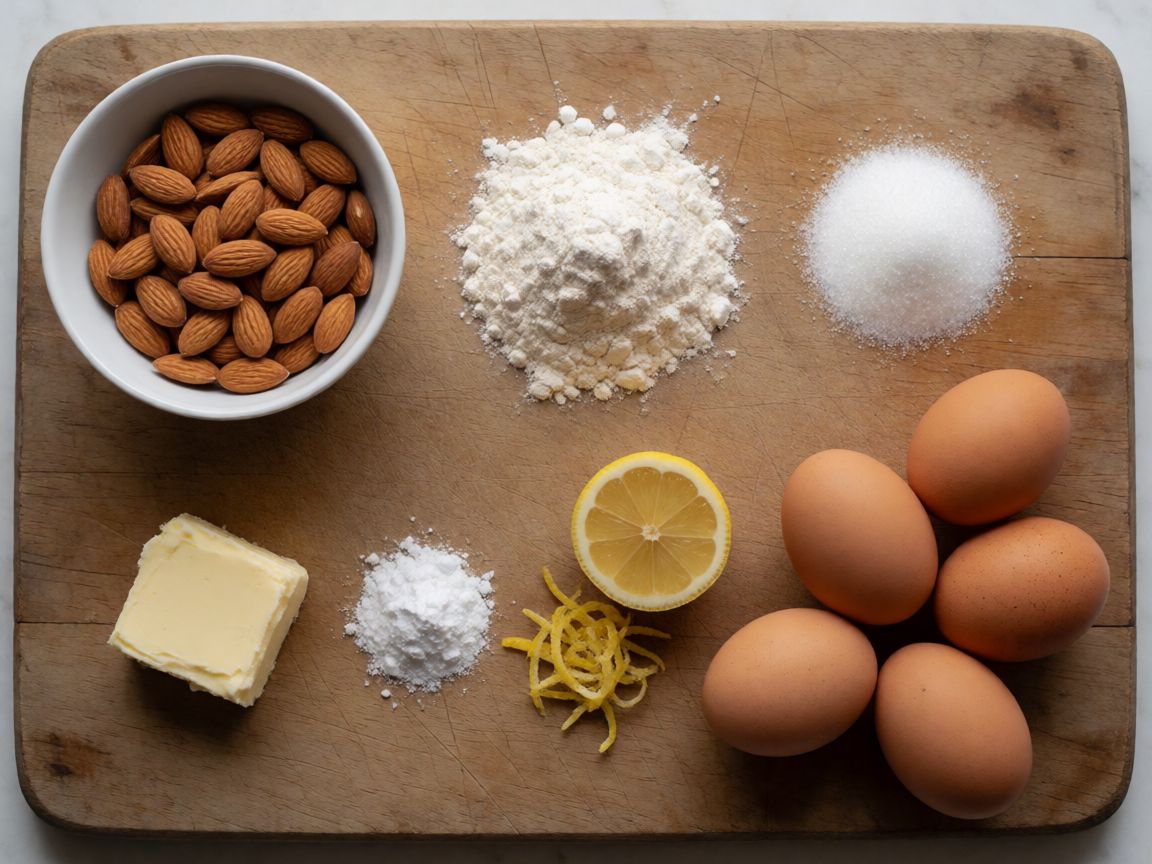
- 300 g Almonds
- 100 g Plain flour
- 180 g Caster sugar
- 70 g Butter
- 5 pcs Eggs
- 1 pcs Lemon zest zest of half a lemon
- 1 pcs Baking powder half a sachet
- Almonds for decoration
- Butter for greasing the tin
- Plain flour for dusting the tin
- Icing sugar








Steps
Grind the almonds in a blender.
In the bowl of a mixer (or a bowl), whisk the egg yolks with the sugar until smooth.
Add the melted butter, sifted flour and baking powder and mix well.
Add the ground almonds to the batter.
Add the lemon zest.
Whisk the egg whites to stiff peaks.
Fold the egg whites into the mixture, stirring gently.
Grease and flour a 24 cm tin and transfer the batter into it.
Sprinkle with icing sugar to boost browning during baking, and decorate with almonds.
Bake in a static oven at 180°C for 45 minutes.
45 minServe at room temperature.
This is an almond cake with almost no flour in it — 300 g of ground almonds against 100 g of flour. That ratio is the whole point. Flour gives a cake structure through gluten, almonds give it structure through fat and protein, and when almonds outweigh flour four to one, you get something denser, moister, and closer to a frangipane tart filling that's learned to stand on its own than to a Victoria sponge. Know that going in, so you don't open the oven expecting a light, airy crumb and panic when you don't get one.
What decides whether it works is the egg whites. You separate five eggs, beat the yolks into the sugar and almonds to build flavour and richness, then whip the whites separately and fold them in last. The whites are the only leavening doing real work here — "half a sachet" of baking powder is a nudge, not an engine. If you knock the air out of those whites while folding, the cake won't rise to meet the tin, it'll sit flat and dense, closer to a biscuit than a cake. Fold like you're trying not to wake it up: cut down, sweep across, turn the bowl. Stop before it looks perfectly smooth.
Some say you should mix everything in one go to save time. No — because the fat and ground almonds in the main batter would collapse whipped egg whites instantly if you tried to whip them together or rushed the fold. Order here isn't tradition for tradition's sake, it's physics: wet, heavy ingredients first, fragile air last.
Almonds: grind them yourself in a blender rather than buying ground almonds if you can, because pre-ground almond meal sitting in a bag loses oil and goes slightly stale-tasting faster than you'd think — almonds are over 50% fat, and that fat oxidises. If you only have ground almonds from a packet, fine, just use them within a few weeks of opening and give them a sniff first; rancid almond flour smells faintly of old paint, and no amount of lemon zest will cover it.
Flour: this is structural glue, not the main event. Plain flour is correct — you don't want the extra protein of a bread flour fighting the almonds for texture. If you need this gluten-free, you can drop the flour and add a bit more ground almond or a spoon of cornflour instead, since there's so little flour here to begin with that the cake's identity doesn't depend on it.
Butter: melted, not creamed, which tells you this isn't a creaming-method cake chasing air through butter and sugar — that job belongs entirely to the egg whites later. Use a butter with no strong cultured tang if you want the almond and lemon to lead; if you only have salted butter, it's not a disaster, just don't add extra salt elsewhere.
Eggs: five of them, separated, doing two different jobs — yolks for richness and binding, whites for lift. Use eggs at room temperature if you remember; cold whites whip up more slowly and less stably, which matters when stability is the one thing holding your rise together.
Lemon zest: half a lemon's worth is there to cut through the richness of all that almond fat, not to make this a lemon cake. Zest only, no juice — juice would add liquid and acidity you haven't accounted for in the structure. Orange zest works as a substitute if you want a warmer note; it's the same mechanism, just a different perfume.
Baking powder: half a sachet is a small amount on purpose, because the egg whites are already lifting the cake. Don't be tempted to add more "just in case" — too much baking powder gives you a coarse, soapy-tasting crumb and a cake that rises fast then sinks as it cools, because the structure (mostly almond, remember, not much gluten) can't hold the extra gas once it's out of the oven.
On your hob and oven: a static (non-fan) setting at 180°C means the heat comes from top and bottom elements with no fan pushing air around, so it's gentler and more even on something this dense — if your oven is fan-only, knock it down by about 20°C to avoid a cake that's dark on the outside before the middle sets, and check it a little before the 45-minute mark with a skewer rather than trusting the clock alone. A 24 cm tin matters more than it sounds like it should: go smaller and the same batter sits deeper, so the outside will be done long before the inside catches up.