
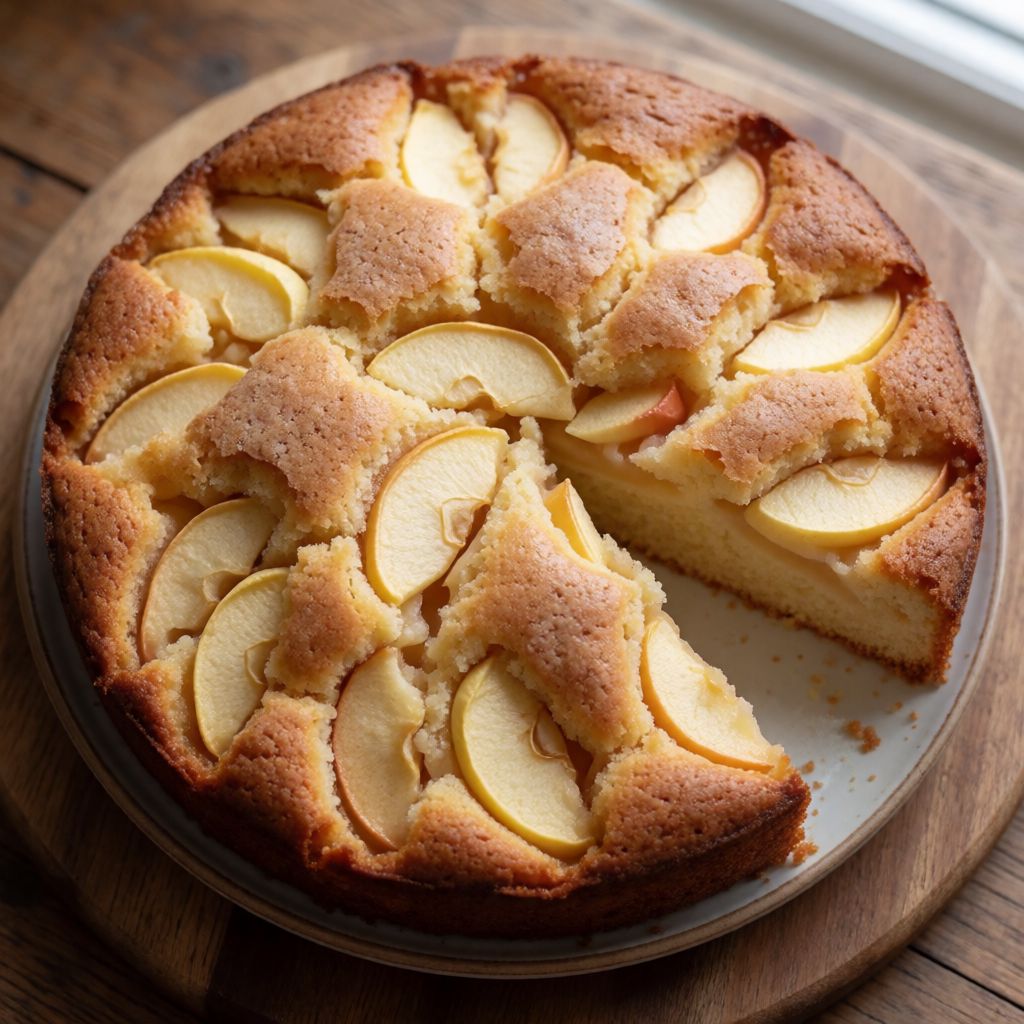
 AI photo
Apple Cake
A moist spiced apple cake made with vegetable oil, perfect for a weekend bake.
Labels are worked out automatically from the ingredients and can be wrong. Check the packaging if it matters to you.
Ingredients
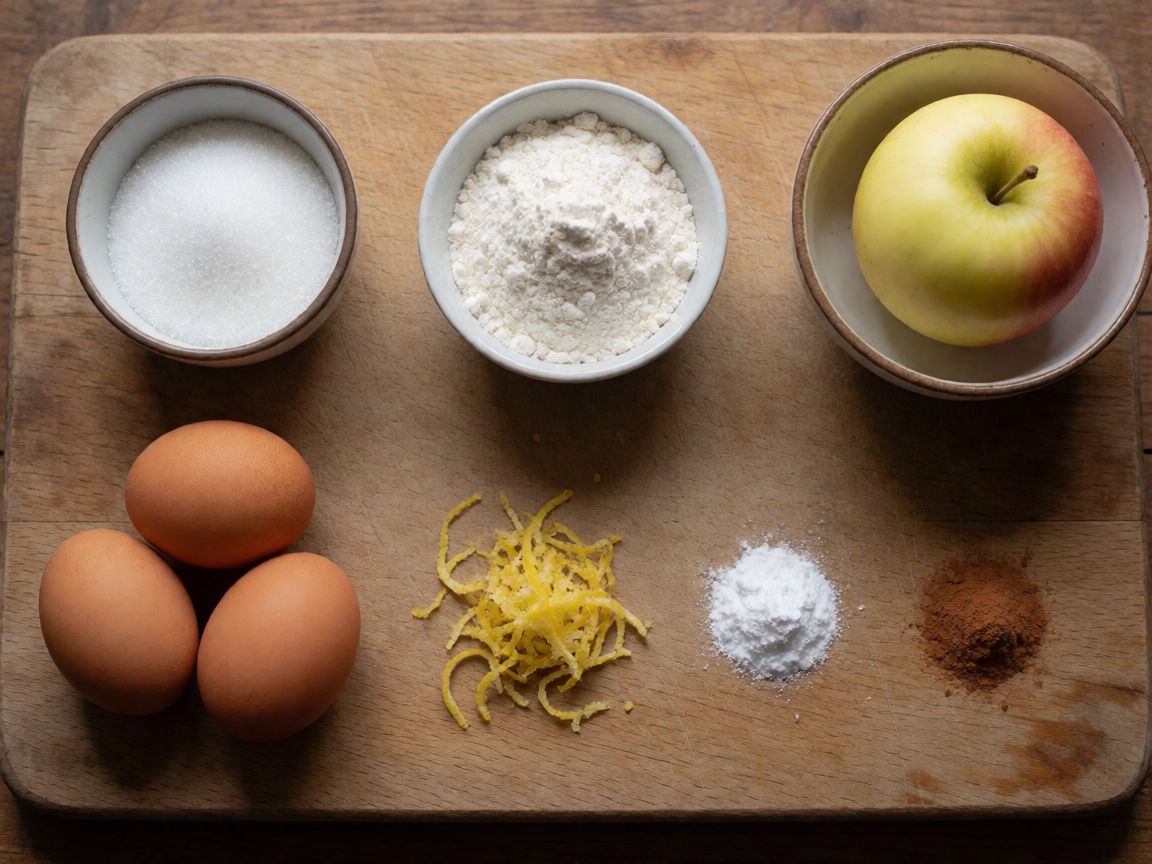
- 3 pcs Eggs
- 150 g Caster sugar
- 130 g Vegetable oil
- 250 g Plain flour
- 15 g Baking powder
- 1 pcs Lemon zest
- 1 tsp Cinnamon
- 500 g Apple








Steps
Crack the eggs into a large bowl, add the sugar and whisk with a hand whisk or mixer until smooth.
Pour in the vegetable oil in a thin stream, whisking continuously.
Sift in the flour in small batches, mixing well each time so the batter stays lump-free.
Stir in the baking powder, lemon zest and a teaspoon of cinnamon.
Peel the apples, cut into cubes and fold into the batter with a spatula or spoon.
Pour the batter into a 24 cm bundt tin, greased with oil and dusted with flour, and smooth the top.
Thinly slice half an apple and arrange the slices in a sunburst pattern on top of the batter.
Bake in a preheated fan oven at 170°C for 45 minutes, or in a conventional oven at 180°C for 45-50 minutes.
45 min
This is a batter cake, not a creamed one — and that single fact explains most of its behaviour. No butter is beaten with sugar to trap air; the only leavening is baking powder, and the only reason the crumb stays soft rather than rubbery is the oil, which coats the flour's gluten strands and keeps them short. So the cake lives or dies on two things: whether the oil actually binds into the eggs instead of floating on top, and whether the apple inside cooks through without turning the bottom third to wet paste.
That's why the oil goes in as a thin stream while you keep whisking. Eggs carry lecithin, a natural emulsifier, and whisking disperses the oil into droplets small enough for the lecithin to coat and hold. Pour it in all at once and the lecithin can't keep up — the oil pools, slides to the surface, and you get greasy streaks baked into the crumb instead of an even, moist cake. This is also why oil was the house choice long before olive oil had a food-writer's halo: it needs no softening, no clock-watching for room temperature, and a cake made with it keeps three or four days under a tea towel without drying out the way a butter sponge does — useful if this is destined for the tin that gets opened every time the kettle goes on.
Eggs and sugar whisked together aren't there to build a foam the way they would in a Genoise — there's no fat being creamed to trap that air structure, so don't expect the batter to triple in volume. What matters is that the sugar actually dissolves into the egg liquid before the oil goes in; undissolved crystals later sit as a gritty seam once baked, because there's nothing left to melt them once the batter sets. Whisk until the mixture looks pale and faintly thickened and you'll feel the sugar stop grinding against the whisk. Use caster sugar for exactly this reason — the smaller crystal dissolves faster in cold egg than granulated does, and you haven't got a double boiler or warm syrup here to help it along.
The oil should be something with no flavour of its own to compete with lemon and cinnamon — a flavourless vegetable or sunflower oil is the usual choice, and it's worth resisting the urge to reach for olive oil unless you like its taste announced in a dessert, because it will be. Flour: plain, sifted in gradually rather than all at once. Sifting isn't really about clumps — a fork can break those up — it's about not needing to beat the batter hard to get rid of them. Overworked flour develops gluten, and gluten is what gives you a tough, bread-like cake instead of a tender one. Add it in stages, stir only until it disappears, and stop.
Baking powder goes in after the flour here, folded through with the zest and cinnamon rather than sifted in with the dry ingredients from the start. Some recipes insist it must always be sifted with the flour — it needn't be, so long as it ends up evenly distributed and meets liquid without delay. Baking powder is double-acting: it fizzes a little the moment it touches batter, then again under oven heat. Every minute the finished batter sits on the counter before baking spends some of that first reaction for nothing, so don't make this ahead and leave it waiting by the oven door.
Lemon zest means the yellow skin only — a fine grater or the small holes of a box grater, working just the surface before you hit the white pith underneath. The pith is bitter, and more zest isn't more lemon flavour if half of what you've grated is pith; it's just bitterness with a lemon smell attached. One lemon's zest is plenty for this amount of batter — you're after a background brightness, not a lemon cake.
For the apple, five hundred grams peeled weight feeding six people tells you this is a light pudding cake, not a dense fruitcake carrying the meal. Choose something that holds its shape under heat — Braeburn, Cox, or a Granny Smith if you want the sharpness to cut through the sugar — and keep well away from a soft cooking apple like Bramley, which is bred specifically to collapse into fluff and will do exactly that here, at the expense of your crumb. Cut the cubes roughly even in size; uneven pieces cook unevenly, and an oversized chunk in the centre can still be raw-firm while the rest of the cake is done.
Greasing the tin with oil and then dusting it with flour isn't belt-and-braces — it's two different jobs. Oil alone fills the fine ridges of a bundt mould but the batter's surface starch still gelatinises directly against bare metal in the low spots and grips there; the flour sits on top of the oil as a dry, brittle layer that the batter bonds to instead, and that layer releases cleanly when you turn the cake out. Skip the flour and you'll lose whole fluted ridges to the tin. And once it's out of the oven, give it the ten minutes in the tin before you try to turn it — the crumb is still soft and the apple pockets are weak points; turned out too hot, the cake breaks exactly where the apple sits. That wait isn't optional extra care. It's the last ingredient, and it's free.