
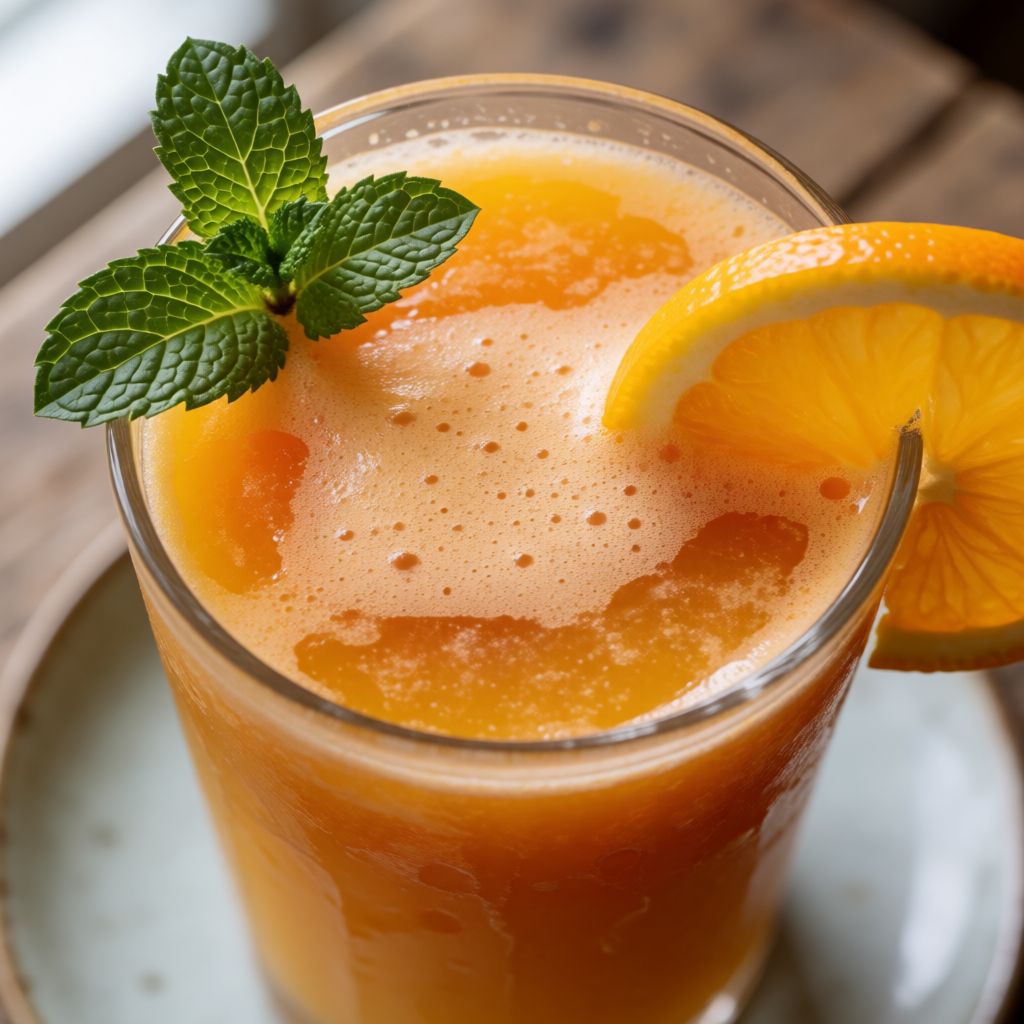
 AI photo
Apple and Carrot Juice
A refreshing homemade juice made from apple and carrot, brightened with orange, lemon and mint.
Labels are worked out automatically from the ingredients and can be wrong. Check the packaging if it matters to you.
Ingredients
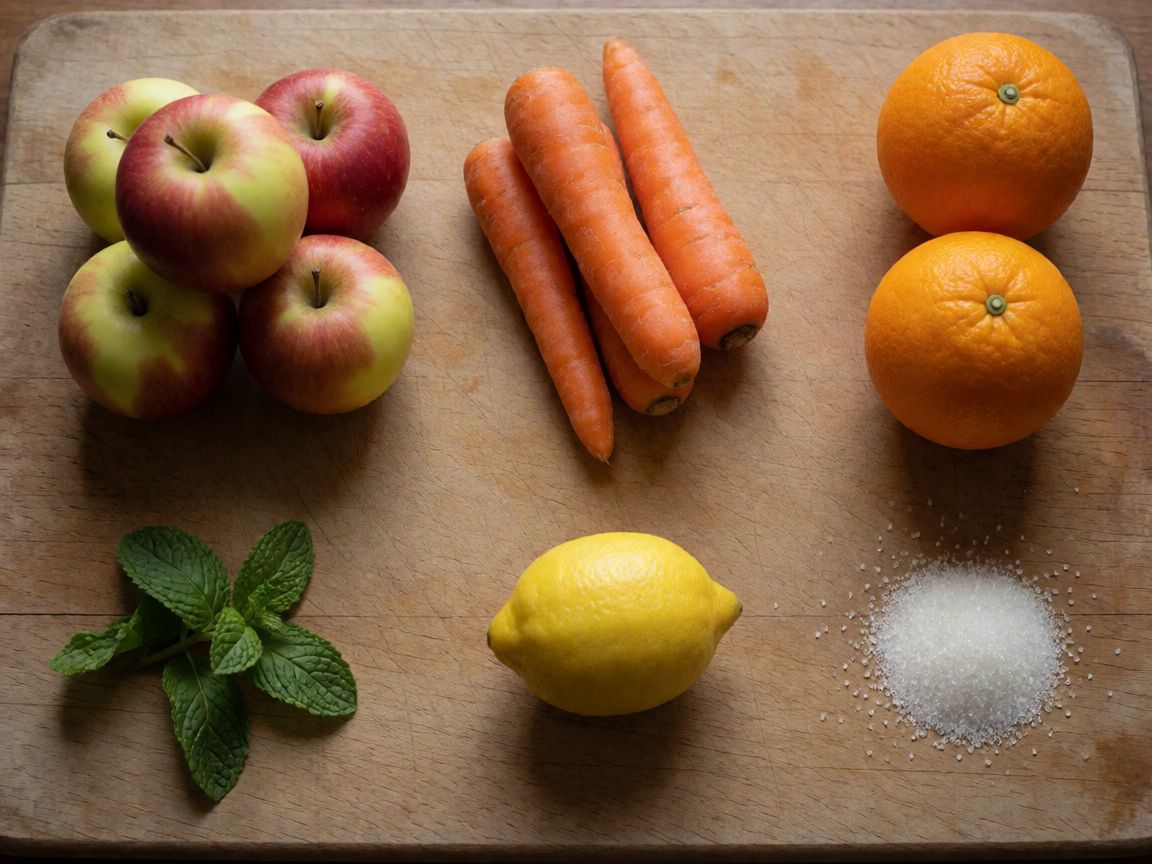






Steps
Squeeze the juice from two oranges and set it aside.
Wash the carrots thoroughly, trim the ends, and set aside a few rounds for garnish.
Wash the apples and dry them well; set half aside for garnish, then cut the rest into large chunks and sprinkle with lemon juice.
Switch on the juicer according to the manufacturer's instructions and first press the carrot juice, pouring it into a jug.
Clean the juicer filter and pass the apple chunks through it along with a few mint leaves.
Combine the fresh apple juice with the carrot juice and orange juice and mix well.
Take four tall glasses, lightly dampen their rims and dip them in sugar.
Pour the drink into the glasses and add ice cubes.
Garnish with the reserved carrot and apple slices and serve the fresh drink to your guests.
This drink runs on two sugars pulling in different directions and one acid keeping the peace. Carrot gives a deep, almost vegetal sweetness; apple gives a sharper, lighter one, with its own built-in sourness; lemon stops the whole thing turning brown and flat before it reaches the glass. There's no heat anywhere in this recipe, which means nothing here is forgiving a poor ingredient — a dull carrot or a tired apple will taste exactly as dull and tired in the jug as it did on the shelf.
What decides whether it works isn't your hands, it's what goes into the juicer. A carrot that bends before it snaps has spent its sugar turning into sweetness rather than into woody fibre down the core — one that snaps clean in half is old, and that bitterness won't be masked by mint, orange, or anything else. An apple should resist a light press of your thumb; if it yields, it's already breaking itself down in the bowl, slowly and for free, instead of in your glass.
Some say sugar on the rim is there to sweeten the drink — no, because between carrot and apple it's sweet enough already. The rim is for texture: a bit of crunch against something smooth, the same reason a cocktail gets a salted rim. Leave it off and the taste doesn't change at all.
Carrot is the backbone — it's what gives the drink body as well as sweetness, and it's also the reason you press it first and clean the filter straight after. Carrot fibre is tough and shreds fine; left in the mesh, it clogs the next pass and your apple comes through half-pulp instead of clear juice. There's no real substitute for carrot here — parsnip or sweet potato would change the whole drink into something else — so spend your care on choosing it: firm, not rubbery, bending rather than snapping.
Apple carries the acid-sweet contrast and most of the actual juice volume, since apples yield more liquid per gram than carrot does. Pick something firm and a touch sharp rather than a soft, mealy apple bred for eating out of hand — the sharper the apple, the less sugar you'll need to add anywhere, rim included. The lemon juice tossed over the cut pieces isn't there for flavour, though it adds a little — it's there to slow the enzyme that turns cut apple brown and bitter-edged before it even reaches the juicer. Any acid with no flavour of its own strong enough to fight the apple works here; a splash of citric acid solution or even a weaker vinegar in a pinch, though lemon is genuinely the easiest thing to keep in a UK kitchen fruit bowl.
Orange is squeezed by hand or reamer, never dropped whole into the juicer, and that's deliberate — the pith and rind are where the bitterness lives, and a centrifugal juicer doesn't know the difference between flesh and peel. Squeezing keeps the juice sweet and clean; running the whole orange through the machine would bring a bitterness you then have to cover with more sugar, defeating the point. Any sweet citrus works as a stand-in — clementine, satsuma — just taste as you go, since they vary more in sweetness than oranges do.
Mint only gives up its oil when it's torn or crushed, which is exactly what happens as it goes through the juicer with the apple chunks — whole, unbruised leaves dropped straight into a finished jug would sit there doing almost nothing. Tear a few leaves before they go in if your machine is gentle, so you're not relying on the blade alone to do the crushing for you.
Sugar and ice are both finishing touches, not structural ones. Sugar on the rim is texture, as said — skip it without guilt. Ice isn't there to water the drink down, it's there because fresh-pressed juice comes out at room temperature and tastes better cold immediately rather than after twenty minutes in the fridge you don't have time for. This isn't a dish with history behind it in the way a stew or a bread is — it's a juice-bar formula that only became ordinary once home juicers got cheap enough to own; before that, nobody pressed four hundred grams of apple into a glass and threw the fibre away. Worth knowing, so you don't feel you're breaking some old rule by changing the ratios to suit what's actually ripe in front of you.