
 AI photo
Apple Croissants
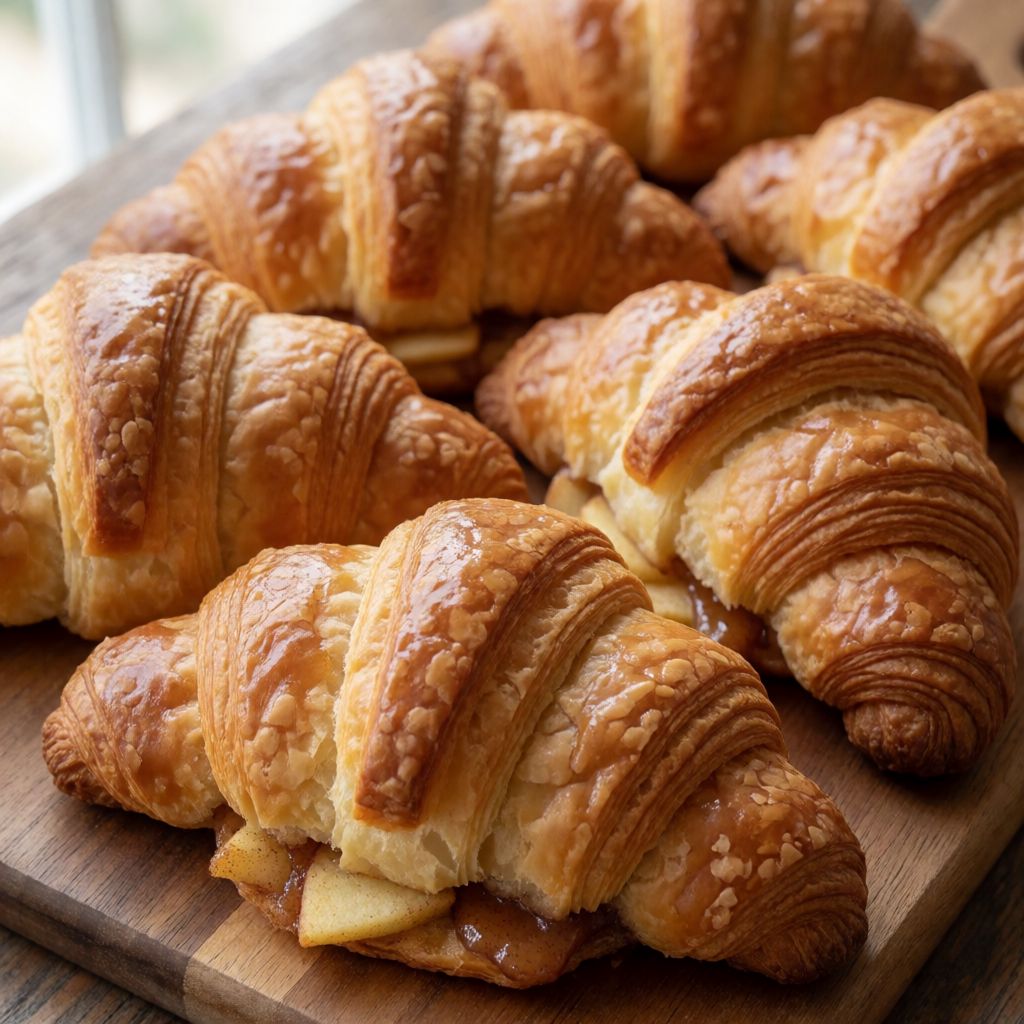
Puff pastry triangles filled with cinnamon-stewed apple and jam, rolled into croissant shapes and baked until golden.
Labels are worked out automatically from the ingredients and can be wrong. Check the packaging if it matters to you.
Ingredients
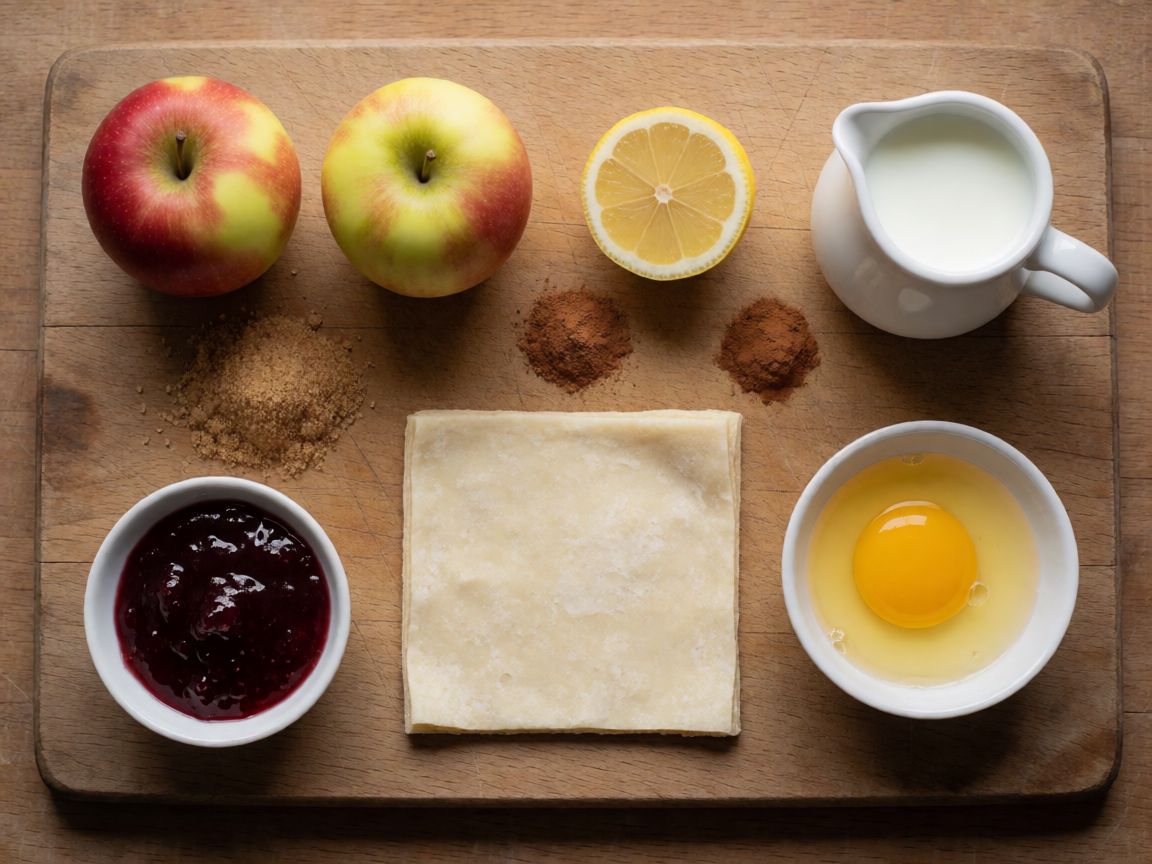
- 2 pcs red apple
- 40 g brown sugar
- 45 ml water
- lemon juice half a lemon
- 1 tbsp cinnamon
- 1 pcs ready-rolled puff pastry
- jam to taste
- milk a little, for brushing
- 1 pcs egg yolk lightly beaten








Steps
Wash and peel the apples, then cut into cubes.
In a pan, melt the brown sugar together with the water and lemon juice.
Add the apples and cinnamon, and cook gently for a few minutes until the apples have softened.
Roll out the puff pastry and cut it into 8 triangular pieces.
On each triangle, place a teaspoon of jam and a little of the stewed apples.
Roll each triangle up starting from the longer edge, shaping it like a croissant.
Brush each croissant first with a little milk, then with the lightly beaten egg yolk.
Bake at 180°C until the croissants turn golden.
12 minServe the croissants warm, straight from the oven.
This isn't a croissant in the proper sense — no lamination, no three-day butter block, no yeast doing slow work overnight. It's shop-bought puff pastry rolled around stewed apple and jam, folded into a croissant shape and baked hot and fast. What you're borrowing from the real thing is the shape and the flake, not the method. That's an honest trade for a Sunday-afternoon bake, and nobody needs to apologise for it.
What decides whether this works is moisture control, twice over. First in the pan: you're not stewing apples into mush, you're softening them just past raw so they bend rather than crunch, while the sugar-water-lemon mixture reduces to something closer to a light syrup than a puddle. If you dump wet apple straight into pastry, the puff won't puff — it'll go soggy at the seam and the layers will glue shut instead of lifting. Second in the folding: a teaspoon of jam per triangle, not a tablespoon, because jam loosens under heat before the pastry has had its one shot at rising, and a flood of it will leak out the fold and burn on the tray before the middle's even warm.
Take the apples first. Red apple is specified for colour as much as flavour — it holds its blush when cut and doesn't brown as fast or as uglily as some paler varieties once lemon juice is in the mix. But the real criterion for which apple to use is firmness: you want something that keeps a little structure after a few minutes in syrup, not something that collapses to purée on contact with heat. A Cox or a Braeburn does this well; a very soft eating apple just turns to mush and you lose the bite entirely. Granny Smith works too and brings its own sharpness, meaning you can ease back on the lemon.
The brown sugar, water and lemon juice together aren't three separate flavourings — they're one mechanism. Brown sugar melts into syrup faster than white because of the molasses it carries, and that same molasses gives you the gingery colour and the slight toffee note without needing caramelisation, which at this small a quantity would scorch before you noticed. The water thins the syrup so it coats the apple instead of hardening around it. The lemon juice does two jobs: it stops the apple oxidising brown while you work, and its acidity cuts the sweetness so the filling doesn't taste like dessert syrup with fruit as an afterthought. If you've no lemon, a splash of any sharp vinegar — cider vinegar, nothing with its own strong flavour — will hold the colour, though you lose the citrus top note.
Cinnamon here is doing more than tradition dictates — it's masking nothing and seasoning everything, the way salt does in a savoury dish. One tablespoon for two apples is generous; some recipes would call that heavy-handed, but with pastry and jam both competing for attention, you need the spice to carry through, not whisper.
On the pastry: ready-rolled puff is the only sensible choice for a domestic kitchen, and nobody should feel they've skipped a step by using it. True puff pastry is built from dozens of alternating layers of dough and butter, created by repeated folding and resting — a process that takes patience measured in hours, not minutes, because the butter needs to stay cold and solid between each fold or the layers merge and you lose the lift entirely. That's not a home-hob job on a Sunday when the oven's already earmarked for a roast. Buy it, keep it cold until the moment you cut it, and handle it as little as possible — warm hands on cold pastry is the single fastest way to kill the layering you're relying on.
Cutting eight triangles from one sheet and rolling from the long edge is simply geometry: it's how you get the tapered, coiled shape that makes this look like a croissant rather than a flat pasty. The jam under the apple is there for two reasons — a little extra sweetness, and a thin barrier that keeps the apple's moisture from sitting directly against the raw pastry at the fold, where sogginess would show first.
The milk-then-egg-yolk brushing is two separate jobs, not one indecisive one. Milk alone gives a soft, pale sheen — fine for softer bakes, but not enough shine or colour here. Egg yolk alone can streak and go patchy, especially brushed over a slightly damp surface. Milk first evens out the surface and helps the yolk sit smoothly rather than beading; the yolk on top is what actually browns and glazes under oven heat, thanks to the proteins and fat in it catching colour faster than the pastry underneath. Skip the yolk and use milk only if you want them paler and softer-looking — acceptable, just a different finish, not a failure.
Serve them warm, straight out, because puff pastry's whole appeal — that shatter when you bite — fades within the hour as trapped steam turns back to moisture and softens the structure from inside. Six croissants from one sheet of pastry and two apples feeds about six people generously as a treat with tea, fewer if you're feeding this straight after a Sunday roast, where appetite's already spoken for.