
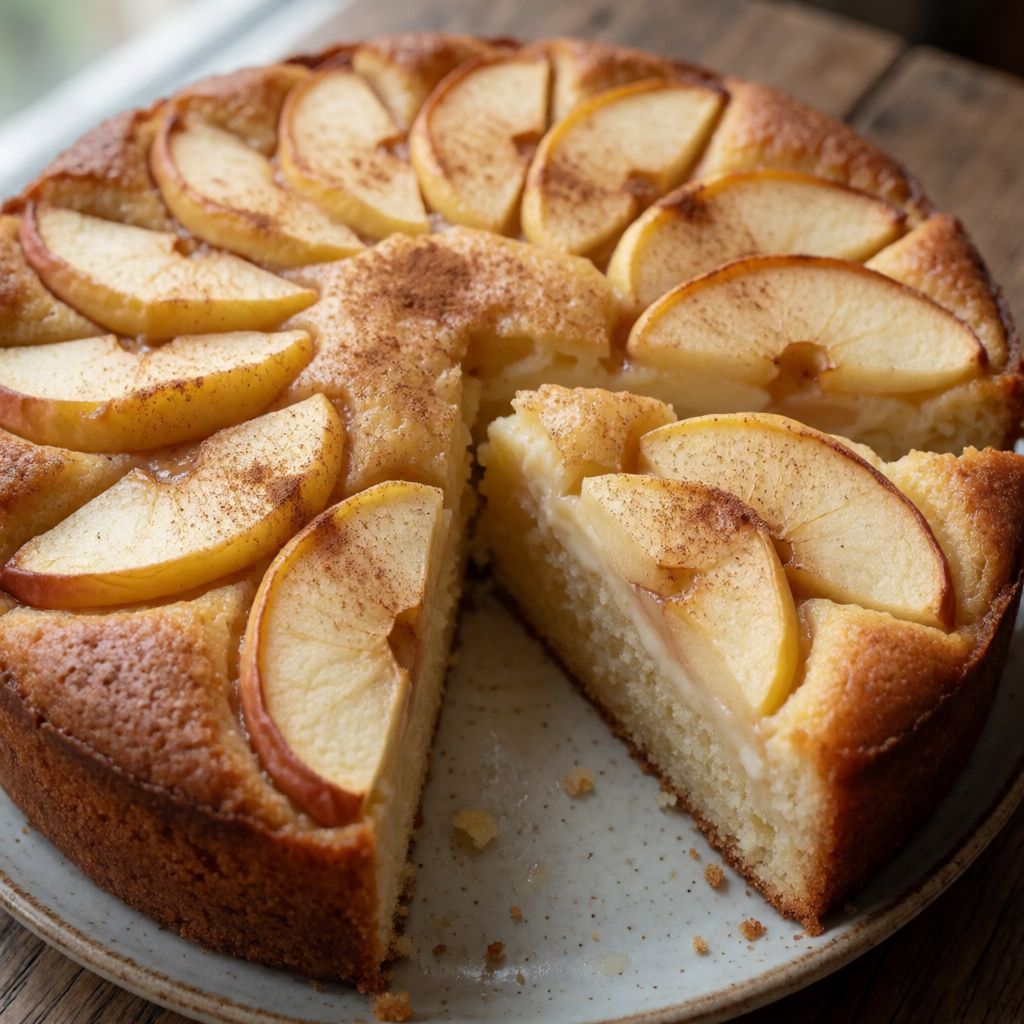
 AI photo
Apple and Mascarpone Cake
A soft apple cake enriched with mascarpone, lightly spiced with cinnamon.
Labels are worked out automatically from the ingredients and can be wrong. Check the packaging if it matters to you.
Ingredients
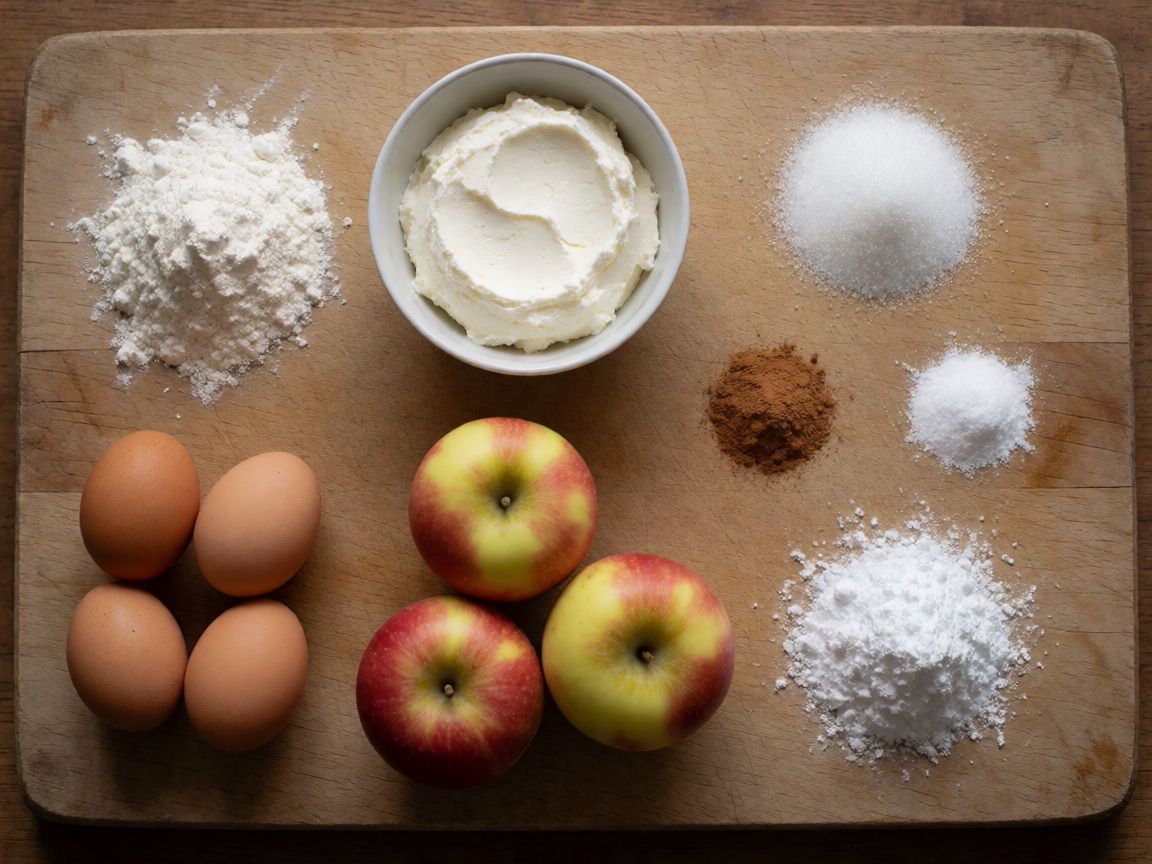
- 250 g Plain flour
- 250 g Mascarpone
- 170 g Caster sugar
- 4 pcs Eggs
- Cinnamon
- 3 pcs Apple
- 16 g Baking powder 1 sachet
- Icing sugar








Steps
In a bowl, whisk the eggs with the sugar for about 5 minutes, until the mixture is pale and creamy.
5 minIn another bowl, soften the mascarpone with a spatula, adding two or three spoonfuls of the egg-and-sugar mixture, and mix well.
Add all the softened mascarpone to the main mixture and mix thoroughly with the spatula until fully combined.
Sift the flour directly into the batter and mix.
Add cinnamon to taste and the baking powder, and mix for a few minutes to remove any lumps.
Cut the apples: two apples into small pieces for the batter, one into thin slices for decoration.
Add the apple pieces to the batter and mix.
Pour the batter into a 24 cm tin, buttered and lined with baking paper, and arrange the apple slices on top in a sunburst pattern.
Bake in a preheated oven, conventional (top and bottom heat) setting, at 180°C (160°C fan) for 40–45 minutes.
42 minCheck the cake is done by inserting a wooden skewer in several places.
Dust the cake with icing sugar and serve.
This is a mascarpone cake that borrows the apple tart's trick of sliced fruit on top, but the real engine is the egg-and-sugar whip, not the flour. Whisk eggs and sugar for those five minutes and you're not just dissolving sugar — you're beating air into the mixture until it holds its own shape for a few seconds when you lift the whisk, pale and thick like softly whipped cream. That trapped air is most of your rise. The baking powder helps, but it's a backup system, not the main one.
Mascarpone is the other half of the story, and it's why this cake has no butter. Mascarpone is basically cream that's been thickened with acid until it sets — around 45% fat, no added sugar, no tang to speak of. Softening it with a few spoonfuls of the egg mixture first isn't fussy technique for its own sake: mascarpone is stiff and if you dump it cold into a light, aerated batter it sits there as lumps, and when you try to break those lumps up you knock the air back out. Loosen it gradually, on its own terms, and it folds in without a fight.
What decides whether this works is restraint at two points: how long you whip, and how little you mix once the flour goes in. Overwhip the eggs and sugar and you get a foam that's dry and about to collapse rather than one that's stable. Overmix after the flour and the gluten tightens up — the cake turns elastic and chewy instead of staying soft and slightly damp, which is the texture you're actually after here, closer to a cheesecake-sponge hybrid than a Victoria sponge.
On ingredients, start with the flour and baking powder together, because people treat "plain flour plus a sachet" as odd when it's actually the normal split in most of continental Europe — self-raising flour isn't really a thing there, so recipes add their own leavening and that's what the 16 g sachet is doing here, standing in for the self-raising flour a British baker might reach for instinctively. If you only have self-raising flour, use it and drop the baking powder, or you'll get an overly open, slightly bitter crumb from too much lift.
Mascarpone has no real substitute that behaves the same — it's the fat that's doing cream's job without cream's water content, which is why the batter can carry so much apple and egg without turning soupy. Full-fat cream cheese is the closest stand-in, but it carries tang that mascarpone doesn't, so you're changing the flavour, not just the fat. Don't reach for ricotta; it's wetter and grainier and will loosen the batter in a way the structure can't recover from.
Eggs here are doing the lifting work a British sponge usually leaves to butter creamed with sugar — there's no butter in this recipe at all, which is worth noticing, because it means the cake's lightness comes entirely from how much air you beat into the eggs and how gently you treat that air afterwards. Use eggs at room temperature if you can; cold eggs whip more slowly and you'll be tempted to over-whisk waiting for volume that's just taking its time to arrive.
For the apples, you want something that holds shape under heat rather than collapsing to mush — a Bramley will fall apart and turn to sauce inside the batter, which isn't what you're after here; a firmer eating apple, a Granny Smith or similar, keeps its shape both chopped in and sliced on top. The tartness also balances a cake that's otherwise quite sweet and rich from the mascarpone.
On the tin and oven: "conventional, top and bottom heat" is specified because fan ovens push air that can dry and colour the apple slices on top before the centre sets — if you only have a fan oven, the 160°C fan figure given is already the adjustment for that, so don't also drop it further. A 24 cm tin matters more than it looks: go smaller and the centre will still be wet when the edges are done; go much bigger and you'll have a thin cake that overbakes trying to colour at all.
Last thing, on the skewer test and why it's listed for "several places" rather than once in the middle: the apple pieces inside the batter are wet pockets, and a skewer through one of those can come out looking undercooked when the surrounding cake is actually fine. Test in a few spots away from where you can feel a lump of apple, and you'll trust the result instead of second-guessing it. And give the cake a few minutes to sit after baking before you dust the icing sugar — patience here isn't about flavour developing, it's just that icing sugar on a hot, moist top melts into nothing within a minute, and you've lost the only decoration this cake has.