
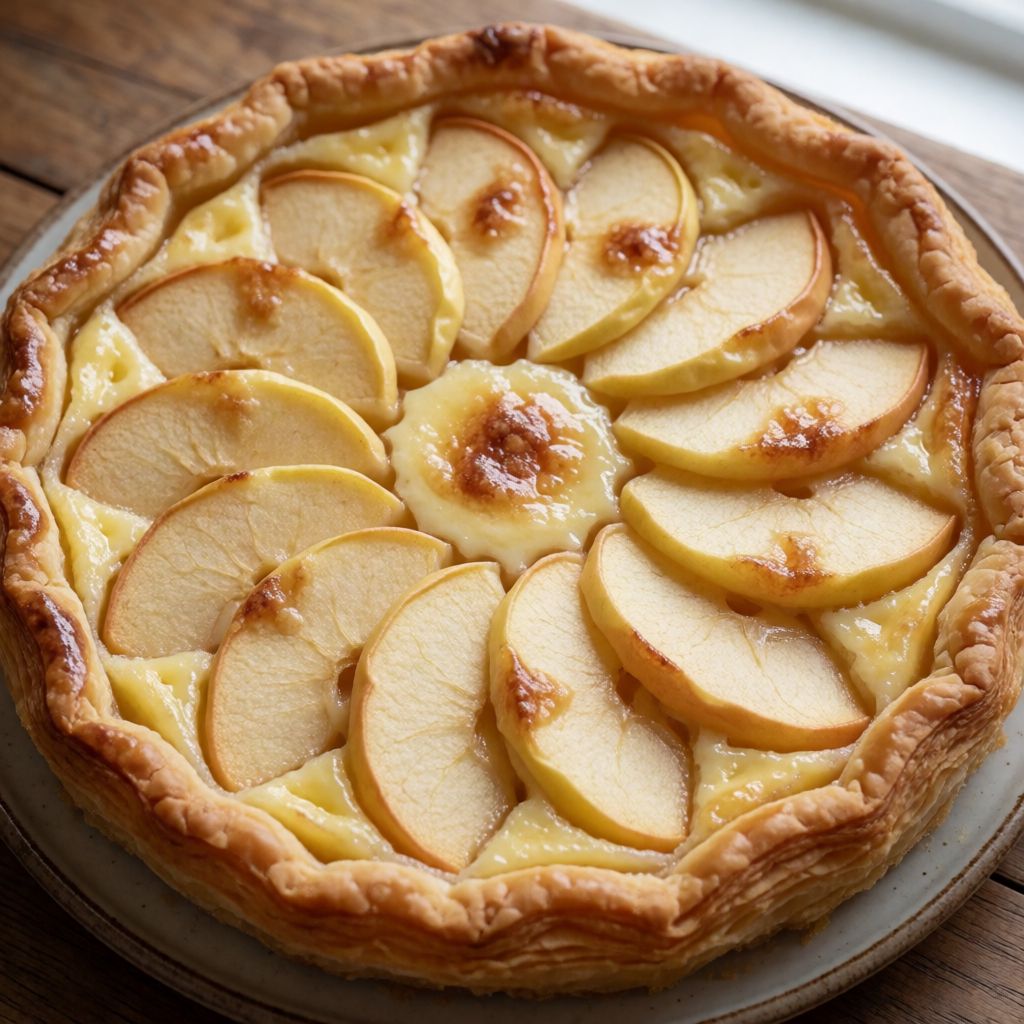
 AI photo
Swiss Apple Pie
A classic Swiss-style apple pie with a light egg and cream topping, baked in puff pastry.
Labels are worked out automatically from the ingredients and can be wrong. Check the packaging if it matters to you.
Ingredients
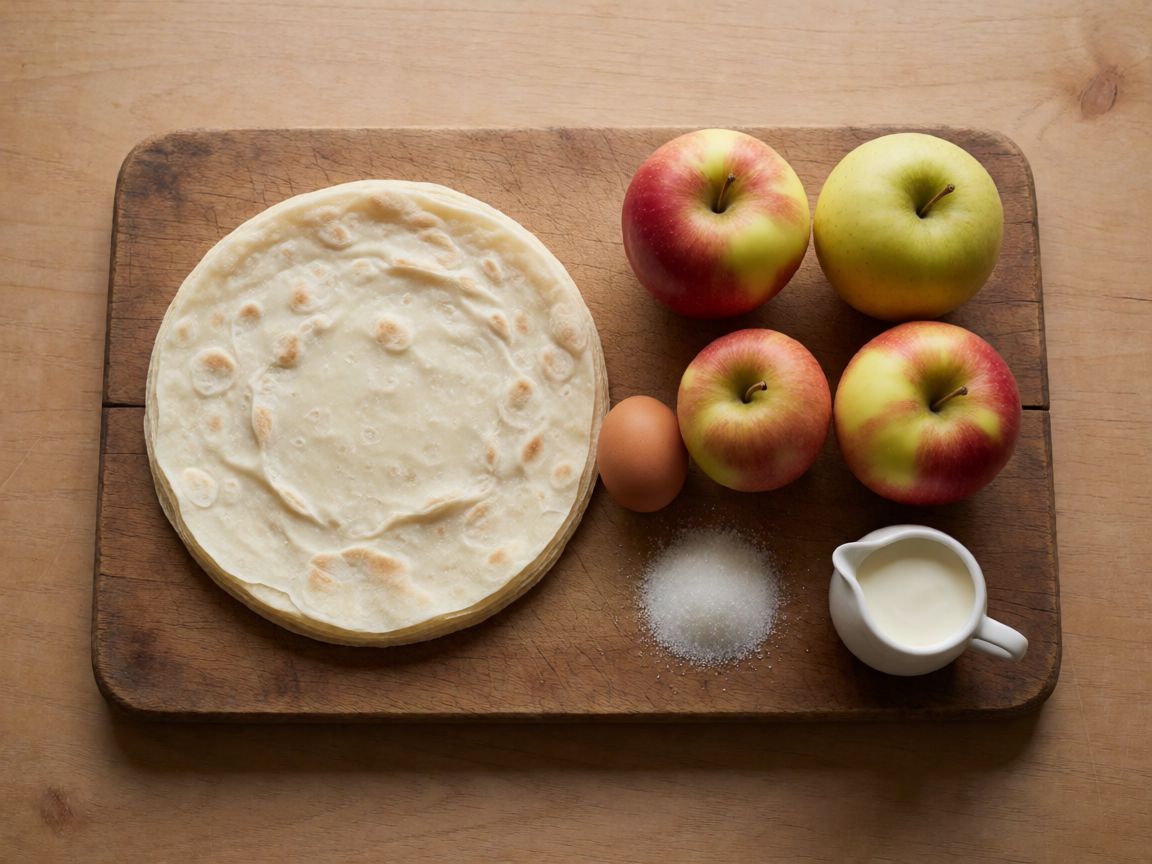
- 1 pcs Puff pastry
- 4 pcs Apple
- 1 pcs Egg
- 2 tbsp Caster sugar
- 1 pcs Double cream





Steps
Line a round tin with the puff pastry.
Slice the apples thinly and arrange them evenly over the pastry.
Beat the egg with the caster sugar until light and fluffy, add the double cream, mix well, and pour the mixture over the apples to cover them completely.
Bake in an oven preheated to 180°C until the top turns golden brown.
23 min
This is not really a pie in the English sense — there's no lid, and the apple isn't stewed into jam first. What you've got is a custard: egg and cream beaten together until they can hold heat and still stay smooth, poured over raw apple that's thin enough to cook through in the time the custard needs to set, and all of it sitting on a sheet of puff pastry that has to survive contact with liquid long enough to dry out, lift, and brown before the whole thing is swimming.
Two separate processes are racing each other in that oven, and whether the dish works depends on who wins. Puff pastry rises because fat sits between layers of dough and steam forces those layers apart — that only happens if the pastry gets hot and starts drying fast. If liquid soaks into it before the heat arrives, the fat layers glue together instead of separating, and you get a pale, bready, slightly chewed-looking base under a perfectly nice custard top. That's the real cause of the 'soggy bottom' people complain about — not that the filling was wet, every apple tart filling is wet, but that the pastry lost the race before it started.
Some say custard tarts need a water bath, the way a crème brûlée does. No — because a water bath exists to protect a deep, continuous custard where the middle would overcook long before the edges even start setting. This is a shallow layer over apple, thin enough that dry oven heat sets it evenly before it has a chance to curdle, as long as you don't push the oven hotter than the recipe allows. Save the water bath for the deep stuff.
The apple matters more than the recipe lets on. You want something that softens without collapsing into mush and without staying crunchy under a set custard — a texture problem, not a flavour one. In a British kitchen the instinct is Bramley, because that's the pie apple everyone grew up with, but Bramley breaks down fast and wet, which is exactly what you don't want sitting under a custard that needs the apple to hold its shape while it sets. Something firmer — Cox, Braeburn, even a Granny Smith — keeps enough structure that the slices still read as apple once they're cut, rather than disappearing into the custard. Slice them thin, properly thin, because that's what lets the heat get all the way through a piece of fruit in the time the custard needs — thick slices force you to choose between an undercooked centre or an overcooked custard, and neither is a good trade.
Puff pastry here is doing a specific job: a laminated dough that lifts on its own steam, no raising agent needed. If you don't have it, a good all-butter shortcrust will still carry the filling, you just lose the flaky edge and get something closer to a tart you eat with a fork rather than fingers. Either way, line the tin properly and get it into a properly hot oven — a tin that's gone in cold, or an oven that hasn't finished preheating, is giving the liquid filling a head start it doesn't need.
Double cream is there for body and for fat content stable enough not to split at the temperature where egg sets. Single cream will work but gives you a thinner, less rich set; crème fraîche is too acidic and more likely to curdle against the heat; milk on its own will set but you'll notice the absence of richness immediately. Caster sugar dissolves into beaten egg cleanly because the grain is fine — granulated left underbeaten will leave a slight grit, icing sugar carries a little cornflour that will very slightly change how firm the set comes out, neither ruins it, just changes the feel.
On the tin: a metal one beats ceramic for this, because metal takes up oven heat faster and pushes it through the pastry base quicker, which is exactly the race you're trying to win. If your only tin is ceramic, that's not a reason to abandon the dish, just expect to watch the base a little more carefully and maybe give it slightly longer before you trust the colour on top.
One small correction: whatever the card says, a single round tin like this isn't a portion for one — it's a pie that cuts into six proper slices, the kind of thing that follows a Sunday roast or sits on the table with a pot of tea and milk. Don't rush the slicing of the apple or the beating of the egg to save five minutes — that patience is what the custard and the pastry are both quietly depending on.