
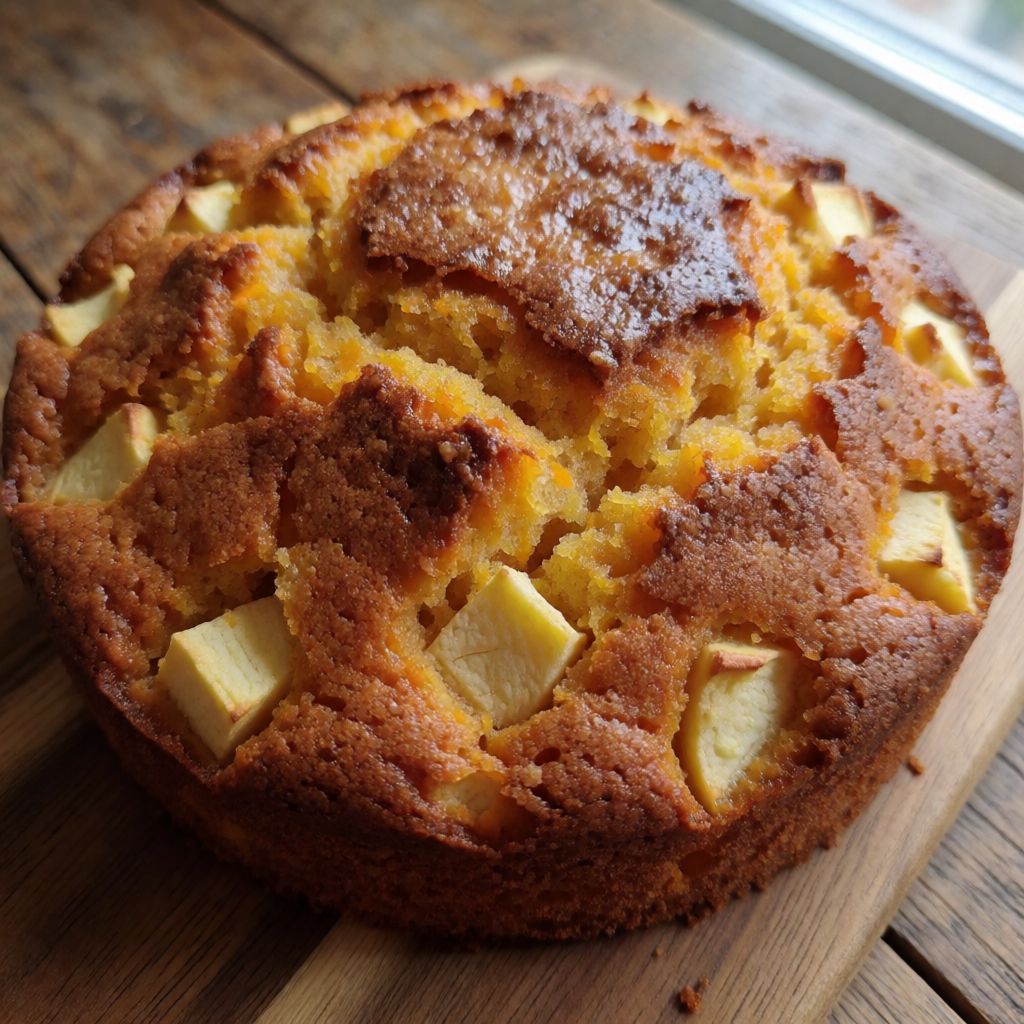
 AI photo
Apple and Pumpkin Cake
A moist apple and pumpkin cake, ideal for an autumn afternoon tea.
Labels are worked out automatically from the ingredients and can be wrong. Check the packaging if it matters to you.
Ingredients







Steps
Wrap the pumpkin in baking parchment and roast in the oven at 160°C until the flesh is very soft.
35 minWhisk the eggs with the sugar until pale and very fluffy.
Add the melted butter and mix.
Finely chop the roasted pumpkin with a knife or blend with a stick blender, then add it to the egg mixture.
Gradually add the sifted flour, then add the baking powder and mix until smooth.
Pour the batter into a buttered and floured 20–22 cm cake tin.
Arrange the sliced apple on top and sprinkle with sugar.
Bake in a preheated oven on the convection setting at 170°C, or on the conventional setting at 180°C, until a skewer comes out clean.
50 min
This isn't a pumpkin pie wearing a cake's clothes. It's a plain egg-and-flour sponge where pumpkin quietly takes over work that butter and milk usually do — body, a little moisture, a round sweetness that isn't sugar. The apple goes on top, not stirred in, because its job is to sit there and form a lid: a seam of caramel and bite over a crumb that would be a bit flat and featureless without it.
What decides whether this rises or sits like a brick is the egg whisk, not the baking powder. Sixteen grams of powder for three hundred grams of flour is modest — most of the lift has to come from air you beat into the eggs and sugar before anything else touches the bowl. Whisk them until the mixture is pale, thick, and holds a ribbon when you lift the beater. Rush this and no amount of baking powder will save you; it'll compensate a little, but a flat egg foam gives a flat cake with a chemical aftertaste.
Some say pumpkin for baking should be boiled soft — no, because boiling adds water you then have to drive back out, and takes the flavour with it into the pot. Roasting the flesh wrapped in parchment does the opposite job: dry oven heat pulls moisture off slowly while the paper traps just enough steam against the flesh that the centre goes properly soft before the edges turn leathery. You want dense, almost dry pumpkin flesh going into the batter, not something you could pour.
On the eggs: don't add the butter until the eggs and sugar are properly whisked, because butter folded into a half-beaten foam collapses the air you just worked for. Melted butter goes in once the foam is stable, folded rather than beaten, so it enriches without flattening. If you have no butter, any fat that's solid at room temperature and has no smell of its own will do the structural job — a neutral margarine, for instance — but the cake will taste thinner, because butter isn't just fat here, it's flavour.
On the pumpkin: choose dense-fleshed squash rather than a watery one — butternut or crown prince, which is what you'll find in a British greengrocer's anyway, works better than a big watery carving pumpkin. Chop or blend the roasted flesh properly fine; stringy lumps don't dissolve in the oven, they just sink and sit as wet pockets in the finished crumb. If your oven is already hot for a Sunday roast, that's the moment to wrap the pumpkin and put it in alongside the joint — heat you're paying for anyway, put to a second use. It's also the practical reason this cake exists: a way to use the flesh left over once the Halloween pumpkin's been carved, rather than binning it.
On the flour and baking powder: add the sifted flour gradually and fold rather than beat, because you're not building gluten structure here the way you would for bread — overwork it and the crumb turns tight and chewy instead of soft. Baking powder goes in with or just after the flour so it isn't sitting active in a wet batter for ages before the oven gets to it and spends itself early. If all you have is self-raising flour, drop the extra baking powder or cut it right back — otherwise you'll get a cake that rises fast, then collapses as it cools, because it ran out of structure before it ran out of lift.
On the apples: pick something that holds its shape in heat rather than one that collapses to mush — a firm eating apple rather than a cooking apple that's bred to fall apart. Slice it thin enough that it softens all the way through in the time the cake needs, and lay it on top rather than folding it in, because apple buried inside the batter leaks juice inward and leaves a soggy streak through the crumb; apple sitting on top just caramelizes where the sprinkled sugar meets it, which is the actual point of that tablespoon of sugar — not extra sweetness, a crust.
On the tin: butter and flour it properly, because a batter this moist, topped with fruit that releases juice as it bakes, will otherwise weld itself to the metal and tear apart on turning out. A 20–22cm tin, ideally springform, makes the lift-out far less of a gamble given the sticky top. And on the oven: a fan setting moves air around the cake evenly, which is why the recipe allows a lower temperature for it; without a fan, heat sits in pockets in most domestic ovens, so the higher figure given for conventional heat is the right one to trust, and if you know your oven runs hot in one corner, turn the tin round halfway rather than hoping for the best.