
 AI photo
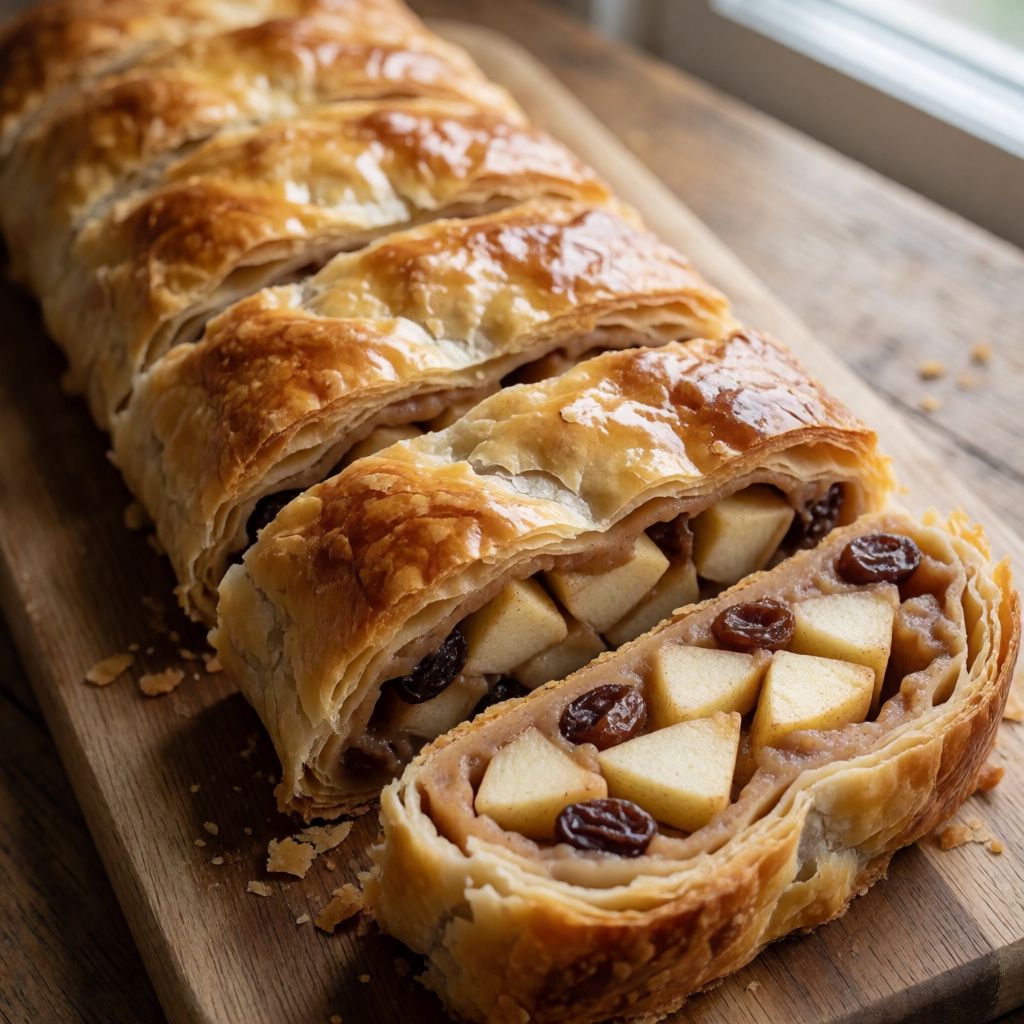
Apple Strudel in Puff Pastry
A classic apple strudel wrapped in puff pastry, filled with spiced apples, raisins and toasted pine nuts.
Labels are worked out automatically from the ingredients and can be wrong. Check the packaging if it matters to you.
Ingredients
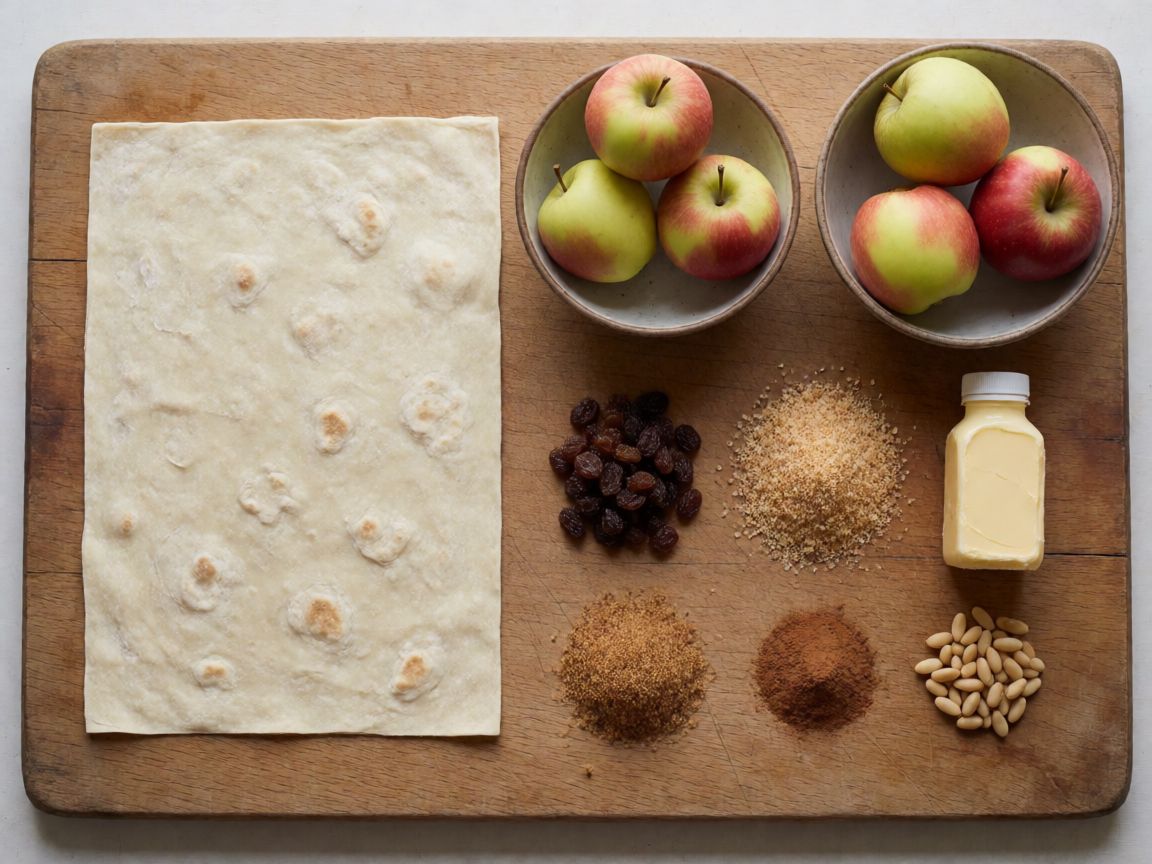
- 1 pcs Ready-rolled puff pastry
- 500 g Apples
- 50 g Raisins
- 50 g Breadcrumbs dried
- 50 g Butter
- 70 g Brown sugar
- Cinnamon to taste
- 30 g Pine nuts
- 1 pcs Egg yolk
- Icing sugar to taste






Steps
Soak the raisins in water for a quarter of an hour.
15 minMelt the butter in a frying pan and add the breadcrumbs, frying over medium heat until golden.
In another pan, toast the pine nuts.
Wash and chop the apples into pieces, then add the toasted pine nuts, brown sugar and the drained raisins, and mix well.
Unroll the pastry, sprinkle it with the melted butter and breadcrumbs, leaving a few centimetres free at the edges.
Spread the apple filling evenly over the pastry and close it, folding in the side edges and pressing gently.
Roll the strudel up using baking paper, and seal the seam.
Transfer it onto a baking tray lined with baking paper.
Beat the egg yolk with milk and brush it over the whole surface of the strudel.
Make a few small cuts on the surface.
Preheat the oven to 180°C and bake the strudel for 25–30 minutes.
28 minLeave the finished strudel to cool to room temperature and dust with icing sugar.
Let's be honest from the start: this is not strudel. Real strudel is a dough you stretch with your knuckles until it's thin enough to read a newspaper through — a skill most pastry chefs train for years, and one that has nothing to do with what's in your fridge on a Tuesday. What you've got here is an apple filling wrapped in shop-bought puff pastry, baked until it looks the part. That's not a failure, it's a sensible trade: puff pastry gives you lamination — hundreds of butter-and-flour layers — for the price of unwrapping a packet, instead of the hour of arm-work the real thing demands.
What decides whether this works is moisture control, nothing else. Apples release water as they heat — and puff pastry's whole trick is steam pushing layers apart as butter melts. Put wet apples straight onto raw pastry and you get steam with nowhere useful to go: it soaks sideways into the dough instead of lifting it, and the bottom goes soft and pale instead of crisp. That's the entire reason for the breadcrumbs fried in butter. They sit between filling and pastry like a blotter, soaking up the apple juice before it can reach the dough, while the butter in them adds flavour you'd otherwise lose.
Some say you should always peel and dry apples thoroughly before baking them in pastry — no, because the real defect isn't the apple's own juice, it's juice meeting raw dough with nothing in between. A juicy apple with a good breadcrumb barrier behaves better than a dry apple with none.
On apples: you want ones that hold their shape under heat rather than collapsing into sauce — a Bramley will fall apart into fluff, a Granny Smith or Braeburn keeps enough bite that the slices stay distinct when you cut the strudel. Chop them into pieces roughly the size of a sugar cube, not grated, not sliced paper-thin — too small and they turn to mush before the pastry's even coloured, too big and the centre stays raw while the outside burns.
Raisins soak for the same reason you'd soak dried pasta before stir-frying it: a dry raisin dropped into a hot oven turns into a hard little stone, pulling moisture from everything around it. Fifteen minutes in water plumps it back up so it bakes soft instead of scorched. Sultanas or chopped dried apricots do the same job if raisins aren't in the cupboard — the criterion is "dried fruit that rehydrates," not raisins specifically.
Breadcrumbs: dried, not fresh, because fresh breadcrumbs still carry their own water and can't absorb anyone else's. If you're out, crushed digestive biscuits or even crushed cornflakes do the same blotting job — slightly different flavour, same mechanism.
Pine nuts toast separately because they burn in the time it takes everything else to just turn golden — their oil content is high, so they go from pale to bitter-black fast while your attention is on the apples. Toast them dry, in a pan with nothing added, and pull them the moment they smell nutty rather than wait for colour, because colour arrives a few seconds before burning does. No pine nuts in the house — flaked almonds or chopped walnuts, lightly toasted, do the same crunch-against-soft-apple job.
Butter in the filling mix and in the breadcrumbs: use it for flavour, but understand it has nothing to do with the pastry's own rise — that lift is already baked into the puff pastry you bought, laminated at the factory or by whoever rolled it. Any neutral butter works; if you're avoiding dairy, a flavourless oil in the breadcrumb-frying step will toast them just as well, you'll just lose the dairy taste.
The egg yolk and milk wash is purely cosmetic chemistry — egg proteins set and brown in the oven, giving you the shine and colour that plain pastry alone won't manage. Skip it and the strudel still bakes fine, it just looks pale and matte instead of glossy. Milk alone, no egg, gives a paler but still even brown.
On your kitchen specifically: a UK oven running at 180°C fan or conventional will treat this the same as any Sunday-roast joint — know which one yours is, because a fan oven at 180°C runs notably hotter in practice than conventional 180°C, and puff pastry colours fast once it starts. Watch for colour and firmness rather than trusting the clock alone: the pastry should be deep gold and feel rigid, not soft, when you nudge it with a spoon — 25–30 minutes is where that usually lands, not a guarantee. And give it the full cool-down before dusting with icing sugar: hot sugar melts into a wet glaze instead of sitting as powder, which is the sort of patience this dish asks of you in exchange for almost no actual skill elsewhere.