
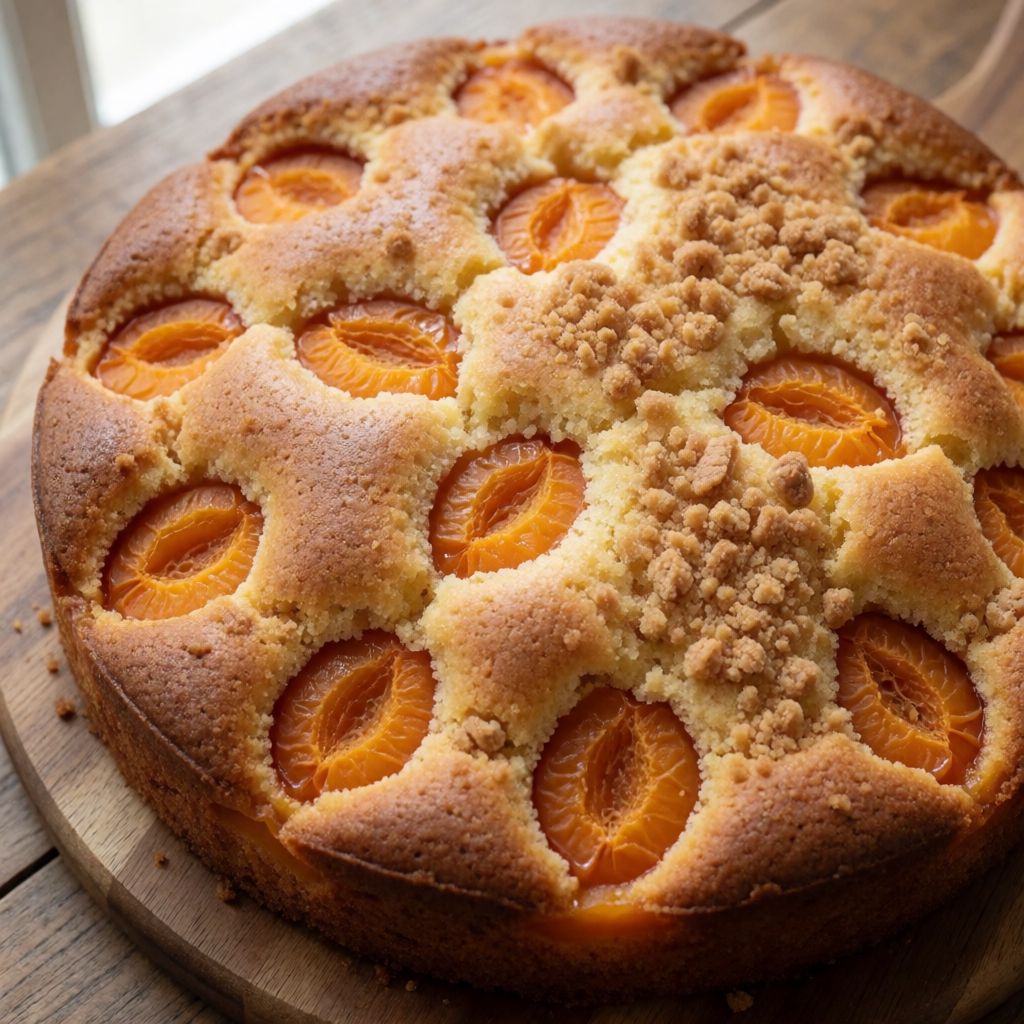
 AI photo
Apricot and Amaretti Cake
A buttery sponge cake studded with crumbled amaretti biscuits and fresh apricots.
Labels are worked out automatically from the ingredients and can be wrong. Check the packaging if it matters to you.
Ingredients
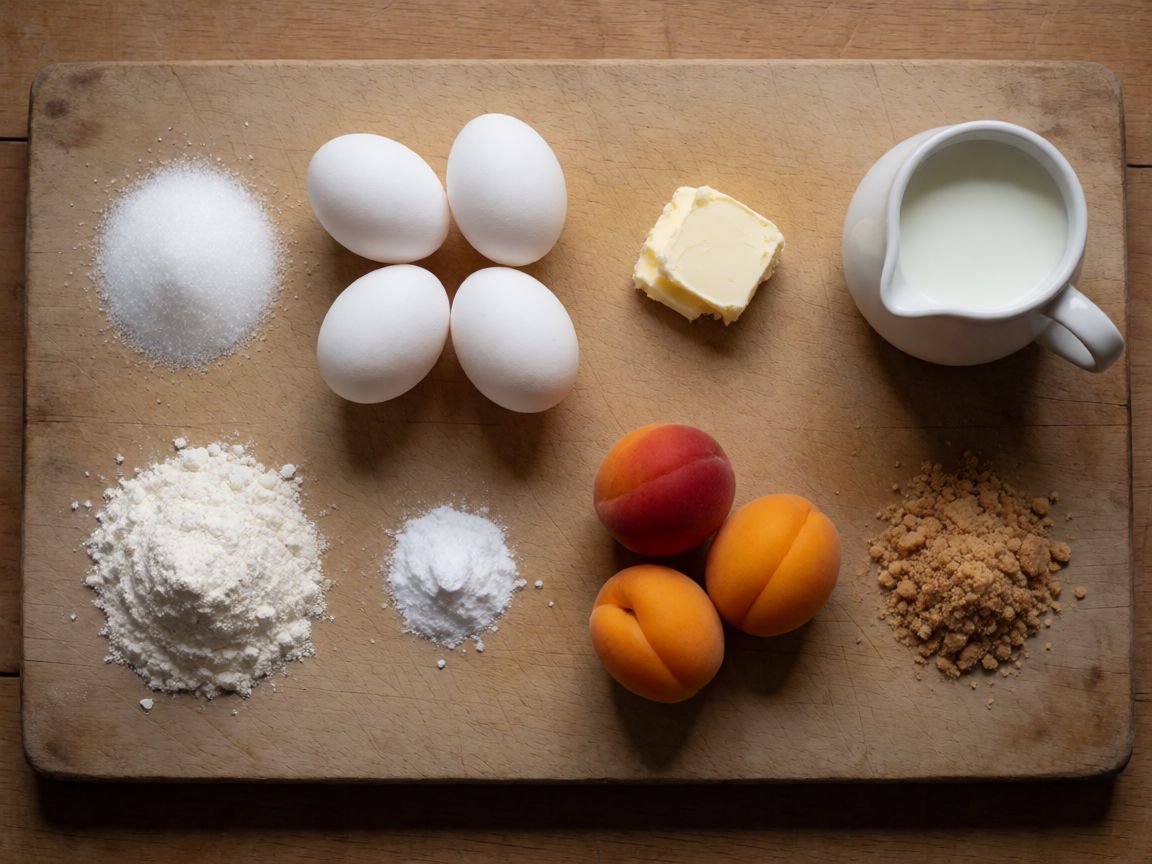
- 140 g Caster Sugar
- 4 pcs Eggs
- 150 g Butter
- 100 ml Milk
- 250 g Plain Flour
- 15 g Baking Powder
- 300 g Apricots
- 100 g Amaretti Biscuits
- 1 pinch Salt







Steps
Whisk the eggs with an electric mixer, gradually adding the sugar, until the mixture is pale and fluffy.
Melt the butter in a bain-marie or in the microwave, let it cool, then fold it into the egg mixture.
Add the sifted flour and baking powder, alternating with the milk. Mix until smooth.
Crumble the amaretti biscuits and fold them into the batter along with a pinch of salt.
Grease a baking tin with butter, dust with flour and pour in the batter.
Wash and cut the apricots into pieces, arrange them on top of the cake, pressing them gently into the batter.
Bake in an oven preheated to 180°C.
30 minCheck with a wooden skewer: if it comes out clean, the cake is ready.
This isn't a delicate sponge you can breathe on and ruin — it's closer to a pound cake that's been asked to carry almond biscuit and fresh fruit on its back. Butter, eggs, a proper dose of baking powder: the structure here is built to hold weight, because amaretti crumbs and apricot halves are heavy passengers for any batter. If the base were as light as a genoise, it would simply sink under them.
What decides whether it works is the egg-and-sugar foam at the start, and how carefully you protect it afterwards. Every step that follows is a small act of defence: cooling the butter before folding it in (hot butter deflates air and half-cooks egg, giving you a flat, greasy crumb instead of a risen one), alternating flour with milk instead of dumping both in at once (so the gluten doesn't tighten up and turn the cake rubbery), folding rather than beating once the flour goes in. None of this is fuss for its own sake — skip any of it and you get a specific, nameable fault: a dense streak at the bottom, a tough top, a crumb that's more bread than cake.
Some say whisking eggs harder and longer always gives a fluffier cake. No — because what builds a stable foam is sugar dissolving gradually into the egg as you whisk, cutting the proteins into a fine, even mesh that can hold air. Whisk furiously with no sugar going in, or dump all 140 g in one go, and you either tear the foam or drown it — pale and thick isn't the same as strong.
On the ingredients, one by one, and why each is doing a specific job rather than just being there.
The eggs want to be at room temperature, not fridge-cold — cold egg traps less air no matter how long you whisk, because the proteins are stiffer and slower to unfold. Caster sugar matters for its grain size: fine crystals dissolve into the egg quickly as you whisk, which is what lets the foam build evenly. Granulated sugar works in a pinch, just blitz it a few seconds in a blender first, or expect a slightly coarser crumb.
Butter here is for flavour and for the way its fat coats flour proteins, holding the crumb tender rather than chewy — melt it, let it cool to roughly hand-warm before folding in, because hot butter will deflate your egg foam and partially cook the eggs on contact, which shows up later as a dense band through the cake. Unsalted is the sensible choice since you're adding your own pinch of salt — if all you have is salted, just leave that pinch out. If you have no butter, a neutral oil will save the structure but not the flavour; this is a cake where butter is doing real work, not decoration.
Milk, added alternately with the sifted flour, keeps the batter loose enough to fold without overworking the gluten — mix flour and milk in all at once, or stir too hard once the flour's in, and you develop gluten the way you would in bread, giving you a tough, closed crumb instead of a soft one. Use plain flour, not self-raising — the 15 g of baking powder is already judged against this exact weight of flour and against the dead weight of amaretti and apricot sitting on top; self-raising flour adds its own leavening on top of that and the middle can collapse once it's risen past what the structure can hold.
Amaretti biscuits are almond biscuits traditionally made from bitter almond kernels and egg whites — historically a way bakeries used up the whites left over from almond paste and marzipan work, nothing mystical about it, just thrift turned into a biscuit people kept making after the thrift stopped mattering. Crumbled into the batter they give crunch and an almond perfume that plain flour alone can't. If you can't get them, crushed digestive or plain amaretti-style almond biscuits with a few drops of almond extract stirred in will get you close, though the texture of the crumble will be a touch softer.
Apricots should give slightly to a thumb press — firm-ripe, not hard, not collapsing. Too soft and they'll disintegrate into the batter rather than sitting on top as pieces, leaving wet pockets the skewer test won't catch properly. Any other stone fruit — plum, nectarine, even a drained tin of apricots with the syrup patted off — will do the same job; just know that tinned fruit brings extra moisture, so lean on the skewer, not the clock, if you use it.
One more thing worth saying plainly: this cake wants you to not rush the egg-whisking stage and not rush the oven time by cranking the heat up to finish faster. Patience here isn't virtue for its own sake — it's the only thing standing between you and a cake that's either collapsed in the middle or burnt on top while still wet underneath. Six people, one ordinary tin, one domestic oven you know the quirks of — that's the whole ask.