
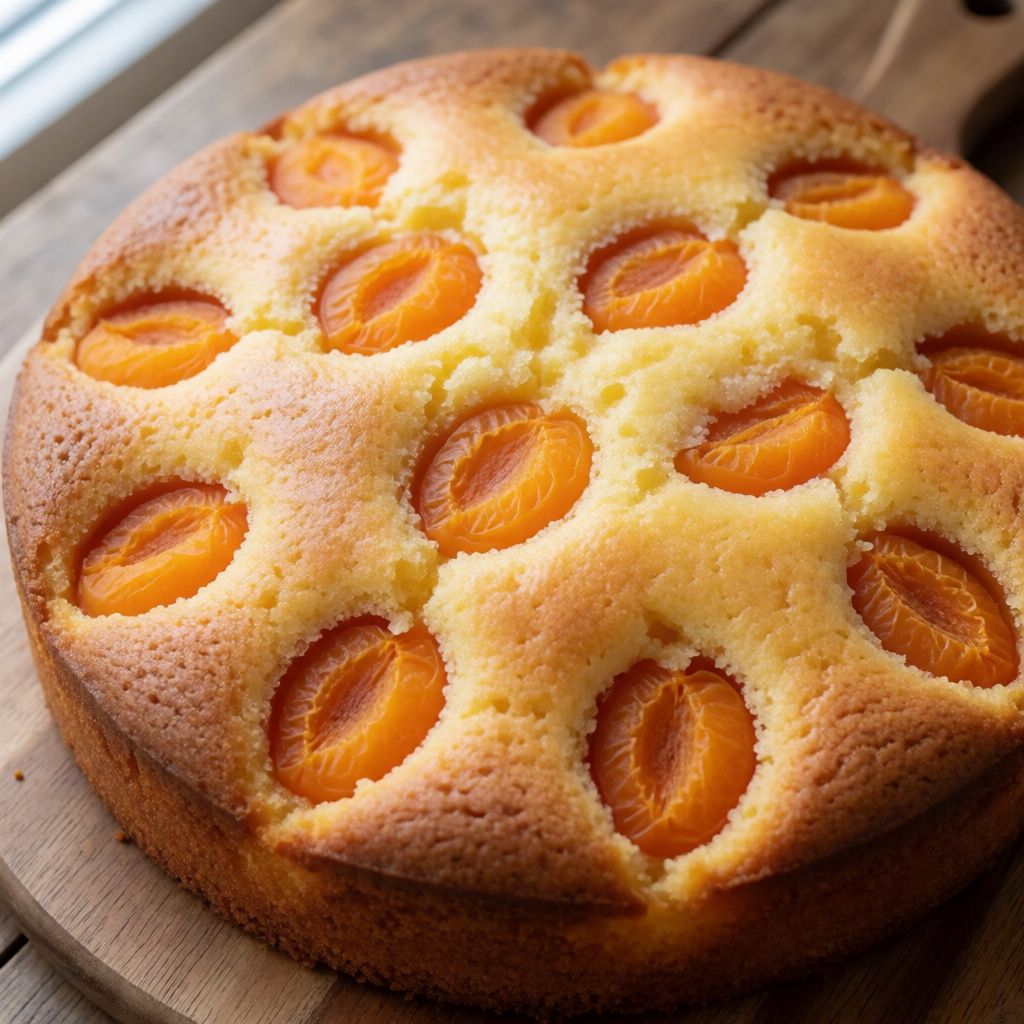
 AI photo
Apricot Cake
A simple apricot cake with a light sponge-like batter, apricot pieces folded in and slices arranged on top.
Labels are worked out automatically from the ingredients and can be wrong. Check the packaging if it matters to you.
Ingredients
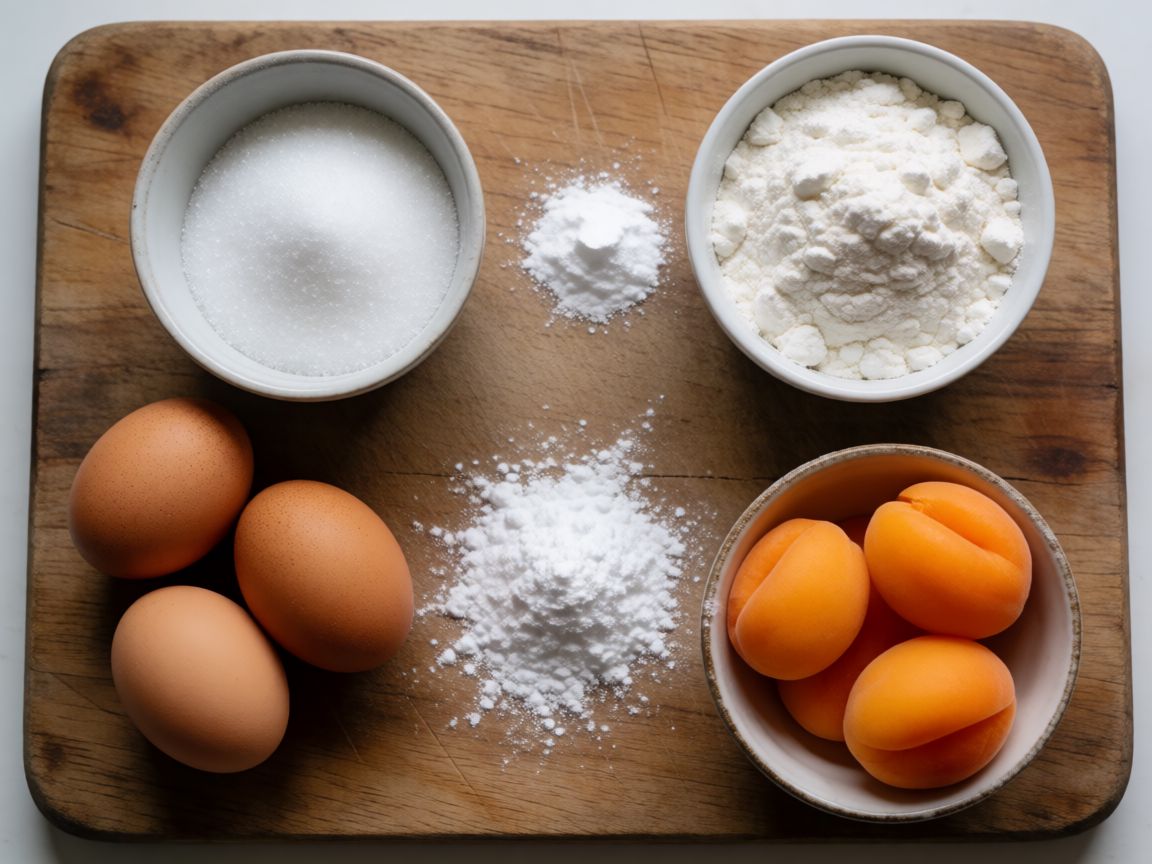
- 3 pcs Eggs
- 150 g Caster sugar
- 100 g Vegetable oil
- 300 g Plain flour
- 10 g Baking powder
- 400 g Apricots
- 1 pinch Icing sugar for dusting, adjust to taste







Steps
Crack the eggs into a bowl and whisk with an electric mixer while gradually adding the caster sugar. Pour in the vegetable oil.
Sift the flour and baking powder, then add gradually in small batches, mixing well each time.
Wash the apricots and remove the stones. Cut 250g into pieces and fold into the batter; slice the rest for decoration.
Pour the batter into a 22cm cake tin, greased and dusted with flour.
Arrange the apricot slices on top and bake in a preheated oven at 180°C (conventional) for 50–55 minutes, or 170°C (fan) for 45–50 minutes.
50 minLet the cake cool before removing it from the tin.
Before serving, dust with icing sugar or brush with jam or honey.
This is a plain sponge, not a showpiece — the kind of cake that sits on the table while the kettle's on, and nobody asks what's in it because they're already eating a second slice. Eggs, sugar, oil, flour, fruit. No butter to soften, no layers to stack, no icing that needs a spatula. It earns its keep by being easy and still coming out right, which is harder to manage than it sounds.
What decides whether it works is the air you put into the batter before the flour ever goes in. You whisk whole eggs with sugar — not whites separately, not butter creamed to ribbons — and that whisking is the only rise this cake gets besides the baking powder. Sugar crystals cut into the egg as you beat, trapping bubbles, and the mixture turns pale and thick. Skip that stage, or rush it, and you get a flat, gummy disc that tastes fine but sits in your stomach like a brick. Some say a sponge needs butter to be properly rich — no, because oil does a different job here: it stays liquid, coats the flour, and keeps the crumb tender and moist for days after a butter cake would've gone dry at the edges. That's the whole point of using oil instead — not thrift, chemistry.
Eggs are the structure here, not a bit player. Three of them, whisked with the sugar until the mixture is pale and holds a ribbon when you lift the whisk — that's the sign enough air is in, and air is what makes this rise, since there's no creamed butter doing it elsewhere. Let them come to room temperature first if you can; cold eggs are thicker and resist holding bubbles, which is why a cake made with fridge-cold eggs often needs longer at the mixer and still comes out denser.
Caster sugar earns its place by being fine enough to dissolve fully while you whisk, so you don't bite into a grainy pocket later. It's not just sweetness — sugar holds onto water, which is part of why this cake doesn't dry out as fast as you'd expect from something with no butter in it. Golden caster works the same way with a slightly deeper flavour; ordinary granulated will do the job too, it just wants longer at the mixer to disappear properly.
Oil replaces butter entirely, and the only real rule for it is that it shouldn't smell of anything — sunflower, rapeseed, any neutral oil sold for frying will do. Rapeseed is an easy choice in a British kitchen and barely registers against the fruit. Olive oil is the wrong tool here; its flavour will argue with the apricots instead of staying out of the way.
Flour and baking powder get sifted together for one plain reason: baking powder sitting in a damp lump means a bitter, metallic pocket in one bite and nothing in the next. Sifting spreads it evenly through the flour before it ever meets liquid. The 300g of flour against only 100g of oil is also what gives the batter enough body to carry the diced fruit without it all settling at the bottom — this is a thick batter by design, not a thin one you've accidentally overworked.
Apricots: 250g diced through the batter, the rest sliced on top for looks. Choose them firm rather than soft — they need to survive 45–55 minutes of oven heat and hold their shape, not collapse into jam before the crumb around them has even set. If what's on the shelf is the usual underripe, flavourless British apricot, you're not losing much by swapping to ripe plums or peaches cut the same way, or well-drained canned apricots if fresh ones aren't worth the money that week. Just keep the fruit dry before it goes in — extra juice thins the batter and that's when pieces do sink.
Icing sugar at the end is pure decoration and nothing more — it will vanish into a damp patch if the cake's sitting in a steamy kitchen with the kettle going, so dust it close to serving, not an hour before. If you're making the cake a day ahead for Sunday tea, brush the top with warmed jam or honey instead — that sets into a thin glaze that doesn't dissolve away and keeps the sliced apricots from drying out on top. And let the cake cool properly in its tin before you turn it out; underneath that golden top it's still finishing its set, and unmoulding it hot is how you end up with a cracked bottom and a cake stuck half in, half out of the tin.