
 AI photo
Artichoke Parmigiana
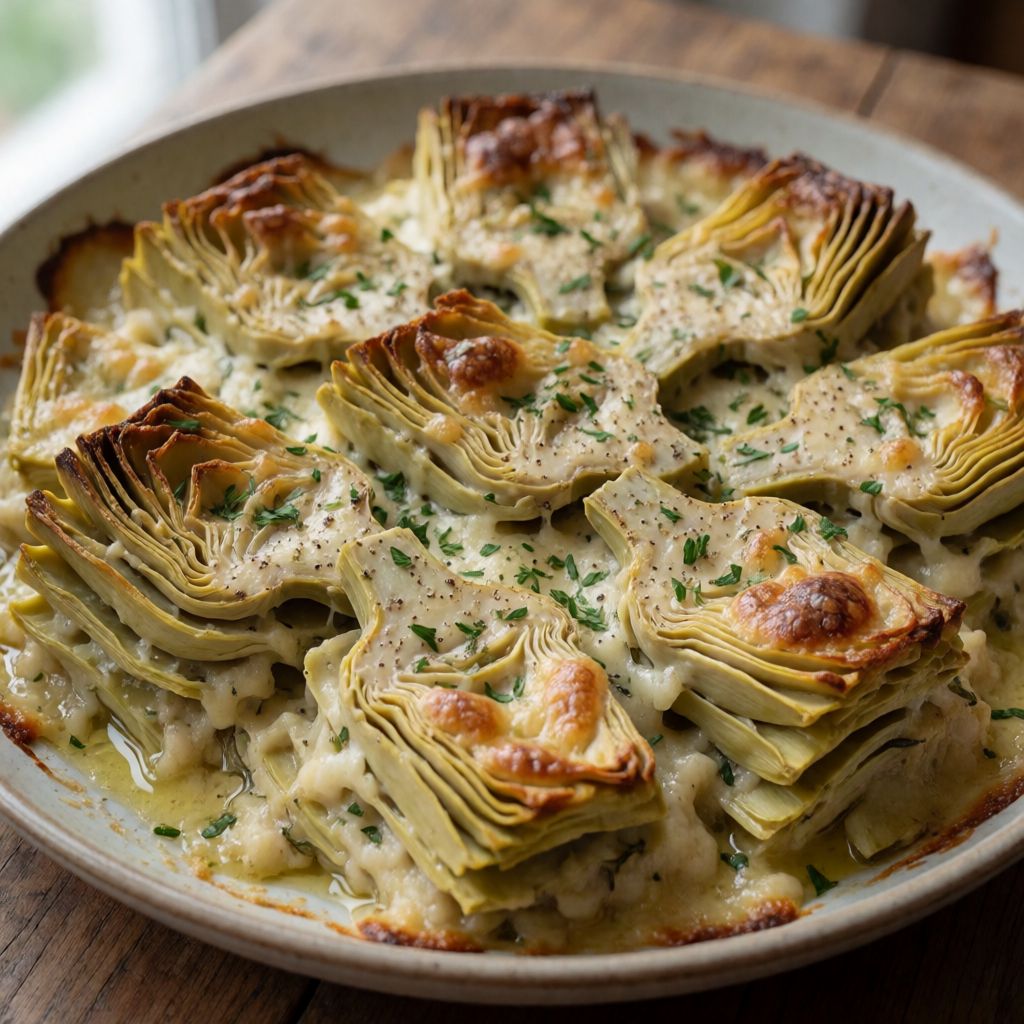
A baked artichoke parmigiana layered with mozzarella and béchamel sauce, finished with a golden crust.
Labels are worked out automatically from the ingredients and can be wrong. Check the packaging if it matters to you.
Ingredients
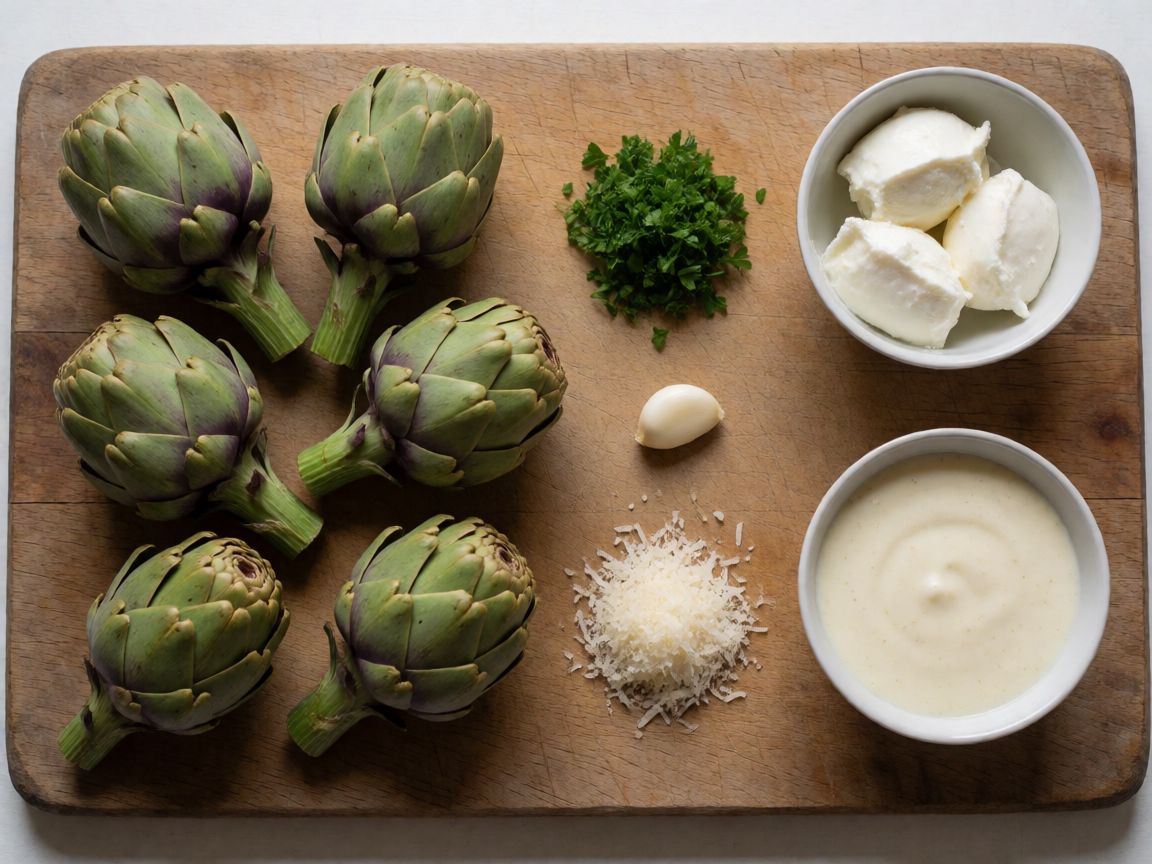
- 8 pcs Artichoke
- 1 clove Garlic
- 1 bunch Parsley
- Olive Oil to taste
- Salt to taste
- Black Pepper to taste
- 200 g Mozzarella
- 250 g Béchamel Sauce
- Parmesan to taste, optional









Steps
Clean the artichokes: trim the stem tip, remove the thorny tips and tough outer leaves. Cut each in half, then into wedges, removing the hairy inner "choke". Place immediately in water with lemon.
Heat the olive oil in a frying pan, sauté the garlic until golden, then add the drained artichokes.
Sauté over high heat, season with salt and black pepper, and add the chopped parsley.
Pour in stock or hot water and cook, gradually adding more stock, until the artichokes are tender.
Spread a thin layer of béchamel sauce over the bottom of a baking dish.
Make the first layer with a third of the artichokes, add sliced mozzarella, then another layer of béchamel.
Repeat for two layers, finishing with a generous layer of béchamel on top.
Bake the parmigiana in the oven until golden and crisp.
12 min
This isn't lasagne wearing a disguise, and despite the name it isn't really about parmesan cheese. Artichoke parmigiana is a vegetable braised down until it surrenders, then stacked in thin layers with béchamel and mozzarella and baked just long enough to grow a skin on top. The whole dish hangs on two fights: keeping the artichoke from going grey before it even hits the pan, and keeping the inside from turning to soup once it's in the oven.
Artichokes brown the second you cut them — an enzyme in the flesh meets air and starts oxidising, same business as a sliced apple going brown on the chopping board. Lemon water isn't there to make things pretty. The acid drops the pH right at the cut surface and stops that enzyme working, which buys you the twenty minutes you need to get through all eight before the first one looks like it's been dead a week.
The second fight is water. Fresh artichoke hearts hold moisture, mozzarella is mostly whey, and béchamel is already a liquid. Stack three wet things and bake them, and you don't get a parmigiana — you get a dish that floods the moment the knife goes in. Every step before the oven exists to drive some of that water off first: the searing, the slow addition of stock instead of a flood of it, slicing (not shredding) the mozzarella so it melts rather than weeps.
Finished right, a wedge holds its shape when you lift it, the top is freckled gold rather than flat brown, and the centre of each artichoke piece gives to the fork without being mush. That's the thing to look for — not a clock.
Start with the artichokes themselves, because they decide more than anything else here. You want the kind where the inner hairy choke is still soft and small — a young vegetable, not a fully grown thistle flower. In the UK the big globe artichokes sold for leaf-dipping are usually past that stage; the choke's gone fibrous and you'll be fighting it with a spoon. If you can't find small ones, frozen artichoke hearts (already trimmed, no choke to deal with) are a genuinely good shortcut for a home kitchen — you lose the trimming theatre but gain consistency, and nobody at the table will complain.
Garlic goes in to flavour the oil, not to be eaten as garlic — which is why you take it to golden and stop. Push it past gold into brown and the sugars in it have gone past caramelising into burning, and burnt garlic is bitter in a way that no amount of béchamel will cover later. If your hob runs hot and uneven, as most domestic ones do, pull the pan off the heat rather than guess — garlic goes from gold to black faster than you think.
Olive oil here just needs to carry heat and not fight the vegetable for attention — any oil with no smell of its own works, including a plain sunflower or rapeseed oil if that's what's in the cupboard; you lose nothing essential, you just lose the olive flavour, which was doing a supporting job, not the lead.
The searing in step three wants real heat, not a gentle warm-through, because the artichokes are still carrying surface moisture from the lemon water and from their own cut edges. High heat flashes that off fast enough that the vegetable starts to colour instead of just steam in its own juice — a pale, boiled-looking artichoke at the end is the symptom of a pan that was never hot enough to begin with. Then you back off and add stock or water gradually rather than all at once, because a flood of cold liquid drops the pan temperature and you end up braising unevenly — some pieces cooked through, some still raw in the centre. Little by little keeps it at a steady simmer the whole way.
Béchamel is just butter and flour cooked together first, then loosened out with milk — the flour has to cook for a minute before the milk goes in, or the sauce tastes of raw starch, which is the actual reason recipes insist on that order and not some rule for its own sake. If you're making it yourself rather than buying it ready-made, that's the one thing to get right. As for mozzarella, buy the drier block type sold for pizza rather than the wet balls in brine if you can — the wet kind is lovely eaten fresh but it'll leak whey straight into your béchamel layers in the oven. If it's all you've got, slice it and let it sit on kitchen paper for ten minutes first to pull some of that water out.
And on the name: some people assume parmigiana means loaded with parmesan, and skip the dish if they're out of it. No — food historians mostly trace the word to the Sicilian for shutter slats, describing how the layers overlap, not what cheese sits in them. That's exactly why parmesan is marked optional on this recipe — it's a finish for the crust on top, not the identity of the dish. The identity is the layering and the artichoke underneath it, patiently braised, which is the one ingredient you can't swap out for anything and still call it this.