
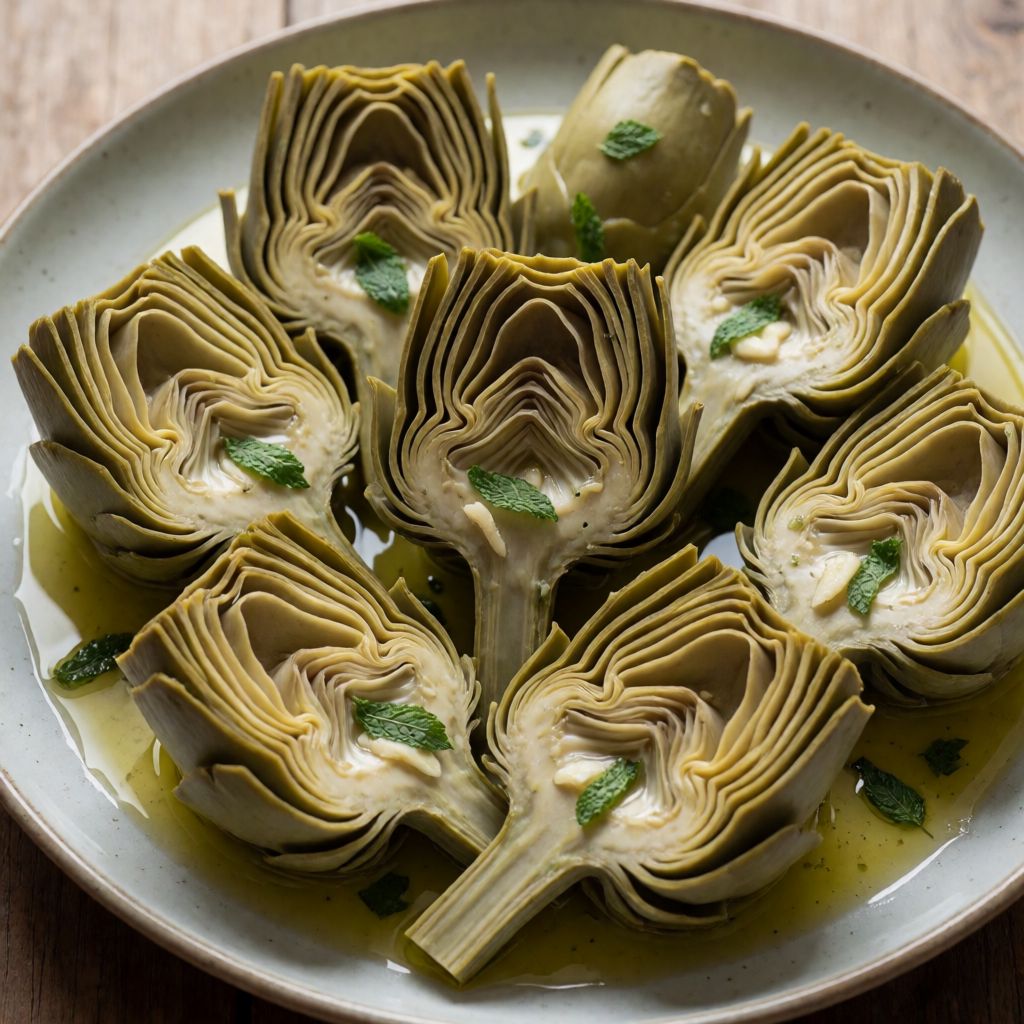
 AI photo
Artichokes in Olive Oil
Sliced artichokes pickled in white wine vinegar with garlic and mint, then preserved in olive oil for a simple antipasto.
Labels are worked out automatically from the ingredients and can be wrong. Check the packaging if it matters to you.
Ingredients
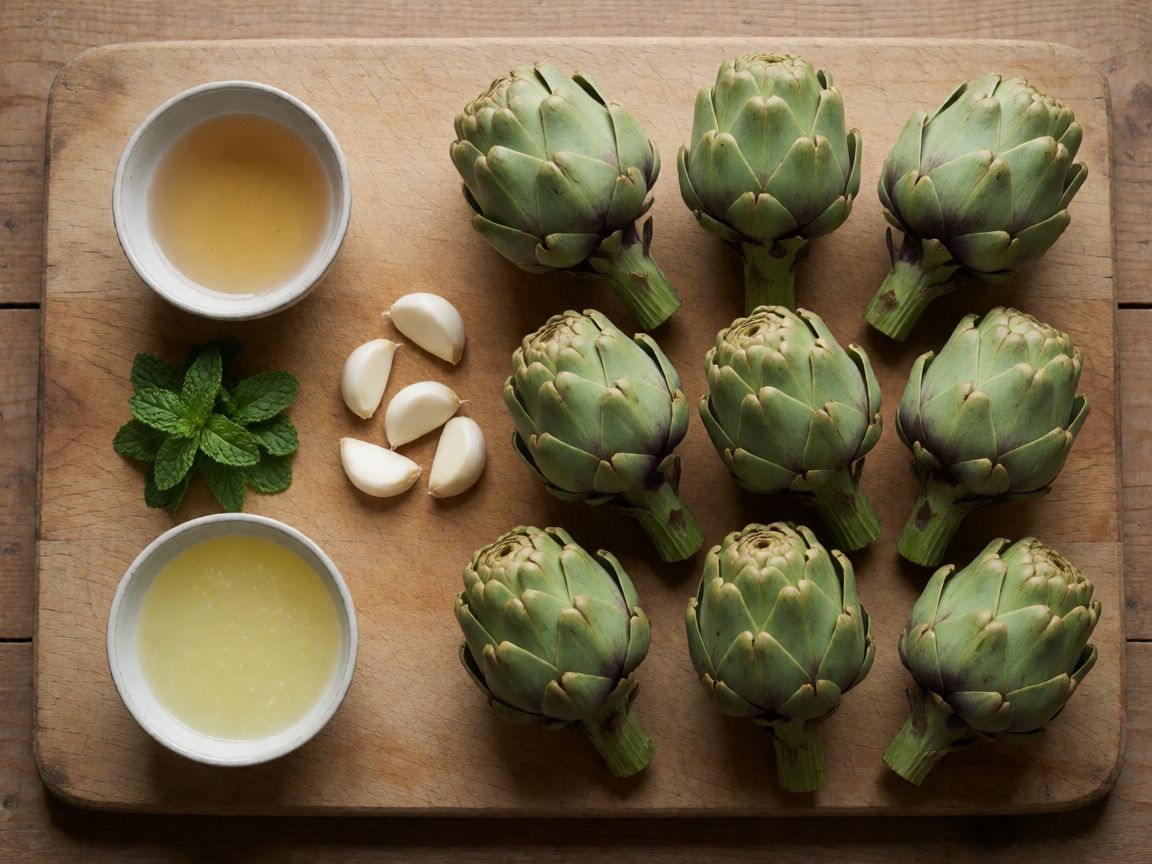
- 10 pcs Artichokes
- 3-4 clove Garlic
- White wine vinegar to taste
- Mint to taste
- Olive oil to taste, plus extra to cover
- 1 pcs Lemon juice juice of 1 lemon






Steps
Prepare the artichokes: trim off the tough outer leaves, cut in half and remove the fuzzy choke.
Slice the artichokes thinly and immediately place them in cold water with the lemon juice.
Transfer the slices to a saucepan, cover with white wine vinegar and blanch until just crisp.
Drain off the liquid and pat the artichokes dry.
Put the artichokes in a bowl, add the garlic, mint and olive oil, and mix well.
Sterilise glass jars in the microwave, then wash and dry them.
Pack the jars tightly with the artichokes and dressing, then top up with olive oil to the brim.
Seal the jars and store them in a dark place for two months.
This is a conserva — vegetables suspended in oil and cut off from air, the way people kept food alive through winter long before anyone owned a fridge. Here the vegetable is artichoke, sliced thin, given a short bath in vinegar, dressed with garlic and mint, and then drowned — properly drowned, to the brim — in olive oil. Two months later you eat it as antipasto, a forkful before the real meal starts.
What decides whether it works has nothing to do with how fancy the jar looks. It's three things: whether the artichoke stayed pale instead of going grey, whether it came out of the vinegar bath still with some bite instead of collapsing into mush, and whether every last slice ended up properly dry and properly covered in oil with no air pocket and no stray drop of water hiding underneath. Miss any one of those and you either get something that looks like it's been left in a puddle, or — worse — something that's gone off quietly in the dark without telling you.
Some say artichokes go black because the metal knife "reacts" with them. No — it's the air. Cut flesh meets oxygen, an enzyme in the artichoke goes to work, and within a minute you've got grey-brown edges whatever knife you used, stainless or not. The lemon water isn't a ritual, it's a brake pedal: acid slows that enzyme down. That's why the recipe has you dunking the slices the second they're cut, not after you've finished the whole pile — by then the first ones are already turning.
Artichokes: look for ones that feel heavy for their size with leaves still gripping tight — a loose, open artichoke has been sitting around drying out from the inside, and no amount of lemon water fixes that later. In the UK you're mostly buying imported ones, Italian or Spanish, best in spring; outside that window don't force it with tired stock. If you can't get fresh globe artichokes, frozen artichoke hearts are an honest substitute — they're already blanched, so you'd skip the vinegar bath and go straight to the dressing stage, accepting a softer texture. Jarred artichokes in brine, well rinsed and dried, work the same way in a pinch, though the flavour is already someone else's decision, not yours.
Lemon juice isn't a flavouring here, it's a brake on the browning enzyme — any acid in water does the same job, so a splash of white vinegar in the water works if you're out of lemons. Speed matters more than quantity: slice and drop, slice and drop, don't let a batch sit on the board admiring itself.
White wine vinegar is chosen for being pale and mild — it cooks the slices without tinting them and without the harshness of plain white spirit vinegar. Any vinegar around 5% acidity will blanch the artichoke the same way; cider vinegar is a fair swap, red wine vinegar will work chemically but will stain everything a faint purple-brown, which some people mind and some don't. What you're watching for while they're in there isn't a clock — it's the slice turning from matte and stiff to slightly translucent at the edges, still with resistance when you bite it. Vinegar overcooks fast; check by eye and tooth, not by minute count.
Garlic goes in raw, sliced thin rather than whole cloves, because thin means it's surrounded by the acidic, oily dressing rather than sitting as its own little pocket in the jar — that matters for the same safety reason the vinegar blanch matters. Mint is the traditional partner for artichoke in this kind of dish because its sharpness cuts the slight bitterness artichoke carries naturally; if you've no fresh mint, a little flat-leaf parsley with a scrap of lemon zest gets you a comparable lift, though it isn't the same note. Dried mint will do if that's what's in the cupboard — use less, since it's concentrated and loses the fresh green edge.
Olive oil is the whole point of the jar, named right there in the title, so swapping it for a neutral oil would technically preserve the artichokes but would miss what the dish is for — the oil is meant to be eaten too, infused after two months with garlic and mint, drizzled over bread. A milder olive oil, not the most aggressive extra virgin you own, lets the artichoke and mint come through rather than being shouted down after two months of marinating. Pat the slices properly dry before they go anywhere near the oil — not damp-dry, actually dry — because water sitting at the bottom of a jar under oil is exactly the kind of hidden pocket that spoils quietly. And top the jar to the absolute brim: any air gap is oxygen the oil doesn't need and a space mould can start in.
The microwave sterilising of the jars is worth doing, but be honest about what it achieves — a bit of steam off boiling water in a jar knocks back surface bacteria and mould spores, it isn't the pressure-and-heat of an industrial autoclave. The vinegar's acidity is still your main insurance, the clean jar is just good housekeeping on top of it.
The dark cupboard for two months isn't tradition for tradition's sake — light speeds up oil going rancid, the same way it fades curtains, and before anyone had a fridge a dark cool larder was the only preservation technology going. Two months isn't a number to argue down. That's patience doing the actual cooking: raw garlic mellowing, mint settling into the oil instead of sitting on top of it, flavours actually meeting instead of politely coexisting in the jar. Open it early and you'll taste three separate ingredients rather than one dish.