
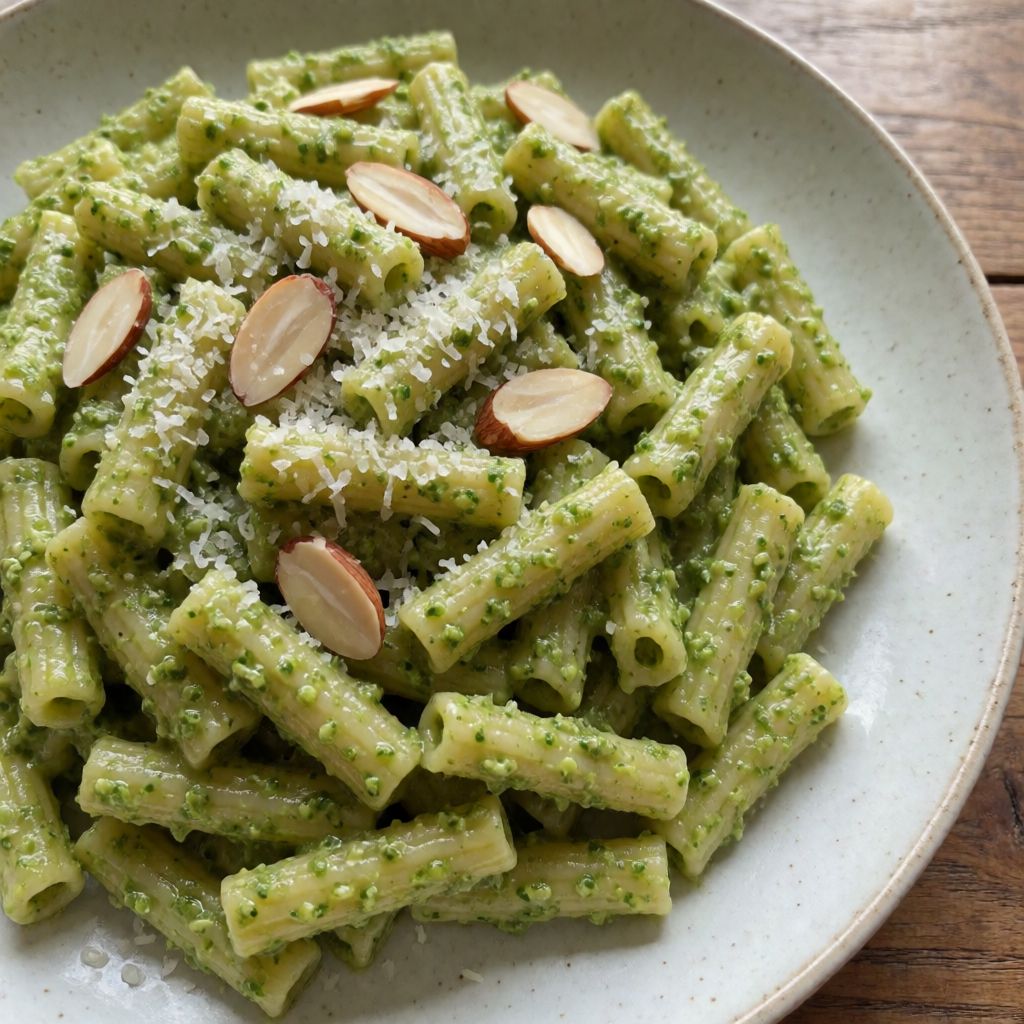
 AI photo
Rocket and Almond Pesto Pasta
A quick, fresh pasta dressed with a vibrant rocket and almond pesto.
Labels are worked out automatically from the ingredients and can be wrong. Check the packaging if it matters to you.
Ingredients







Steps
Bring a pot of salted water to the boil and cook the pasta.
Put the washed and dried rocket into a blender and blitz until finely chopped.
Add the salt, almonds, Parmesan and a thin stream of olive oil.
Blend everything to a fairly loose, smooth consistency.
Add a pinch of nutmeg and a little of the pasta cooking water to make the pesto creamier.
Drain the pasta and toss it with the pesto, adding a little more water if needed.
Sprinkle with Parmesan and mix until evenly combined.
This is basil pesto with the serial numbers filed off — rocket standing in for basil, almonds for pine nuts. Same logic, cheaper ingredients, sharper edge. Rocket brings pepper and bitterness where basil brought sweet anise, and that changes the whole balance: you need the fat and the salt to tame it, not just carry it.
What decides whether this works is simple and has nothing to do with how finely you chop: it's whether you keep the sauce raw. The moment this gets hot, two things go wrong at once — the chlorophyll in the rocket breaks down and the bright grass-green turns a tired khaki, and the mustardy compounds that give rocket its bite cook off, so you're left with a sauce that's gone both dull and bland. Everything in the method exists to avoid that. No pan, no simmer — the pasta's own residual heat is as warm as this sauce is allowed to get.
The second thing that decides it is the emulsion. Oil and the starchy pasta water don't want to mix on their own — left alone they'll separate, oil floating free, and you'll get a puddle at the bottom of the bowl instead of a coating on the pasta. The starch suspended in that cooking water is what holds them together. That's why you keep some back and add it in stages rather than all at once: you're building a sauce, not diluting one.
Rocket: buy it young if you can tell — smaller leaves, paler stems. Old rocket, the kind that's been sitting under supermarket lights, turns properly hot and almost acrid, past pepper into punishment. Wash it and dry it properly, because wet leaves dilute the sauce and water the flavour down before the oil's even gone in. Wild rocket (the raggedy-leaved kind) is hotter than the cultivated salad-bag type — use less of it, or mellow it with a touch more almond and cheese.
Almonds: their job is body and fat, nothing more romantic than that. Skin-on almonds carry a slight bitterness of their own that actually sits well next to rocket's bitterness — they agree with each other. Blanched almonds give you a smoother, paler, creamier paste if that's what you want. Either way, raw, not toasted: toasting adds a flavour this sauce isn't built around, and a blender needs a wetter, oilier nut to move at all — dry-toasted nuts clog the blades. If you've no almonds, any oily, fairly neutral nut does the same structural job — walnuts, cashews, even sunflower seeds work at a push, and are the one to reach for if someone's got a nut allergy to the stone-fruit family.
Parmesan, twice, for two different reasons: blended in, it's salt and savoury depth working inside the sauce; scattered on top at the end, it's texture and the bit you actually taste first. Buy a block and grate it yourself if you can — the ready-grated stuff is often cut with anti-caking starch, and that starch will thicken your sauce in a way you didn't choose and can't control.
Olive oil here is doing flavour work, not just lubrication, so this is one place where you want one with a personality — a oil that tastes faintly of itself, peppery or grassy, rather than the flavourless stuff you'd use for frying. Pour it in a thin stream while the blender runs; add it all at once and it won't bind evenly, you'll get pockets of raw oil instead of a sauce.
Nutmeg is the quiet one. It's an old habit with dark leafy greens and with anything dairy-heavy — think of it in spinach, in béchamel — because its warmth cuts bitterness without fighting it the way more aggressive spices would. A pinch, no more; it should be felt, not tasted.
On the blender itself: a jug blender or food processor is your mortar and pestle here, and there's no shame in that — nobody's hand-pounding rocket in a London flat on a Tuesday. But the motor generates its own heat through friction, and if you run it long and continuous you can warm the paste enough to start the same greying you were trying to avoid by not cooking it. Pulse it in short bursts instead of one long grind — you'll know you've gone too far if the green dulls and the smell turns flat rather than peppery. Salt the pasta water properly and keep a mugful back before you drain — that's your emulsifier and your safety net if the sauce looks too thick once it meets the pasta. And pick a short pasta with some shape to it — fusilli, penne, orecchiette — because the ridges and hollows are what actually hold a loose sauce like this; a smooth long noodle just lets it slide straight off.