
 AI photo
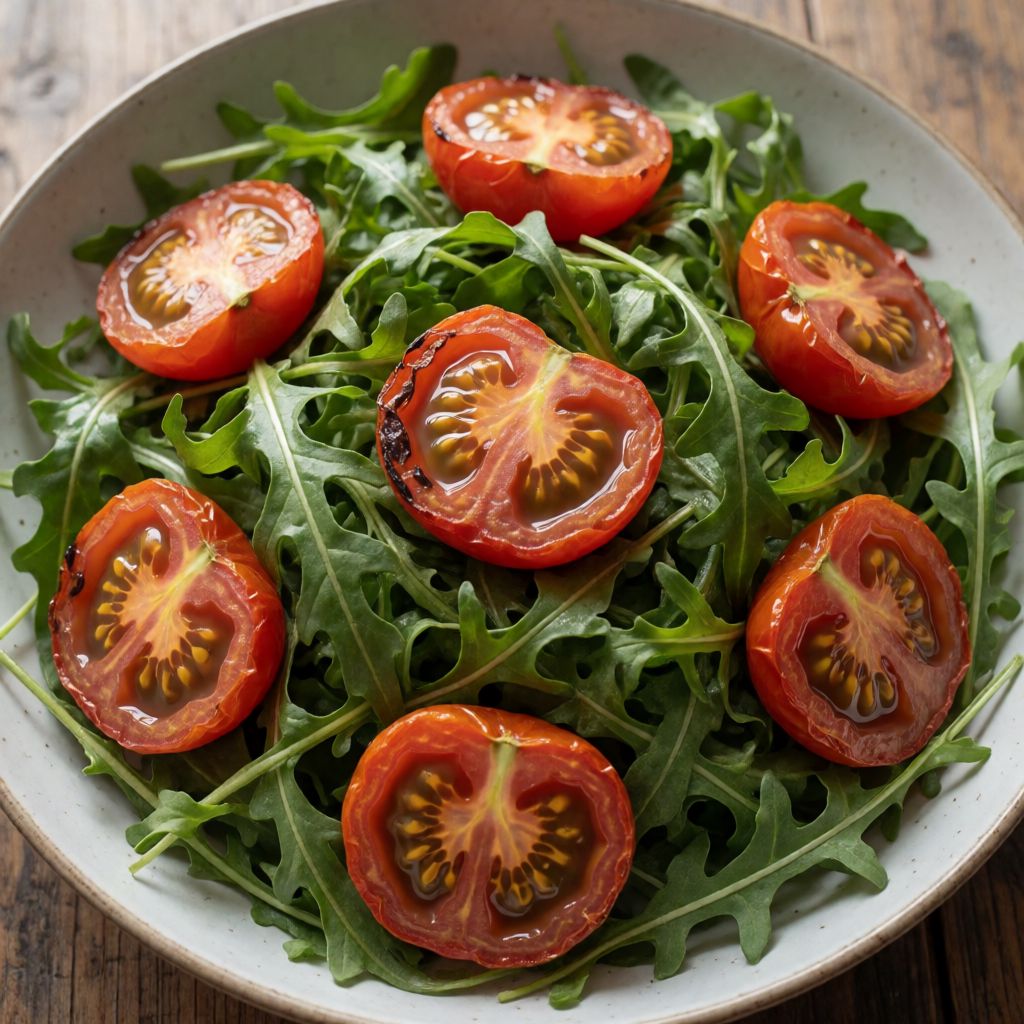
Rocket Salad with Roasted Tomatoes
A fresh rocket and spinach salad topped with slow-roasted tomatoes, toasted pine nuts and a honey-mustard vinaigrette.
Labels are worked out automatically from the ingredients and can be wrong. Check the packaging if it matters to you.
Ingredients
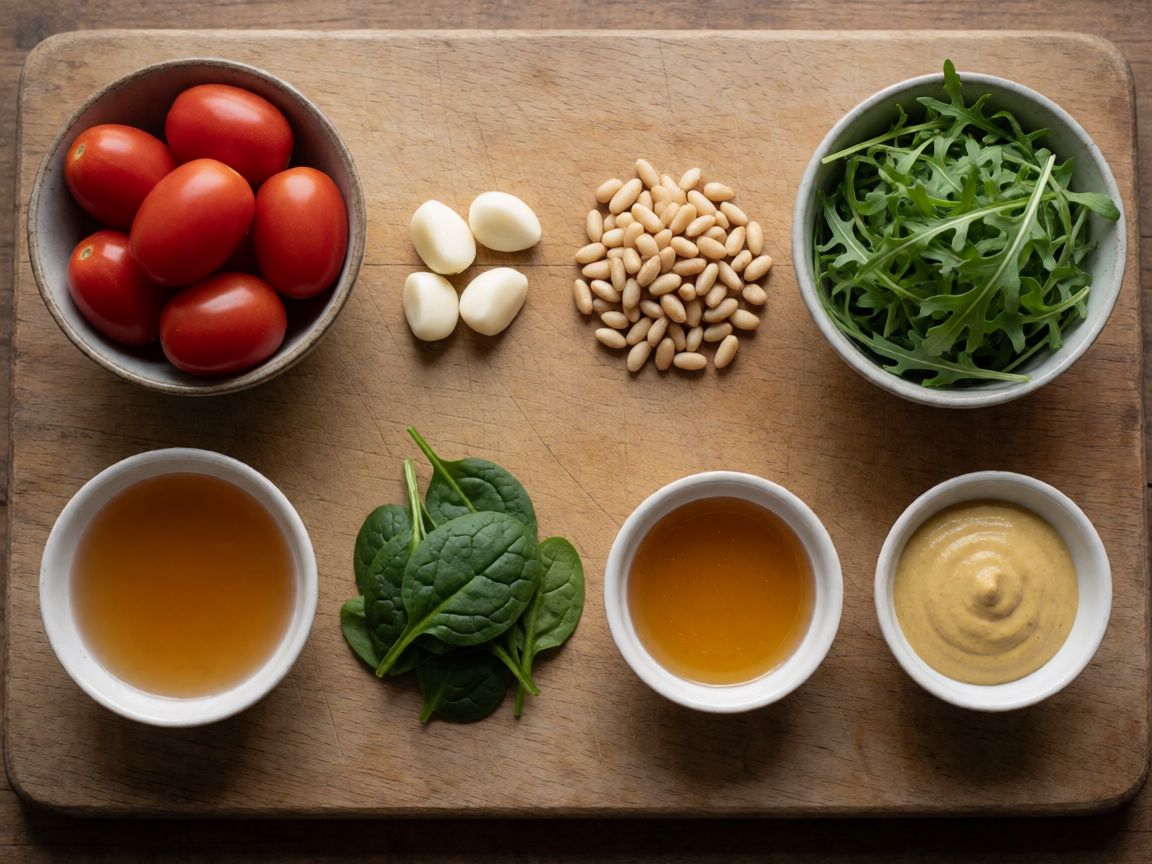
- 200 g Tomato
- 3 clove Garlic finely chopped
- 1 tbsp Olive oil
- Salt
- Black pepper freshly ground
- 30 g Pine nuts
- 125 g Rocket
- 50 g Spinach
- 3 tbsp Olive oil
- 1 tbsp Apple cider vinegar
- 1 tsp Honey
- 1 tsp Dijon mustard
- Salt
- Black pepper freshly ground






Steps
Halve the tomatoes and place them on a baking tray lined with baking paper. Scatter the finely chopped garlic over the top, drizzle with olive oil and sprinkle with salt and pepper.
Roast the tomatoes at a low temperature of 125°C for 1 1/2 – 2 hours. Remove from the oven and let cool.
120 minWhisk the vinaigrette and season well with salt and freshly ground pepper; add more honey or mustard to taste if you like.
Toast the pine nuts in a dry, hot pan, stirring, until golden.
Toss the rocket with the spinach and vinaigrette, arrange on a plate and scatter the tomatoes and pine nuts over the top.
This isn't really a salad recipe — it's a tomato recipe with a salad attached. Two hours at a low heat is doing something that no amount of chopping and dressing can fake: it's pulling water out of the tomato slowly enough that sugars concentrate rather than scorch. What decides whether it works is patience with that oven, not cleverness with the leaves.
125°C is below the point where sugars caramelise fast and brown — it's a drying temperature, not a roasting one. You're not cooking the tomato so much as persuading it to give up its water gently, so the flesh collapses into something dense and almost jammy while the flavour that was spread thin through all that juice gets left behind, concentrated. Rush this at 200°C and you'll get tomatoes that are soft on top and raw in the middle, or worse, charred skin with watery insides — the heat races ahead of the moisture loss.
Some say roasting tomatoes is just "intensifying" the flavour, as if heat adds something. No — it removes something. Water is the main thing in a fresh tomato, and water has no taste. Take it away slowly and what's left behind — sugar, acid, that faint tomato savouriness — simply takes up more of the volume. The garlic scattered on top turns from sharp to sweet and nutty over the same two hours; thrown in raw at the end it would stay harsh.
The rest — the vinaigrette, the toasted nuts, the greens — is assembly, not cooking. It has to wait for the tomatoes, not the other way round.
The tomato itself matters more than the recipe lets on. You want one with actual flesh and not too much interior water cavity — plum or Roma types roast better than big beefsteak slicing tomatoes, which are mostly seed-jelly and give you less to concentrate. Cherry tomatoes work too, just watch them — small ones finish well before the two-hour mark and you'll end up with raisins, not jam. If your tomatoes taste of nothing to begin with, no amount of roasting will invent flavour that isn't there; roasting concentrates, it doesn't create.
Garlic finely chopped, not crushed, because crushed garlic releases enzymes faster and tends to burn bitter under long slow heat even at 125°C; a knife-chopped clove roasts more evenly and comes out sweet rather than acrid. If you've only got garlic powder, add it at the very end instead — it has no water to lose and will just sit there doing nothing useful for two hours, or burn.
Olive oil here is doing double duty — carrying flavour in the roast, and carrying the vinaigrette. Use "any oil with no taste of its own" is the wrong instruction for the vinaigrette's base and the roasting oil alike, because here you want the opposite: an olive oil with actual character, since it's one of the few flavours standing next to a slow-cooked tomato with nothing else competing. A flavourless vegetable oil would just grease the pan. Save the neutral oils for things you don't want to taste.
Pine nuts toast in a dry pan because they're already oily enough to self-fry — add butter or oil and they'll go from pale to black in the time it takes to look away. Watch them, not the clock; gold is the point, brown is burnt, and pine nuts don't warn you, they just go. If pine nuts are pricey or you can't find them, toasted flaked almonds or sunflower seeds do the same job: fat and crunch against soft leaves.
Rocket and spinach together is a balance, not a whim — rocket alone is all pepper and bite, spinach mellows it and adds a mineral, almost metallic note that sits well against the sweet roasted tomato. The vinaigrette's job is small: acid (vinegar) against sweetness (honey, tomato), a thickener and emulsifier (mustard) holding the oil in suspension so it coats leaves instead of pooling at the bottom of the bowl. Dress the greens just before serving, not before — spinach wilts and rocket goes limp and bitter if it sits in vinegar.
And the two hours in the oven: that's not downtime to fill with something else entirely, but it is unattended time. You can get on with a Sunday roast in the same oven at the same gentle heat if you're clever about shelf space, or just put the kettle on, have your tea, and let the tomatoes get on with losing their water in peace. The whole point of 125°C is that it doesn't demand your attention — only your patience.