
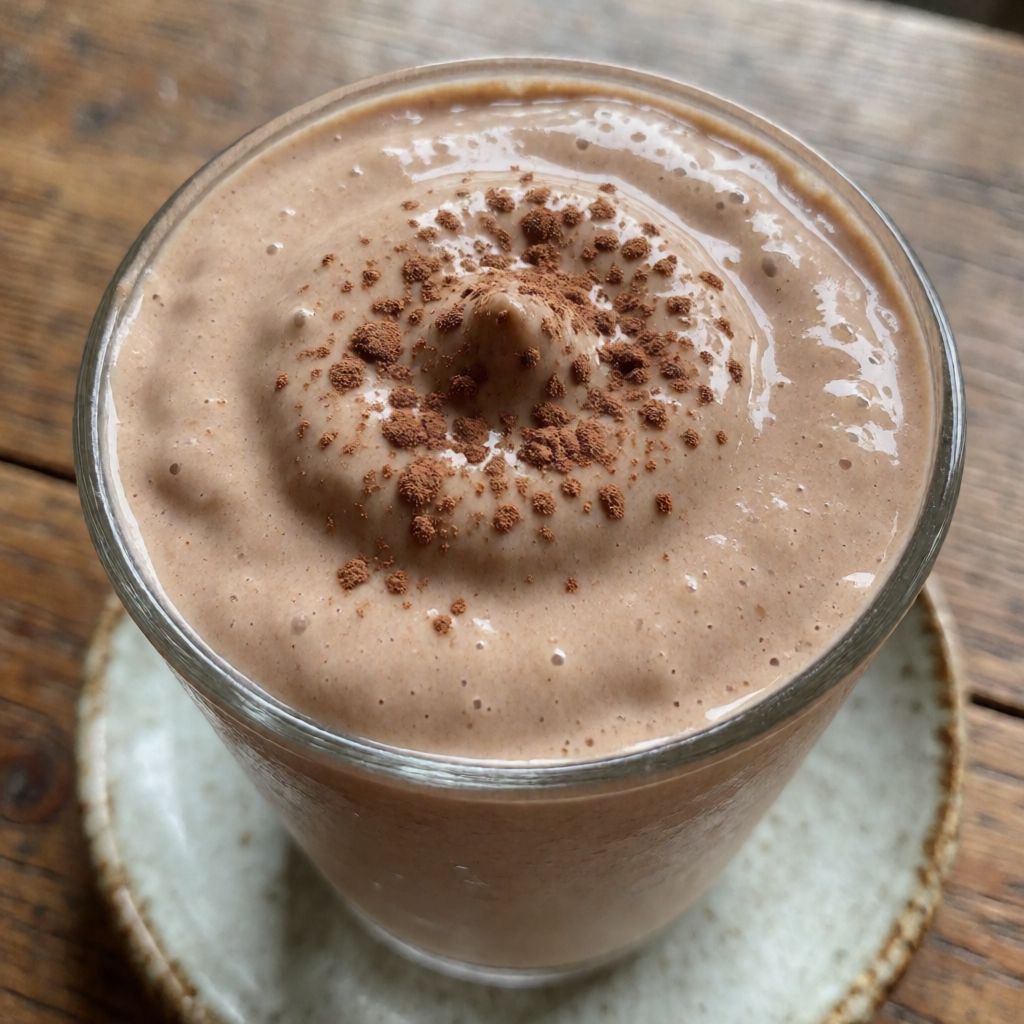
 AI photo
Avocado and Cocoa Smoothie
A smooth, creamy smoothie made from avocado, cocoa and milk.
Labels are worked out automatically from the ingredients and can be wrong. Check the packaging if it matters to you.
Ingredients
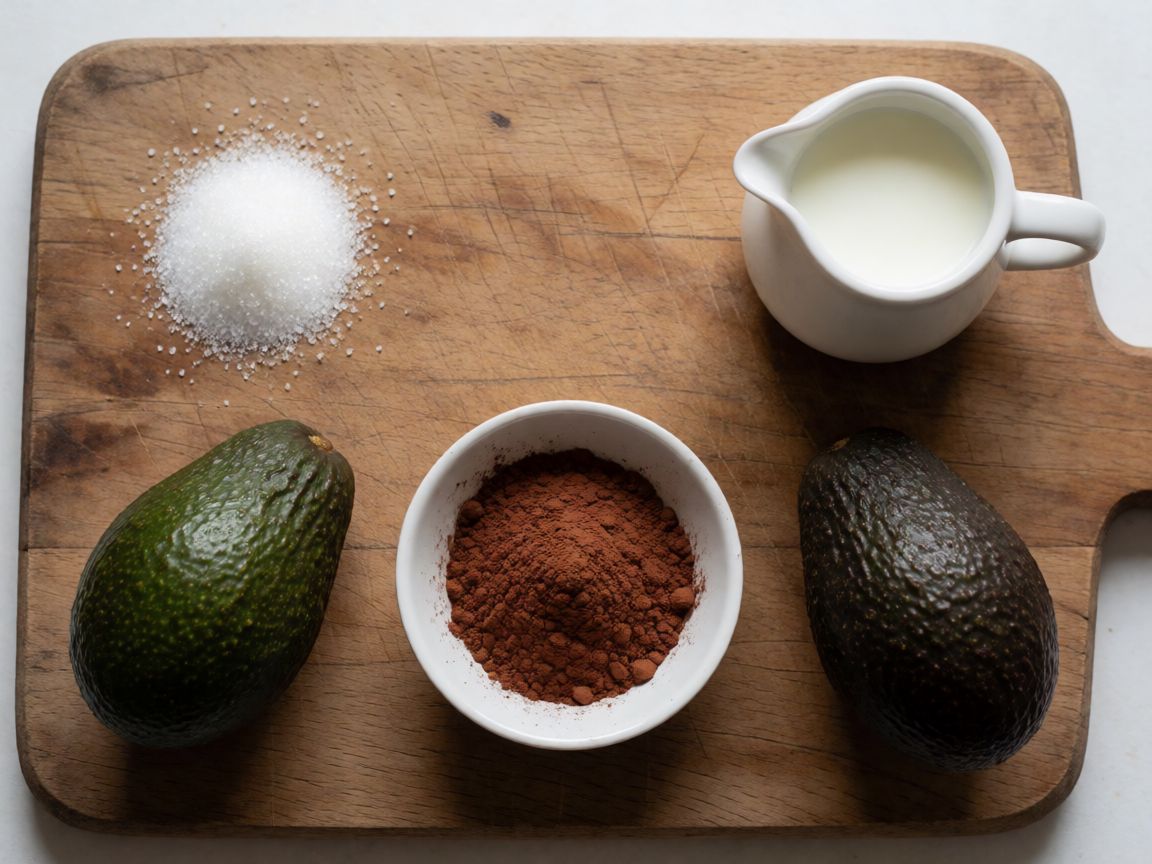
- 2 pcs Avocado
- 2 tbsp Sugar
- 50 g Cocoa powder
- 500 ml Milk


Steps
Cut the avocados in half and remove the stones. Scoop the flesh out of the skins with a spoon and put it into the blender jug.
Blend on medium speed until the avocado turns into a smooth, even purée.
Add the milk and keep blending until you get a thick, creamy mixture.
Add the sugar and sift in the cocoa powder through a fine sieve so no lumps form.
Keep blending until all the ingredients come together into a smooth mixture.
Serve the smoothie in glass bowls, decorated if you like with dark chocolate shavings or desiccated coconut.
This is not a milkshake with avocado thrown in for virtue points — it's a dessert built on one fact: ripe avocado flesh is almost pure fat with no strong flavour of its own. That's the whole trick. Cream gives a mousse its body by being fat suspended in water; here the avocado does the same job without cream, without eggs, without a stove. Which is why there's no cooking step at all — everything that decides whether this works happens in the blender, not on heat.
And what decides it is ripeness, full stop. A hard avocado won't purée smooth — it'll shred into fibrous threads no blade can fully break, and you'll be chewing green string through your chocolate. You want the kind that gives gently under a thumb at the stem end, almost too soft to slice neatly. If yours are still firm, this isn't the day to make this — leave them on the counter, not the fridge, for a day or two first.
Some people say avocado belongs only in savoury food, guacamole and toast and nothing sweeter. No — because the plant doesn't know what you're going to do with it. Its fat is neutral, almost buttery, with barely any taste of its own to clash with cocoa. Chefs have used fatty, bland things to carry chocolate for as long as there's been chocolate — this is the same logic as a ganache, just dairy-free and raw.
Avocado — two of them, ripe as above. If you genuinely can't get one soft enough, a very ripe banana will give you creaminess but a sweeter, fruitier result, not the same clean fat-carried chocolate; it's a different dessert wearing this one's name, not a true substitute. There isn't really a like-for-like swap here — the fat content is the entire mechanism, and nothing else in a British fridge has that much fat and that little flavour.
Milk — ordinary, the same stuff that goes in your tea. Whole milk gives a thicker, richer result because its fat backs up the avocado's; skimmed will still work but the mixture sits thinner and separates faster once poured. If you're avoiding dairy, oat milk carries weight well because it has a bit of natural fat and body; almond milk is thinner and you'll feel the gap — the smoothie will taste right but pour more like soup.
Cocoa powder — the plain, unsweetened kind, not a sweetened drinking-chocolate mix, which already has sugar and milk powder in it and will throw your proportions off and make the whole thing cloying. Cocoa powder clumps because the fine particles trap air and cling to each other the moment moisture touches them from one side only — sieving breaks that up before it ever meets the liquid, which is the only real defence against the bitter little pellets you sometimes bite into in a badly made chocolate drink. If you only have cocoa that's gone a bit solid in the tin, break it up and sieve twice.
Sugar — two tablespoons is a starting point, not a law, because cocoa brands vary wildly in bitterness and your avocados vary in how much natural richness they bring. Taste before you pour it out; you can always blend in a little more, you can't take it out once it's in.
Equipment is the one place a domestic kitchen can genuinely let you down here — a weak blender will leave a thin fibrous residue in a less-than-perfect avocado no amount of extra blending time fixes, because the motor simply doesn't spin fast enough to shear it. If yours struggles, scrape the jug down with a spatula between blends and give it rest intervals rather than running it continuously until it stalls.
And patience, even in a ten-minute recipe, still earns its place: patience in letting the avocados actually ripen before you start, because no amount of blending time afterward buys back what underripe fruit won't give you.