
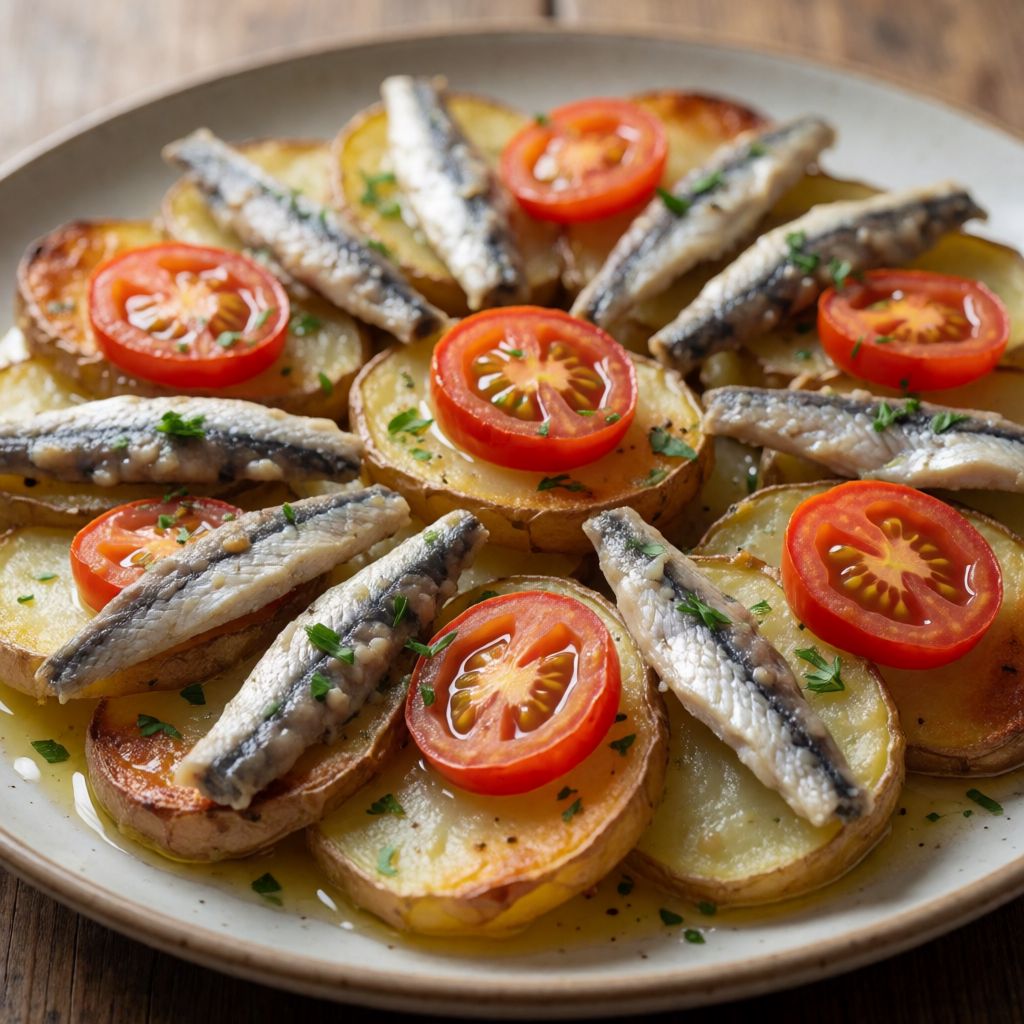
 AI photo
Baked Anchovies with Potatoes
A simple baked dish layering anchovies, potatoes and tomatoes, finished with breadcrumbs.
Labels are worked out automatically from the ingredients and can be wrong. Check the packaging if it matters to you.
Ingredients
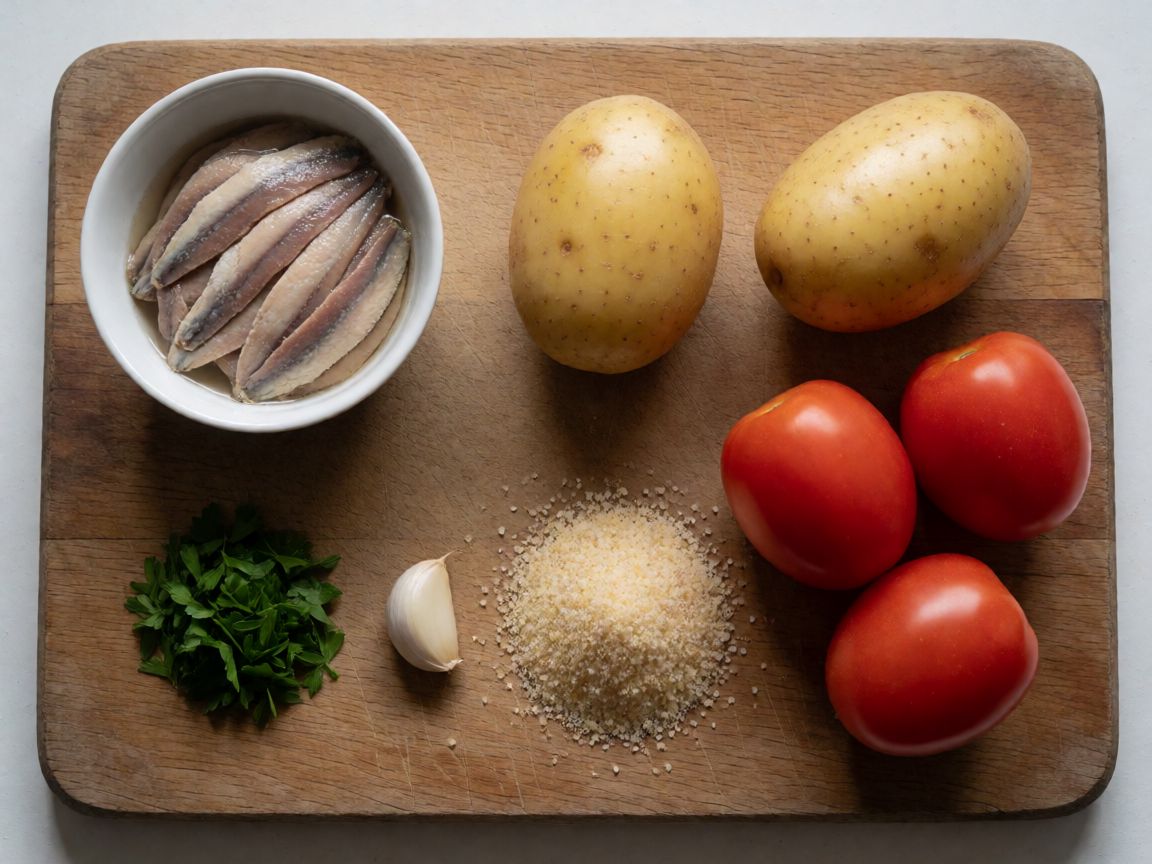
- 1 kg Anchovies cleaned and halved
- 2 pcs Potatoes
- 4 pcs Tomatoes
- 1 bunch Parsley
- 1 clove Garlic
- Olive oil to taste
- Salt to taste
- Black pepper to taste
- Breadcrumbs to taste, dried








Steps
Clean the anchovies thoroughly: cut off the head and tail, rinse, open in half, remove the innards and backbone, rinse again.
Wash and peel the potatoes, cut into thin slices, and boil for a few minutes in salted water.
Wash the tomatoes, peel them, and cut into thin slices or dice.
Peel the garlic, remove the core, and chop finely. Wash the parsley and chop finely.
Grease a baking dish with olive oil and arrange the halved anchovies in it.
Add a layer of boiled potatoes, then cover with tomato slices.
Sprinkle with parsley and chopped garlic, season with salt and black pepper.
Repeat the layers of anchovies, potatoes and seasoning until the ingredients are used up.
Generously top the last layer with breadcrumbs and drizzle with olive oil.
Bake at 180°C for 60 minutes.
60 minRemove the dish from the oven, let it cool slightly, and serve.
This is a poor man's dish dressed up as a Sunday dish. Anchovies, potato, tomato, bread — nothing here costs money, and that is the whole point. Along the Mediterranean coast this was what you cooked when the small, bony, strong-tasting fish were the ones nobody wanted to buy fresh and sell at a price, and you had a wood oven going anyway for the bread. Stack it in layers, let the oven do the work, eat it lukewarm. No technique to hide behind.
What decides whether it works is moisture. Anchovy is an oily, assertive fish — it does not need protecting from drying out, it needs its strength balanced. Raw tomato gives up water as it bakes; raw potato would stay chalky in the middle under that same heat and time, so it gets parboiled first — not cooked through, just softened enough that the oven can finish the job without needing twice the time or twice the heat. That parboil is not a formality, it is what stops you ending up with potato you can bite through and mush you can't.
Some say anchovies need frying first to "set" them before baking. No — that's a habit borrowed from dishes that actually need a crust. Here the fish is thin, cut open flat, and layered under tomato and potato that both release liquid as they bake; it braises as much as it bakes. A fried crust would just go soft again under that moisture, so you'd be frying for nothing.
180°C in a home oven, for an hour, in a shallow dish — that's gentle, steady background heat, not a blast. It's slow enough to let the potato finish cooking and the tomato collapse into sauce without the top burning before the middle is ready. Don't picture a wood-fired roar here; your oven just needs to hold that heat evenly, fan or not, and that's well within what a normal British oven does without complaint.
Anchovies: fresh, not the salted tinned kind in oil — those are a different ingredient entirely, concentrated and already seasoned, and would throw the whole salt balance off if you used them here. If you can't get fresh anchovy (not always easy inland in the UK), use another small, oily fish with a strong flavour of its own — fresh sardine is the honest substitute, same proportions, same handling. The point is oiliness and character, not a particular Latin name.
Potatoes: the role here is to soak up the tomato and fish juices while holding a shape you can see as a slice, not collapse into the sauce. A waxy or all-rounder potato does this; a floury mash-type potato will fall apart under the parboil-then-bake treatment and you'll lose your layers. Cut thin, consistently — thickness, here, decides cooking time more than the clock does.
Tomatoes: peeled, so you don't get curls of skin working loose in the sauce as it cooks — a small thing, but it's the difference between a dish that looks deliberate and one that looks unfinished. Out of season, British tomatoes can be watery and flavourless; if that's what's on the shelf, use tinned plum tomatoes, drained and sliced or just crushed, rather than fighting with pale winter ones that bring liquid and no taste.
Garlic and parsley aren't a garnish scattered at the end — they're seasoning built into every layer, so the flavour runs through the dish rather than sitting on top of it. Chop them fine for the same reason you slice the potato thin: surface area, so they release their flavour into the oil and juices around them rather than staying as isolated bites.
Olive oil: use one with a flavour of its own here — this is one of the places where "any neutral oil" would actually flatten the dish, because the oil is doing real seasoning work alongside the garlic and parsley, not just carrying heat. Breadcrumbs: dried, plain, nothing flavoured — they need to be dry enough to crisp rather than steam, which is the whole reason you only add them at the very end.
And give it the one ingredient that isn't on the list: time to sit after it comes out. The instruction to let it cool slightly isn't politeness — a dish built in loose layers with a lot of released liquid needs that liquid to settle and thicken a little before you cut into it, or every slice arrives as a puddle. Ten minutes of patience here is what makes the difference between serving a dish and serving a soup.