
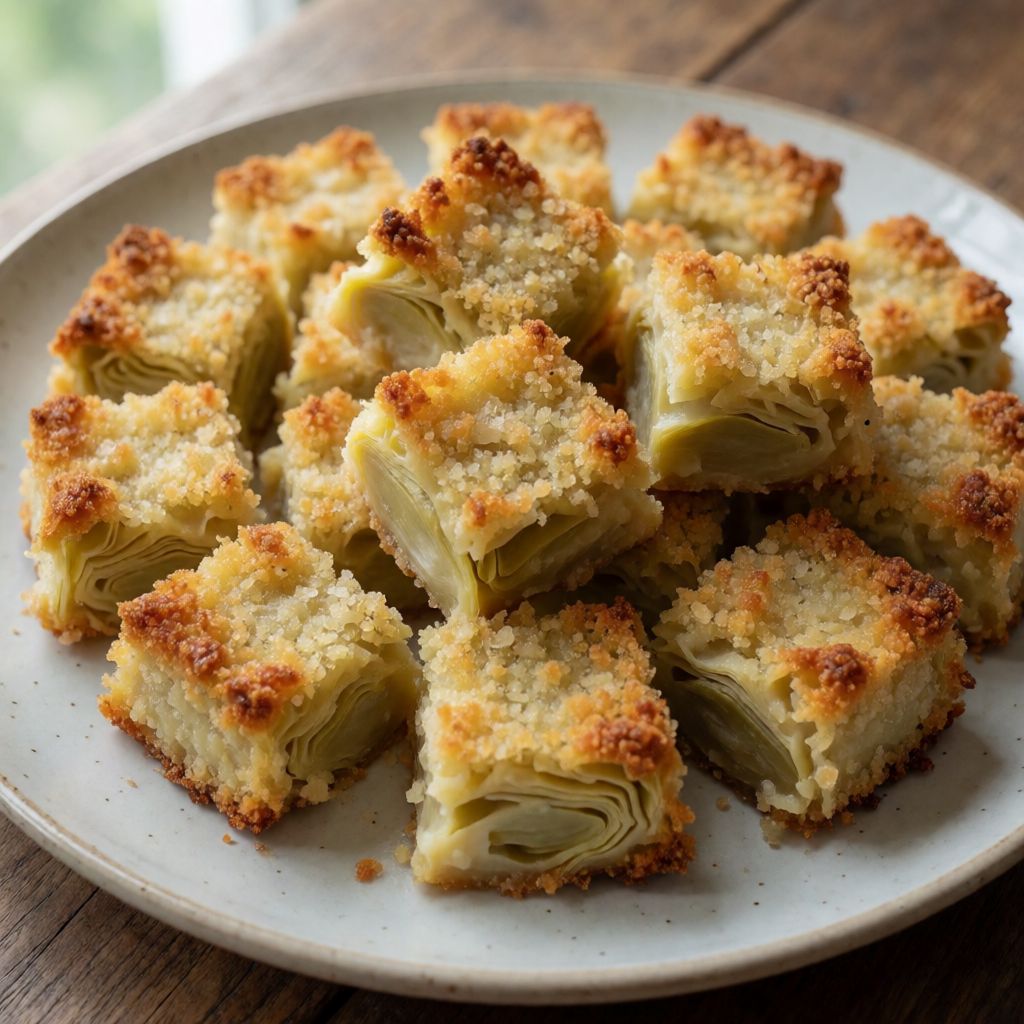
 AI photo
Baked Artichoke Cubes
Soft artichoke and cheese cubes, baked until golden on top.
Labels are worked out automatically from the ingredients and can be wrong. Check the packaging if it matters to you.
Ingredients
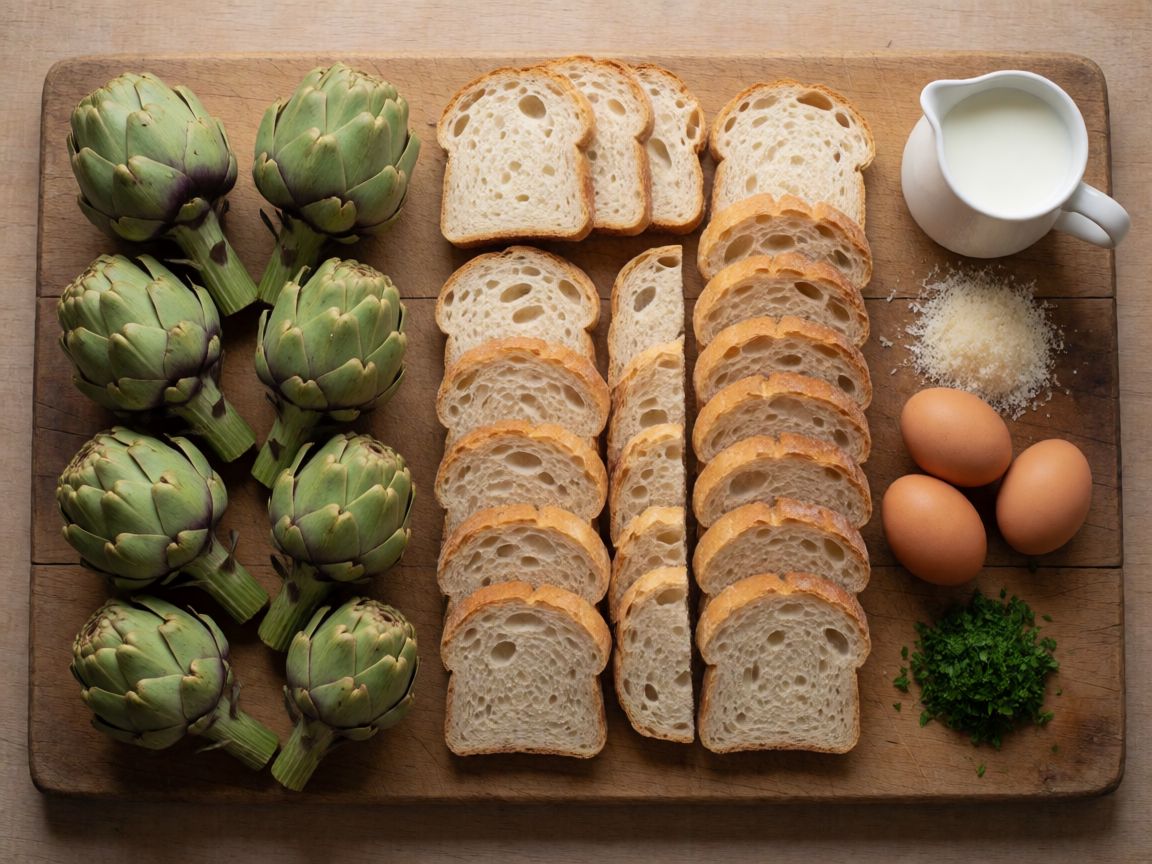
- 7-8 pcs Artichoke
- 18-20 pcs Sliced bread
- 3 pcs Eggs
- 50 g Pecorino
- 50 g Parmesan
- Vegetable oil to taste
- Milk to taste
- Salt to taste
- Black pepper to taste
- Parsley to taste









Steps
Clean the artichokes, rinse them and boil until tender.
Once the artichokes have cooled, cut them into pieces.
In a bowl, soak the sliced bread in the milk, then add the artichokes, pecorino, parmesan, eggs and parsley, and mix everything together.
Season the mixture with salt and pepper.
Spread the mixture into a rectangular tin lined with baking parchment, level it out and drizzle with oil.
Bake at 200°C until the top is nicely browned.
30 minRemove from the oven, let it cool slightly, cut into cubes and serve.
Call it what it actually is: a savory bread pudding with artichoke running through it, not an artichoke dish wearing a crust of bread. Eighteen to twenty slices of bread against seven or eight artichokes tells you where the weight sits — bread gives the body, the artichoke gives flavour and a faint vegetal bitterness that keeps the whole thing from tasting like a cheese sandwich that fell in an oven.
What decides whether it works is how wet the bread is the moment it meets the rest of the bowl. Let it drown in milk, or skip squeezing it out, and you get a swamp no amount of baking will rescue — a pale top sitting over a trench of loose egg and mush underneath. Soak it until it swells and loses its crumb shape, turns to something like a thick paste, but is not actually dripping — that's the window you want. Too dry and the mixture won't bind at all; it'll crumble apart instead of cutting into cubes.
The oven has one job here: cook the egg right through so it sets as a net holding bread, cheese and artichoke together, and brown the surface so you know that heat has got all the way to the middle. A deep gold-brown top is your real clock. Thirty minutes is where to start checking, not where to stop — ovens lie about their own numbers more than people admit.
The step nobody writes down properly is the wait after baking. Cut it hot and the egg, still loose and trembling, collapses under the knife — you'll get warm rubble instead of cubes. Let it sit, let the proteins finish firming as it cools, and the knife will go through clean.
Artichokes: some say preparing them is a fiddly business — trimming leaves, rubbing with lemon so they don't go brown, fishing bits of choke out with a spoon. Not here, and that's the relief of this recipe: you boil them whole first, let them go tender and dull, then cut when cool. No raw trimming under running water, no race against oxidation. Choose ones that feel heavy for their size and squeak faintly when you press the leaves — that's moisture still in there, not air. If fresh artichokes are a hassle where you shop, jarred ones in water (not oil) will do; drain and press them properly, because any extra liquid they carry just adds to the soaking problem you're already managing with the bread.
The bread is doing more work than it looks like it's doing. Soaked in milk, it swells and turns from crumb into a soft, almost paste-like mass that carries moisture evenly through the whole mixture — this is the same mechanism as bread-and-butter pudding, which you already know from this side of the Channel. It's not filler out of shame; using up bread that's gone a day or two stale, rather than throwing it out, is just old household economics dressed up as a technique. Fresher bread goes gluey rather than soft, so slightly dry slices work better than a fresh loaf straight off the shelf.
Eggs are the structural glue, not a garnish. Raw, they're a thin liquid running through everything; baked, their proteins tighten and set, turning the soaked bread-and-artichoke mash into something you can actually slice. There's no good substitute for this — the dish depends on egg doing exactly this job, so don't try to cut the quantity down thinking it's for richness alone.
Pecorino and Parmesan are doing two different things, which is why the recipe asks for both rather than double of one. Pecorino, made from sheep's milk, carries a sharp, salty tang that cuts through the mildness of boiled artichoke and milk-soaked bread — without it the whole thing tastes flat. Parmesan sits underneath that with a nuttier, rounder depth, less aggressive, more savoury weight. If you're missing either, the criterion is simple: a hard, well-aged cheese with real salt and character — grana padano or a mature cheddar will stand in, though cheddar shifts the flavour towards something fattier and less tangy.
Milk softens the bread without the sweetness water would leave behind, and its fat makes the final crumb tender rather than dense — use whole milk if you can, the same instinct that tells you to put proper milk in your tea rather than the watery kind. The oil drizzled over the top before baking isn't flavour, it's mechanism: it promotes browning on a surface that otherwise has no fat exposed to the heat, so without it the top stays pale and dry rather than crusting. Any oil with no smell of its own does the job — sunflower, rapeseed, a mild olive oil — because you don't want the oil arguing with the cheese and parsley for attention.
For the tin: a rectangular baking tin lined with parchment is exactly what you'd reach for to make a traybake, so there's nothing unfamiliar about the equipment here. The only honesty worth adding is about your oven — home ovens run hot or cold against their own dial more often than people expect, so trust the colour of the top over the number on the timer, and give it the extra minutes it clearly wants rather than pulling it out because the clock says so.