
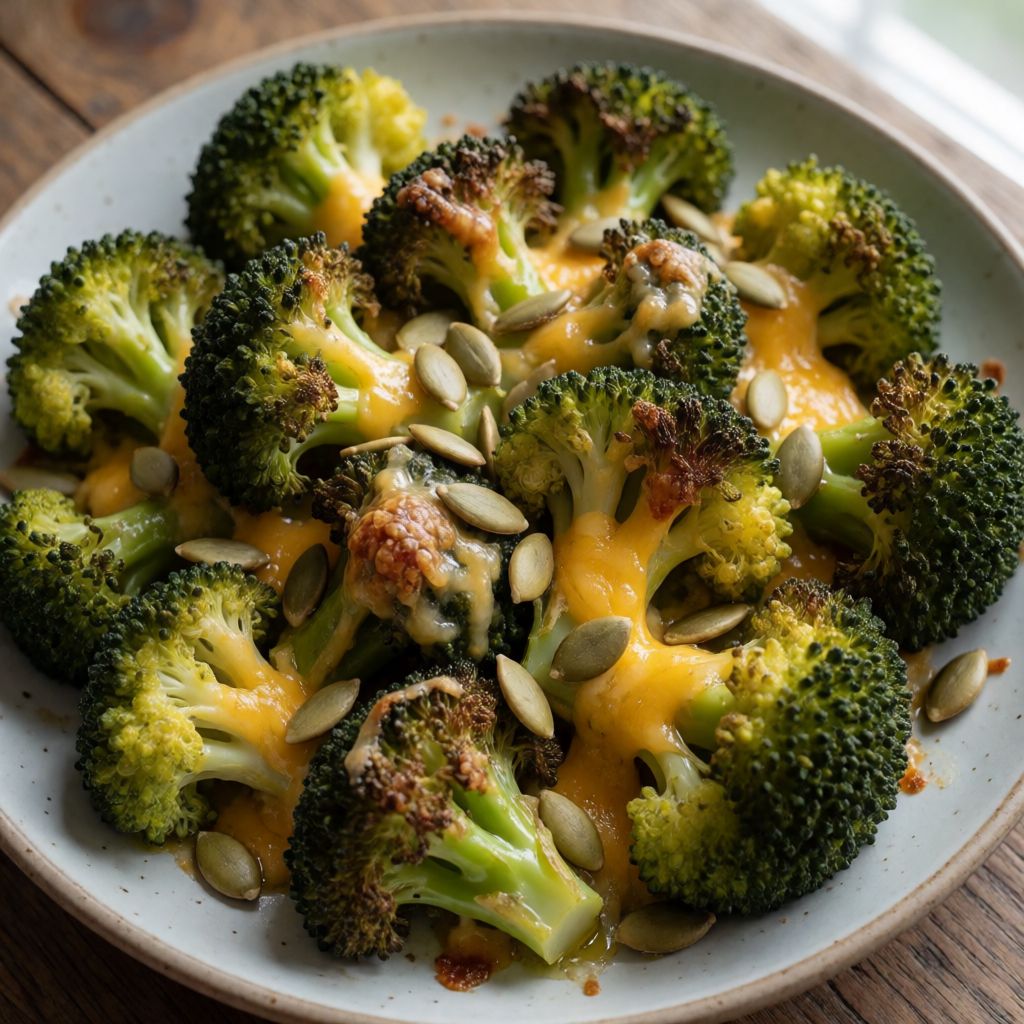
 AI photo
Baked Broccoli
Oven-roasted broccoli with pumpkin seeds, melted cheddar and lemon zest.
Labels are worked out automatically from the ingredients and can be wrong. Check the packaging if it matters to you.
Ingredients
- 1 pcs Broccoli cut into slices
- 50 g Pumpkin Seeds
- 50 g Mature Cheddar freshly grated
- 1 pcs Lemon juice and finely grated zest
- 2 tbsp Olive Oil
- 1 pinch Salt to taste
- 1 pinch Black Pepper freshly ground







Steps
Toss the broccoli slices with the olive oil.
Spread on a baking tray lined with baking paper and sprinkle with the pumpkin seeds and half of the cheddar.
Cut the ends off the lemon and halve it crosswise.
Place one lemon half on the tray, cut side up.
Bake in a preheated fan oven at 180°C for 20 minutes.
20 minAdd the remaining cheddar and bake for a further 5 minutes.
5 minSprinkle with flaky salt and freshly ground black pepper, and grate a little lemon zest from the other half over the baked broccoli.
What was changed
The original hard cheese was replaced with Mature Cheddar, a similar mature hard cheese available in UK shops; the oven temperature was rounded as in to suit standard UK ovens.
This isn't boiled broccoli with a handful of cheese thrown over it to make it respectable. It's broccoli roasted hard enough that the cut faces catch real colour — go a little nutty, even a little charred at the tips — while a crust of toasted seeds and cheese builds on top of it. The whole dish is built on contrast: crisp edge against a stem that still gives a bit of resistance when you bite it; cheese melted into the vegetable against cheese that's kept its shape on top; sharp raw lemon zest against the mellow, rounder taste of a lemon half that's spent twenty-five minutes quietly cooking next to it.
What decides whether it works happens in the first five minutes. Either the moisture sitting on the broccoli's flat cut surfaces burns off fast enough for the oil and the heat to start browning it — or the broccoli sits there in its own steam and turns that grey-green colour everyone associates with school-dinner cabbage. That smell isn't a mystery, by the way, it's just overcooked brassica releasing sulphur compounds; nothing magical, nothing you did wrong beyond leaving it too wet, too long, at too low a heat. Slicing the broccoli rather than breaking it into florets is what gives you a flat, even face for the heat to land on. A floret is all hollows and crevices — it traps steam instead of shedding it.
Broccoli: look for tight, dark heads — green or the purplish-tinged kind, both are fine — with a stem that still feels firm, not spongy, when you press it. A tired head has already lost the moisture it needs to steam its own insides while the outside roasts; it'll go limp before it browns. One head here feeds four as a side, which tells you this dish isn't trying to be the main event — it's doing what the sprouts or the cabbage usually do at a Sunday roast, except it's asking to sit in the hot part of the oven you've already got going for the joint, rather than a pan on the hob. That's really the economics of it: you're not heating a second appliance for a vegetable, you're borrowing twenty-five minutes of heat you're paying for anyway.
Pumpkin seeds go in raw and untoasted, scattered on before the long bake, because the oven is doing the toasting for you — that's the only reason they're there before the cheese rather than sprinkled on at the end for looks. Any seed or nut that turns crunchy and nutty in dry heat will do the same job: sunflower seeds, flaked almonds, a rough chop of hazelnuts. What they're for is bite — broccoli and melted cheese are both soft once baked, and without something that cracks between your teeth the dish has no texture left at all.
Cheddar: mature, not mild, and freshly grated rather than pre-shredded from a bag. Mild cheddar carries more moisture and less actual flavour per gram, so it melts wetter and tastes of less — exactly the wrong direction when you're trying to cut through broccoli's slight bitterness. A hard, aged cheese holds its shape better on top and gives you sharpness, not just saltiness. If cheddar isn't to hand, the criterion is a firm cheese with real bite: an aged Gouda, a strong Comté, even a hard Pecorino if you want saltier and don't mind losing the English accent on the dish.
Olive oil: there's only two tablespoons for a whole head of broccoli, because its job is contact, not frying — it's there to carry heat evenly onto the cut surface and stop it drying out and scorching before it's had a chance to brown properly. Any oil with no smell of its own will do this job just as well and for less money — rapeseed or sunflower oil are the obvious, cheaper choices in a British kitchen, and nobody will notice the difference once the cheese is on.
Lemon does two separate jobs and that's why half of it is treated one way and half the other. The half that goes into the oven, cut side up, spends the whole bake mellowing — heat softens citric acid's sharp edge and concentrates what's left, so its juice turns rounder, almost sweet at the rim. The other half stays raw, because the fragrant oil in lemon zest is volatile — twenty-five minutes of oven heat would cook it flat and a little bitter. So the zest only ever comes from the lemon that never saw the oven, grated on right at the end while it's still bright. If you've no fresh lemon, a dash of vinegar gives you the acid, but you lose the aromatic half of the job entirely — there's no real substitute for zest, you're just making a different, flatter decision.
Salt at the end is flaky, not table salt, and that's deliberate too: fine salt stirred in before baking just dissolves into the oil and juices and vanishes as flavour with no texture left behind. Flaky salt sprinkled on afterwards sits as separate crystals you actually feel, which matters once everything else on the tray has gone soft. And if your oven has no fan — plenty of older UK ovens don't — trust the blistering on the broccoli's edges over the clock; a still oven holds a layer of damp air against the food instead of stripping it away, so it'll take a little longer to get the same browning, and no two ovens will agree on exactly how long. That's the one ingredient a recipe can't give you a number for — patience, and the willingness to look rather than time it.