
 AI photo
Baked Castagnole
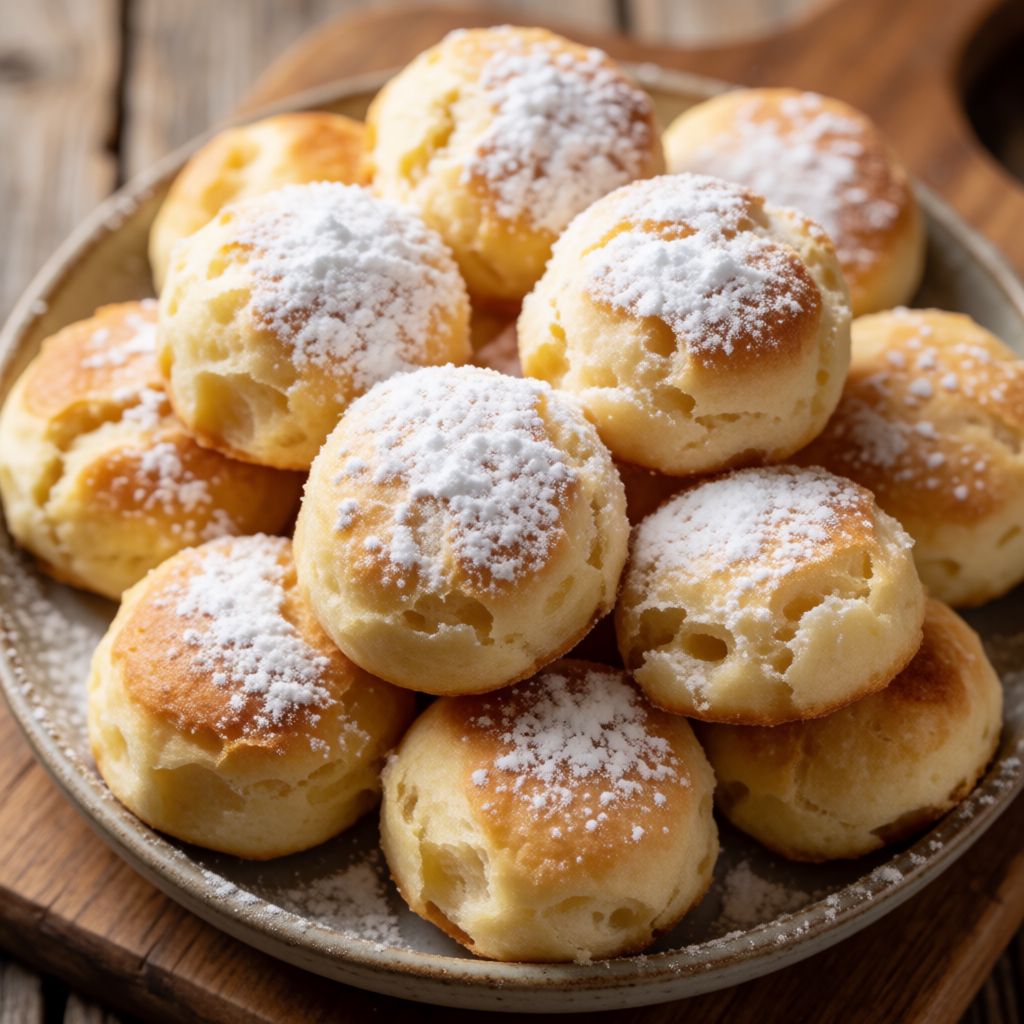
Soft, oven-baked Italian sweet dough balls, lightly dusted with icing sugar – a lighter take on the classic.
Labels are worked out automatically from the ingredients and can be wrong. Check the packaging if it matters to you.
Ingredients
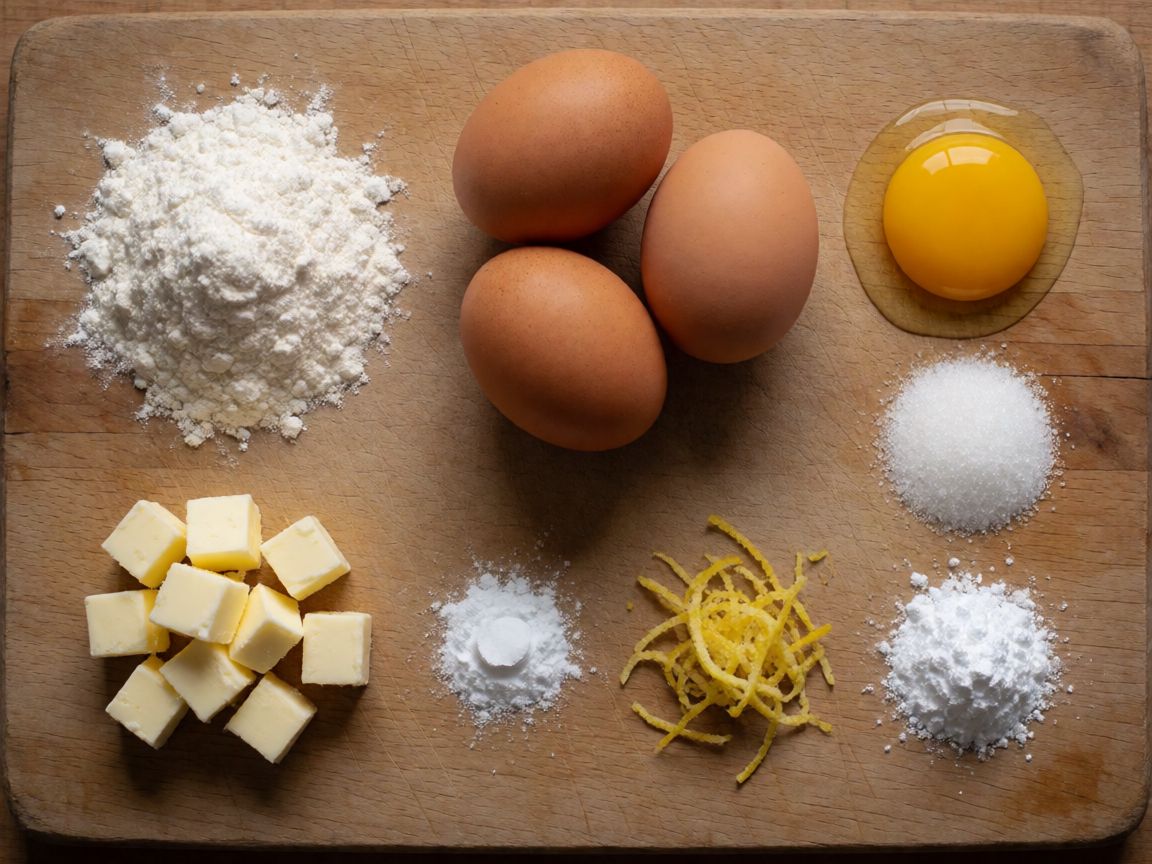
- 400 g Plain flour
- 3 pcs Eggs
- 1 pcs Egg yolk
- 100 g Caster sugar
- 70 g Butter cold, cubed
- 15 g Baking powder
- 1 pinch Salt
- 1 pcs Lemon zest from an unwaxed lemon
- Icing sugar for dusting









Steps
Pile the flour on a work surface, make a well in the centre and add the eggs, egg yolk, sugar, butter and baking powder; add the salt and lemon zest.
Quickly knead the dough by hand until smooth, soft and elastic.
Shape into a ball, wrap in cling film and chill in the fridge.
5 minDivide the dough into pieces, roll into ropes about 1.5 cm thick, cut and shape into small balls.
Arrange the castagnole in rows on a baking tray lined with baking paper, leaving a few centimetres between them.
Bake in the oven at 180°C until golden brown.
Let the baked castagnole cool, then dust with icing sugar.
Castagnole take their name from castagna — chestnut — because that's the size you're aiming for, not because there's a chestnut anywhere in the bowl. They're a Carnevale sweet, the days before Lent when Italian households used up the eggs, the butter, the sugar — anything rich that wasn't going to survive the fast. Traditionally they're dropped into deep oil. This is the baked version, the one that makes sense in an ordinary flat with a tray and an oven you already trust for Sunday roast, not a pan of oil you don't know what to do with afterwards.
What decides whether this works is temperature management of one single ingredient: the butter. It goes in cold, in cubes, and it has to stay in little separate islands through the kneading — not melt into the flour, not turn the dough greasy. Those cold lumps are what puff when they hit the oven: they melt fast, throw off steam, and that steam is the only lift you've got besides the baking powder. Knead too long, with warm hands, and the butter vanishes into the flour before it's done its job — you get a dense, biscuity ball instead of something with a bit of air trapped inside.
Flour here is plain for a reason — you don't want the long gluten strands that a strong bread flour would give you, because that's what turns a bun chewy instead of short and tender. If all you have is self-raising, use it, but drop the baking powder by roughly what's already folded into the flour, or you'll get a double rise that collapses on itself.
Three eggs plus an extra yolk: the yolk is there for richness and colour without the extra liquid a whole egg's white would bring. More white, looser dough, more kneading needed to pull it back together — and every extra minute of kneading is a minute the butter has to survive intact. The yolk gives you fat and colour on the cheap, so to speak, without that cost.
Butter's only real job is to stay solid until it's in the oven, so the substitution criterion is simple: a fat that holds its shape cold and doesn't carry a flavour loud enough to fight the lemon. Margarine will physically go in, but it's softer at fridge temperature than butter and won't hold its cube shape through handling — you lose some of the steam-pocket effect before the dough even hits the tray. Clarified butter is the wrong direction entirely: you've cooked the water out of it, and it's exactly that water turning to steam that does the lifting.
The baking powder dose looks generous for 400g of flour, and it needs to — there's no yeast here, no proving time, so all the lift has to happen fast, triggered by oven heat in one go. That's also why the dough goes in to bake soon after shaping: the powder starts working the moment it meets any warmth and moisture, and a long wait on the counter spends some of that lift before the oven gets its turn.
Lemon zest only, never the juice, and from a lemon that hasn't been waxed. Wax is there to keep supermarket lemons shiny on the shelf, and it sits right over the oil glands you're trying to grate — scrape a waxed lemon and you get bitterness and a faint taste of the coating, not the citrus oil you wanted. Juice is left out on purpose too: it's acid and extra liquid, and either would start reacting with the baking powder before the dough has even been shaped, or simply slacken it.
The short chill isn't about chilling the dough through — five minutes won't do that — it's about two small, related fixes: the gluten you worked by hand relaxes, so the ropes roll without springing back on you, and the butter, softened by warm hands during kneading, firms up again before it meets the oven. Leave a few centimetres between the balls on the tray for the same reason you'd give any dough with baking powder in it room: they expand, and two that touch fuse along a seam that stays pale and half-raw underneath, however gold the rest goes. And dust the icing sugar only once they're properly cool — onto a warm surface it doesn't sit as powder, it melts into a thin wet glaze, and you've lost the whole point of dusting. That wait is not an inconvenience; it's the step that keeps the sugar sugar.