
 AI photo
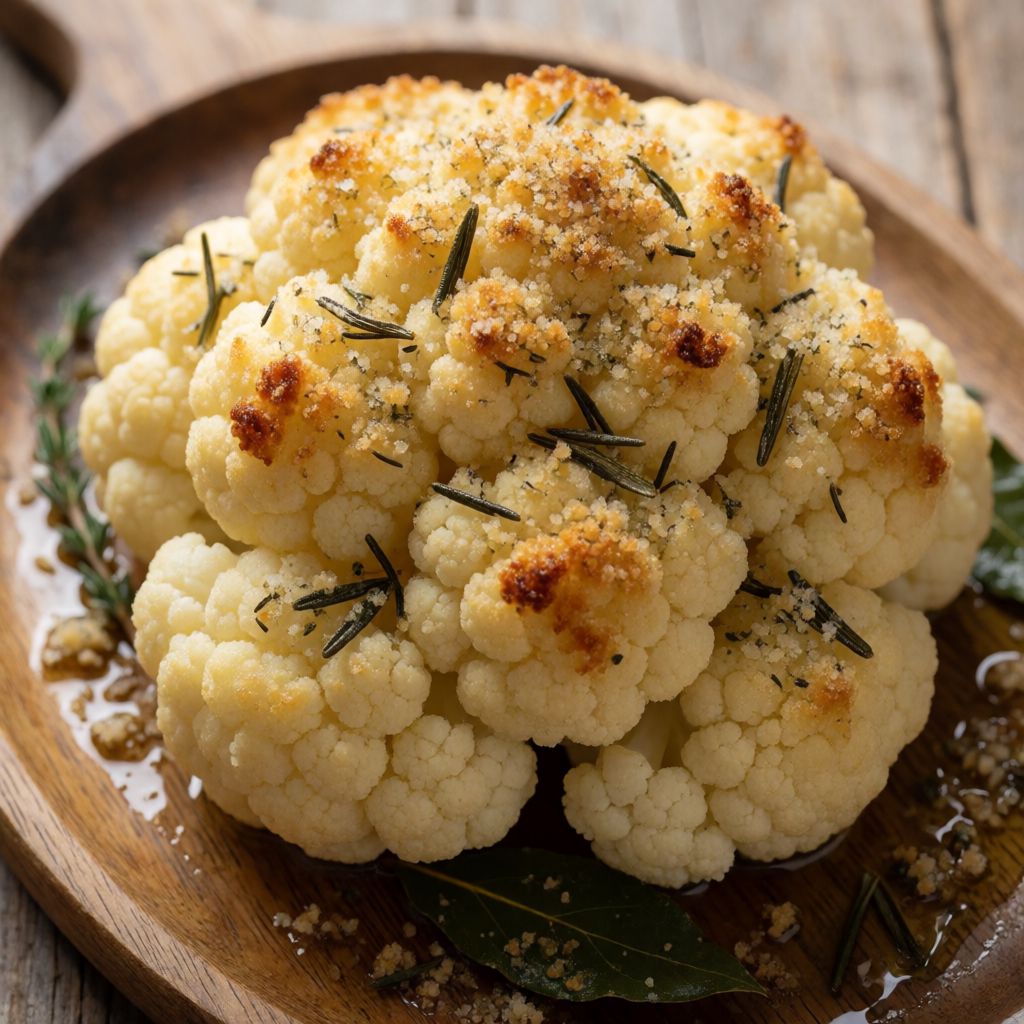
Oven-Roasted Cauliflower without Béchamel
A simple oven-roasted cauliflower dish, coated in herbed breadcrumbs and anchovies, with no béchamel needed.
Labels are worked out automatically from the ingredients and can be wrong. Check the packaging if it matters to you.
Ingredients
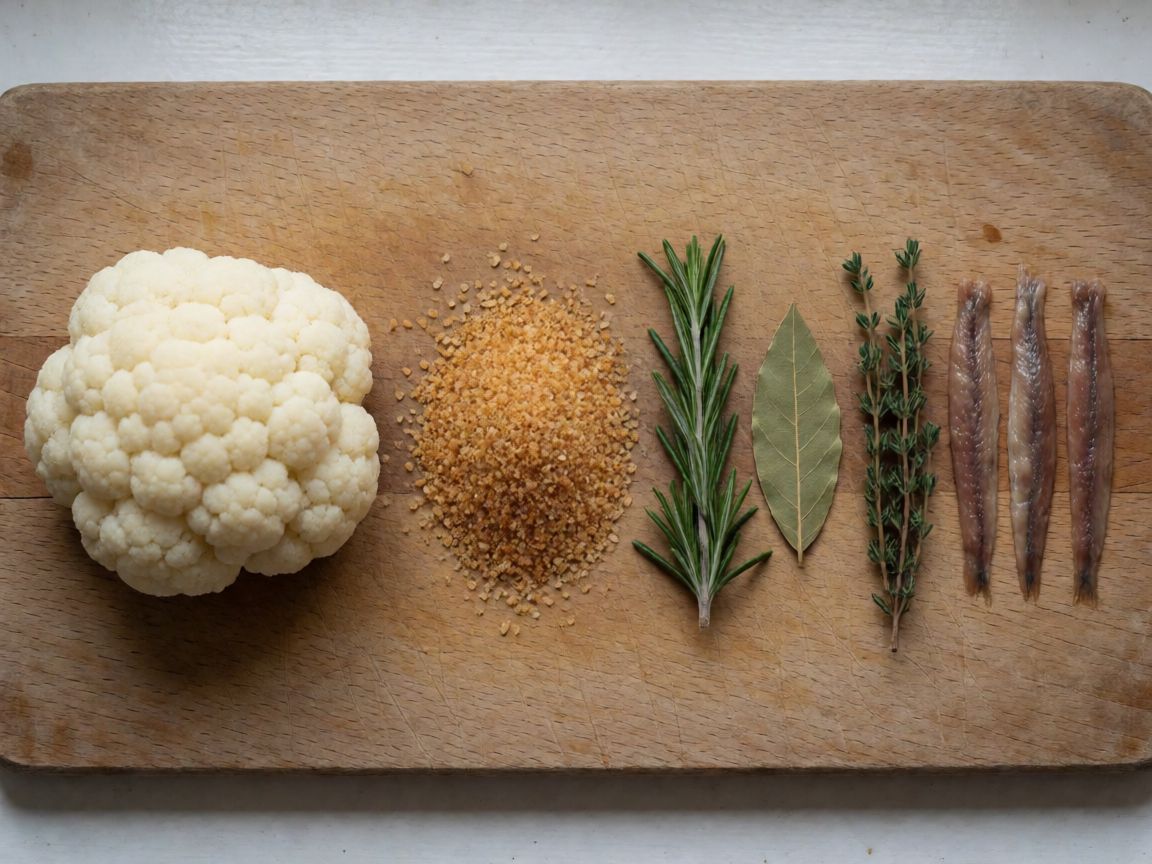
- 1 pcs Cauliflower 600–700g, pre-boiled
- Breadcrumbs to taste
- Rosemary to taste
- Bay leaf to taste
- Thyme to taste
- Olive oil to taste
- Salt to taste
- Black pepper to taste
- 3 pcs Anchovies




Steps
Wash and clean the cauliflower, removing the outer leaves and core. Cut into florets.
Bring a pot of water to the boil and add the cauliflower florets; cook for about 15 minutes.
15 minIn a bowl, mix the breadcrumbs with chopped thyme, bay leaf and rosemary. Mix well, then add a pinch of salt, black pepper and the anchovies.
Once everything is combined into a uniform mixture, add a little olive oil.
Line a baking dish with parchment paper.
Drain the cauliflower in a colander and arrange it in the dish, generously sprinkling the flavoured breadcrumbs on top.
Drizzle with olive oil on top and place in an oven preheated to 180°C for about 15-20 minutes, until golden brown.
18 minMake sure the internal temperature at the thickest point reaches 63°C. The dish is ready to serve.
This is a gratin that refuses the sauce. The classic cauliflower bake leans on béchamel to glue the crumbs down and keep the surface from drying out over a slow oven. Here the gluing and the moisture both come from something cheaper and sharper: oil-soaked crumbs and three small salted fish doing the work that butter, flour and milk usually do. Done right, you get a crust that shatters a little when the fork goes in, and underneath it, cauliflower that gives without resistance — no raw crunch at the stem, no collapse into paste.
What decides the dish is the double cooking. The boil is there to get the cauliflower most of the way tender before it ever sees dry heat — the oven alone, at a temperature gentle enough not to scorch crumbs, would take too long to cook raw florets through, and by then the crust would be burnt dust. So the boil does the slow, wet work, and the oven does the fast, dry work: crisping the top, driving off surface moisture, letting the oil in the crumb actually fry rather than steam. Undercook the boil and you get a crust sitting on crunch. Overcook it and the florets fall apart under the weight of their own topping — there's nothing holding them up, because there's no sauce to suspend them in.
Cauliflower: buy it heavy for its size, tight white curd, no grey patches or spreading florets — a cauliflower that's starting to open is starting to lose moisture and will go stringy under heat. The pre-boil isn't about timing, it's about a bend test: a floret lifted on a fork should sag slightly, not snap, and not slide off the fork on its own. Boil past that point and the oven step only finishes the job of falling apart.
Breadcrumbs: this is where people go wrong by using fresh bread whizzed in a blender — too much moisture in it, and it turns to paste under oil instead of toasting. You want dry, open crumbs: stale bread grated or blitzed, or bought dried breadcrumbs if that's what's in the cupboard. The test is sound, not sight — a dry crumb rustles when you shake the bowl.
Rosemary, thyme, bay leaf: fresh if you have it, dried works, but the bay leaf is the one to watch — it's tough and leathery even dried, and if you chop it with the other herbs rather than crumbling it fine, you'll find woody shards in the crust. Either chop it properly small or leave it out and lean a little harder on the thyme and rosemary; nobody will miss one herb in a mix of three.
Anchovies: three fillets, mashed into the oil and crumbs, are doing the job of salt and savoury depth that stock or cheese does elsewhere — this is the real reason the dish doesn't need béchamel for flavour, not just texture. Taste before you add extra salt; anchovies are already salty, and over-salting here is the easiest way to ruin an otherwise good crust. If you're avoiding fish, the honest substitute is something else that brings concentrated salt and umami without smelling of itself raw — a few chopped capers or olives, or a scant teaspoon of soy — but understand you're trading one flavour engine for another, not leaving a gap.
Olive oil: it's doing two things — carrying the herbs and anchovy through the crumb, and letting that crumb fry rather than just bake dry. Any oil without a smell of its own strong enough to fight the rosemary will do — sunflower or rapeseed oil are fine stand-ins if you're out of olive oil, though you lose a little of the bitterness that olive oil brings to a crisp crust.
On the drained colander step: don't skip it and don't rush it. Cauliflower straight out of the pot carries a surprising amount of water in its curds, and if it goes into the dish wet, that water pools under the crumb and steams the bottom instead of letting it crisp — the real cause of a soggy base, not the oven being too cool. As for the 63°C internal temperature the recipe mentions: that's a number borrowed from meat cookery, where it means something about safety. Cauliflower doesn't carry that risk, so don't go hunting for a thermometer — a skewer sliding in without resistance tells you the same thing, for free.