
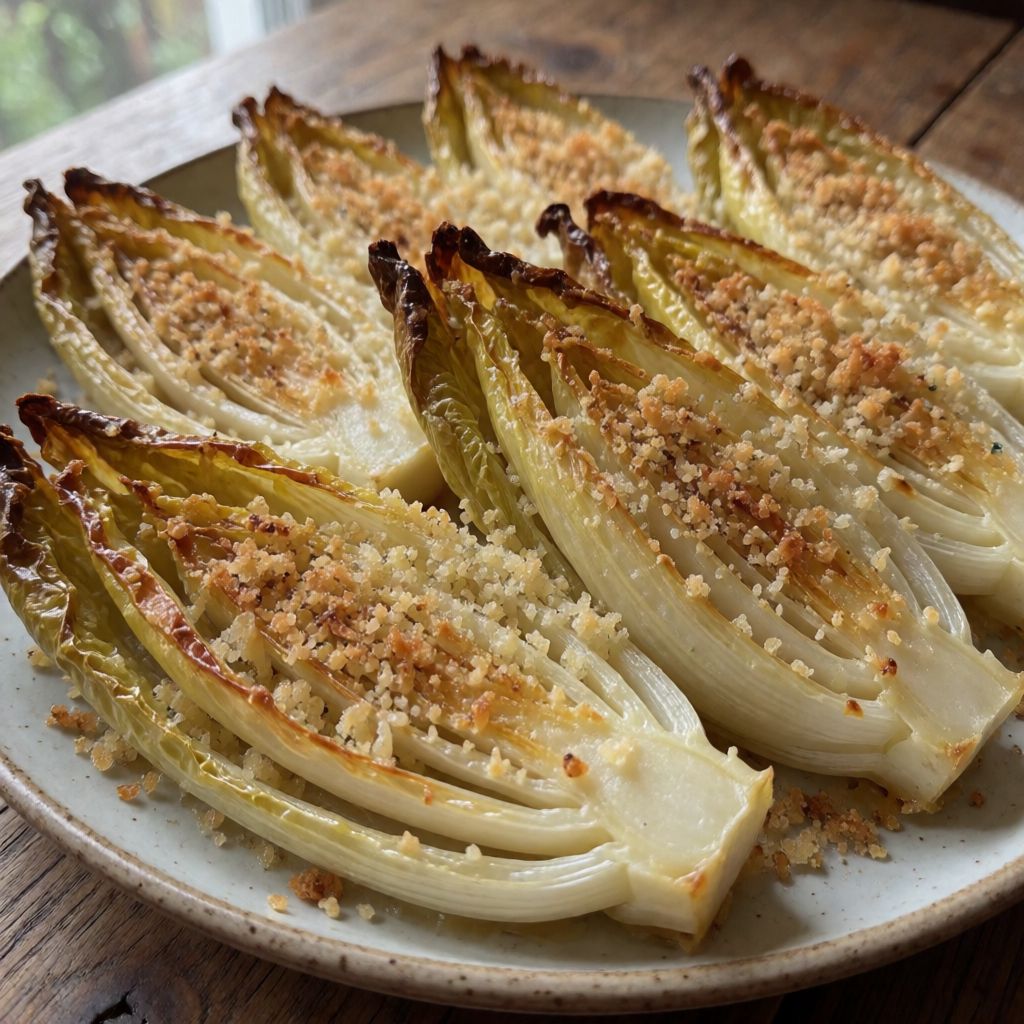
 AI photo
Baked Chicory with a Cheese Crust
A simple side of oven-baked chicory, topped with a crisp parmesan and breadcrumb crust.
Labels are worked out automatically from the ingredients and can be wrong. Check the packaging if it matters to you.
Ingredients
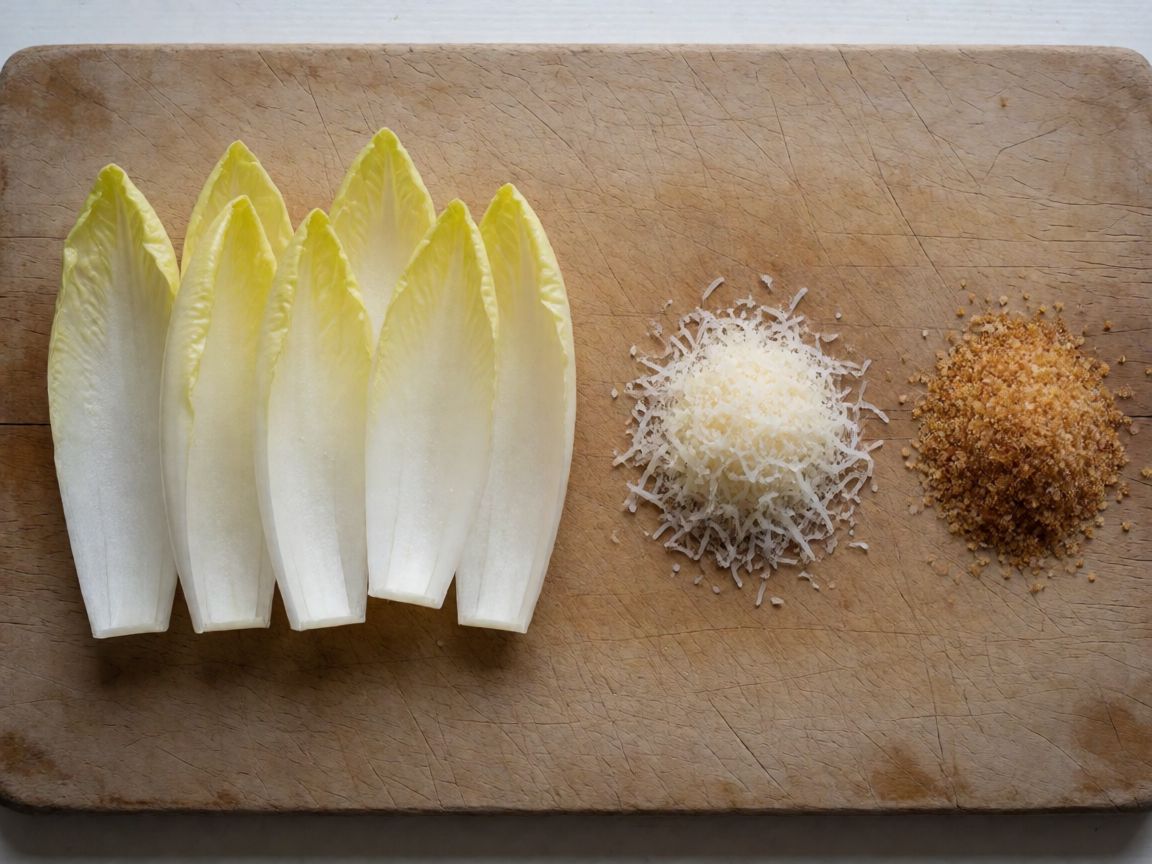
- 8 pcs Chicory about 500g
- 25 g Parmesan
- 25 g Breadcrumbs
- Olive Oil to taste
- Salt to taste
- Black Pepper to taste






Steps
Remove any wilted outer leaves of the chicory, rinse the heads under running water, and leave to drain.
Cut each head of chicory into quarters and arrange in a baking dish lined with parchment paper.
Mix the breadcrumbs with the parmesan, then add pepper and salt.
Sprinkle the mixture over the chicory and drizzle with olive oil.
Bake in the oven at 220°C for 20 minutes.
20 minRemove from the oven and serve hot.
Forget the chicory you know from a salad bowl, dressed with blue cheese and walnuts and eaten raw and bitter on purpose. Here the same bitterness gets cooked out, not masked — roasting at a real, dry heat turns the sugars sitting under the surface of each leaf into caramel, and caramel beats bitter every time you give it the chance. That's the whole trick of this dish: heat as a chemical tool, not just a way to make something hot.
What decides whether it works is dryness. Chicory heads are mostly water held tight between layers of leaf, like a cabbage built by an engineer. Any water left clinging to the surface when the dish goes in the oven turns to steam the moment it meets heat, and steam cooks the chicory soft before it ever gets the chance to brown. So rinse it, yes — but then let it actually drain, properly, not a token shake. A domestic oven has no kazan's dry, enveloping heat; it's a small box that struggles to recover its temperature once you open the door, so you can't afford to start wet and hope the oven will catch up.
Some say blanch the chicory first in water with a squeeze of lemon, to draw the bitterness out before cooking — no, because that's solving the wrong problem with the wrong tool. Boiling pulls bitter compounds into the water, true, but it also pulls out the sugars that would have caramelized, and it leaves the leaf waterlogged right before you need it bone-dry for browning. You'd trade one defect for a worse one. Roasting handles the bitterness on its own, by converting it, not washing it away.
Start with the chicory itself. You want heads that are pale, almost white with just a blush of yellow at the tip, tightly closed, heavy for their size. Any green creeping in means the head saw light while it grew, and light turns a mild vegetable bitter and a bitter vegetable fierce — that greening is precisely what the growers fight to prevent by raising chicory root in total darkness, a method the Belgians worked out in the nineteenth century almost by accident, forcing roots in cellars originally grown for coffee substitute during the years France was cut off from real coffee by blockade. The whole crop exists because someone needed a cheap stand-in for a luxury; the paleness you're buying in the shop is the descendant of that dark cellar.
Cutting into quarters rather than loose leaves is not decoration, it's structure. Cut through the root end and each quarter stays bound together by that little core, so it holds its shape in the dish and gives you a flat cut surface — exactly where the caramelizing needs to happen. Strip it down to separate leaves and you get something closer to braised cabbage, soft everywhere, crisp nowhere.
The crust is doing two jobs at once. Parmesan brings fat and salt and, because it's a hard, dry, low-moisture cheese, it fries in its own fat under the oven's heat rather than turning rubbery or weeping water the way a soft cheese would. Breadcrumbs are there to soak up that fat and the olive oil and turn golden and brittle, giving you something to bite through before you reach the vegetable. Any hard cheese that grates into crumbs and doesn't run — grana padano, a well-aged pecorino — does the same job. For the crumb, any dry, stale bread grated fine works; even panko, though it crisps a touch coarser and browns a shade faster, so watch it.
The oil's job is just to carry heat to the crumb and stop it drying into dust before it has time to brown — so it wants to be something with no flavour of its own loud enough to fight the chicory's bitterness. Olive oil earns its place here because its own slight bitterness actually sits comfortably alongside the vegetable's; a neutral sunflower or grapeseed oil will do the carrying job just as well if that's what's in the cupboard, you'll simply lose that small echo.
On parchment: line the dish, because sugar that caramelizes on bare metal has nowhere to go but to stick and burn into something genuinely bitter — the bad kind, carbon, not the kind you're trying to tame. Parchment lets the sugars brown and lift off clean.
As for the oven, be honest about it: a domestic fan oven runs evenly but can undershoot its dial by a surprising margin, while a conventional one browns harder at the top. Put the dish on the upper shelf if you want real colour on that crust, and treat 220°C and twenty minutes as where you start looking, not a number to trust blindly. And once it's out, eat it at once — that crust is only crisp for a few minutes before the steam still escaping from the chicory underneath softens it back down. Patience gets this dish to the table; it won't wait for you once it's there.