
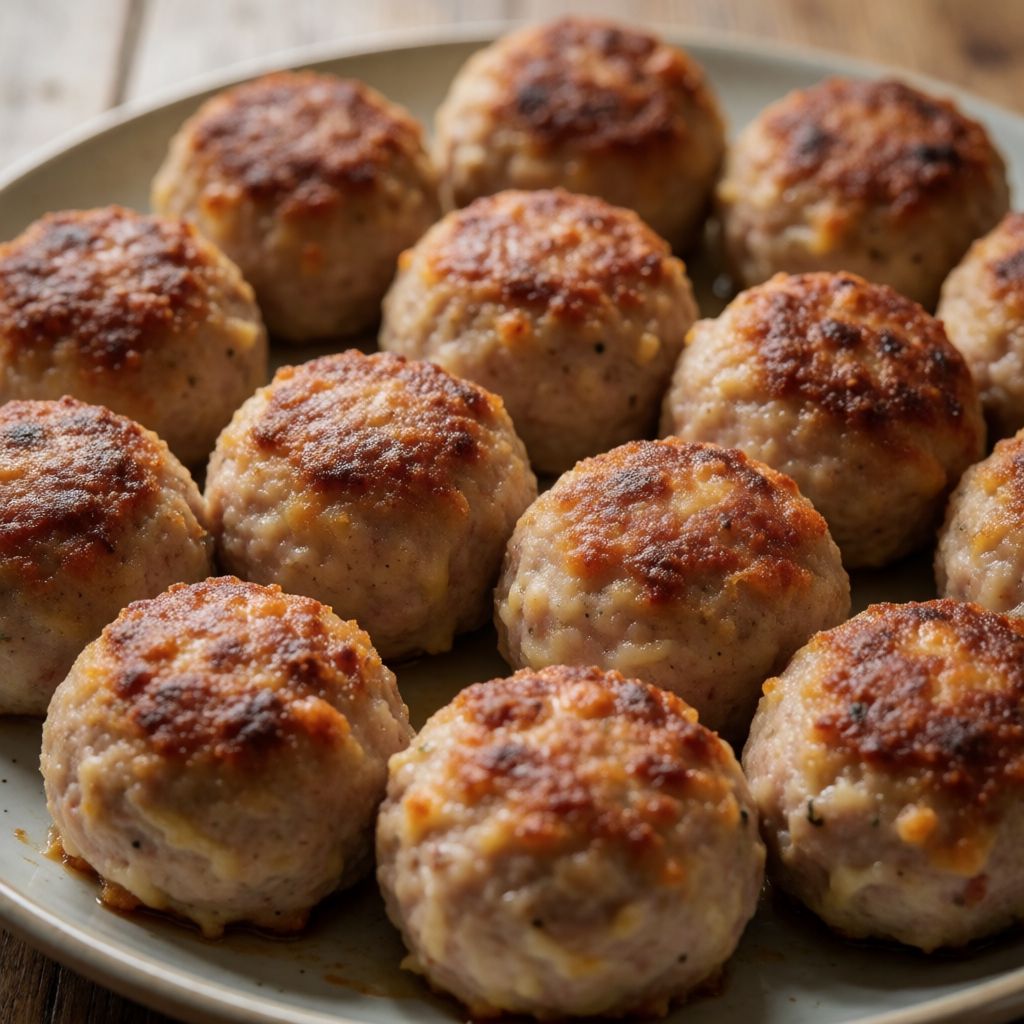
 AI photo
Baked Meatballs
Tender beef and pork meatballs baked in stock with rosemary, finished with a simple strained sauce.
Labels are worked out automatically from the ingredients and can be wrong. Check the packaging if it matters to you.
Ingredients
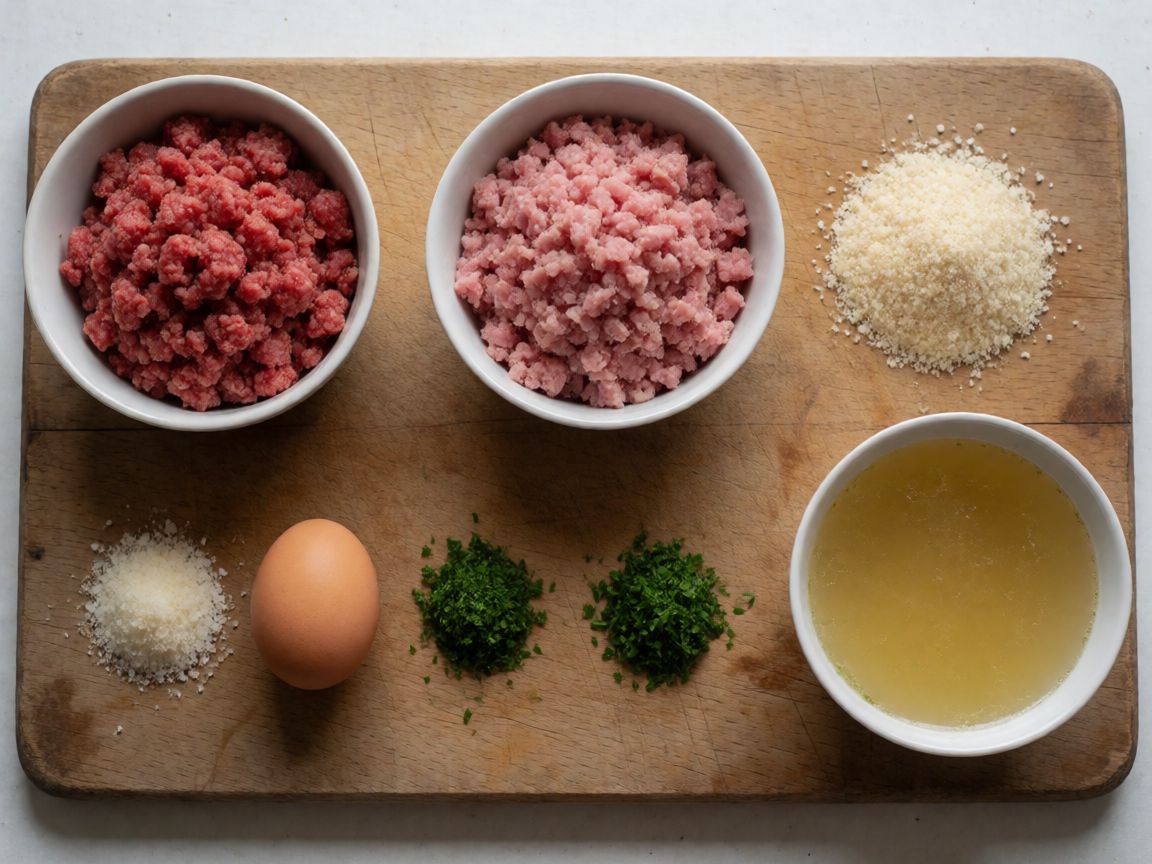
- 400 g Beef mince
- 100 g Pork mince
- 100 g Breadcrumbs
- 1 pcs Egg
- 30 g Parmesan or Grana Padano
- 2-3 tbsp Water or milk
- 3 tbsp Olive oil
- 1 tbsp Parsley
- 150 g Meat stock
- Salt to taste
- Black pepper to taste











Steps
Prepare the meat stock — you will need about 150 g.
Soak stale breadcrumbs in a bowl of water for a few minutes.
Squeeze the crumbs well by hand and add both minces, the egg, parsley, Parmesan, salt and black pepper.
Mix by hand until smooth and even.
Shape the meatballs by rolling between your palms; each needs about 40 g of mince.
Grease a baking dish with olive oil, place in the meatballs, pour over the warm stock and add a sprig of rosemary.
Bake in an oven preheated to 180°C for 15 minutes.
15 minTake out the dish, carefully turn the meatballs and continue baking at the same temperature until the internal temperature reaches 71°C.
Transfer the cooked meatballs to a serving plate, strain the sauce from the dish through a fine sieve and warm it slightly.
Pour the sauce over the meatballs and serve with baked potatoes as a side.
These aren't fried meatballs finished in the oven — they go in raw and cook entirely by dry heat, sitting in a shallow pool of their own stock. That's the whole trick: the oven browns whatever sits above the liquid line, and the stock stops whatever's below it turning to leather. Six people, forty grams a ball — about the size of a small plum, no bigger, because size is what decides whether the middle catches up with the outside before the outside dries out.
What decides whether this works is the fat, not the seasoning. Beef mince alone — especially the lean stuff sold here for "healthier" burgers — has almost nothing to baste itself with. Pork brings the fat that melts at oven temperature and runs through the meat instead of sitting on top of it. Leave the pork out and you get a meatball that tastes of salt and little else, however hard you lean on the pepper.
Myth worth killing: some say you must sear mince first to "seal in the juices." You can't seal a liquid in with a crust — meat isn't a bag. Browning does one job: it builds new flavour on the surface through the Maillard reaction, nothing more. These meatballs get their browning from the oven's dry upper air, on whichever side is facing up — which is exactly why you turn them halfway, not for looks, for even colour.
The soaked breadcrumb — a panade, if you want the French word for it — is doing a job plain water can't. Dry crumbs stirred straight into mince would pull moisture out of the meat as they swell in the oven's heat; pre-soaked and squeezed, they're already saturated, so they sit in the mix as soft pockets holding water rather than stealing it. Squeeze them properly, though — too much liquid left in and the mixture won't hold its shape when you roll it, and you end up scraping meatball off your palms instead of forming one.
Egg binds protein to protein as it sets in the oven, nothing mysterious about it, and one is enough for this weight of meat — more, and you get a springy, almost sausage texture, which isn't the point here. Parmesan or Grana Padano earns its place through glutamate — the savoury lift it gives is worth more than its small weight in salt. Any hard, aged, low-moisture cheese does the same job; a mature Cheddar grated fine will get you most of the way there, if Parmesan feels like an extravagance for a weeknight.
"Mix by hand until smooth and even" is a real instruction, not a formality — you're spreading fat and panade through the lean meat so no ball ends up drier than its neighbour. It doesn't mean work it like dough. Past a certain point you're just tightening the meat's own proteins into something closer to a firm sausage bite than a tender one, and there's no coming back from that.
Stock is the engine of the method, and pouring it in warm rather than cold matters — cold stock drops the oven's recovery time, so the dish spends its first minutes climbing back up to 180°C instead of cooking. It needs to taste of something on its own: homemade is best, a good stock cube dissolved properly is a fair stand-in, and the one real criterion is that it's seasoned enough to work as a sauce once it's reduced and strained, because that's exactly what it becomes by the end. The rosemary goes in whole and comes out at the sieve — its job is to perfume the hot fat and liquid, not to be eaten as a sprig.
Olive oil here is just for greasing the dish, stopping the meatballs catching and tearing when you turn them. Any oil with no smell of its own does the same job — sunflower, a plain vegetable oil — since you're not frying in it and its own flavour never really gets a say.
Patience is the ingredient nobody lists on the card. Let the crumbs actually soak instead of rushing the squeeze, let the oven come properly up to heat before the dish goes in, and don't pull the meatballs the moment they look done — "looks done" is a plate-side verdict with mince, a thermometer is the kitchen-side one. Baked potatoes alongside aren't filler either; they want the same unhurried oven and roughly the same patience, which is probably why the two ended up sharing a plate in the first place.