
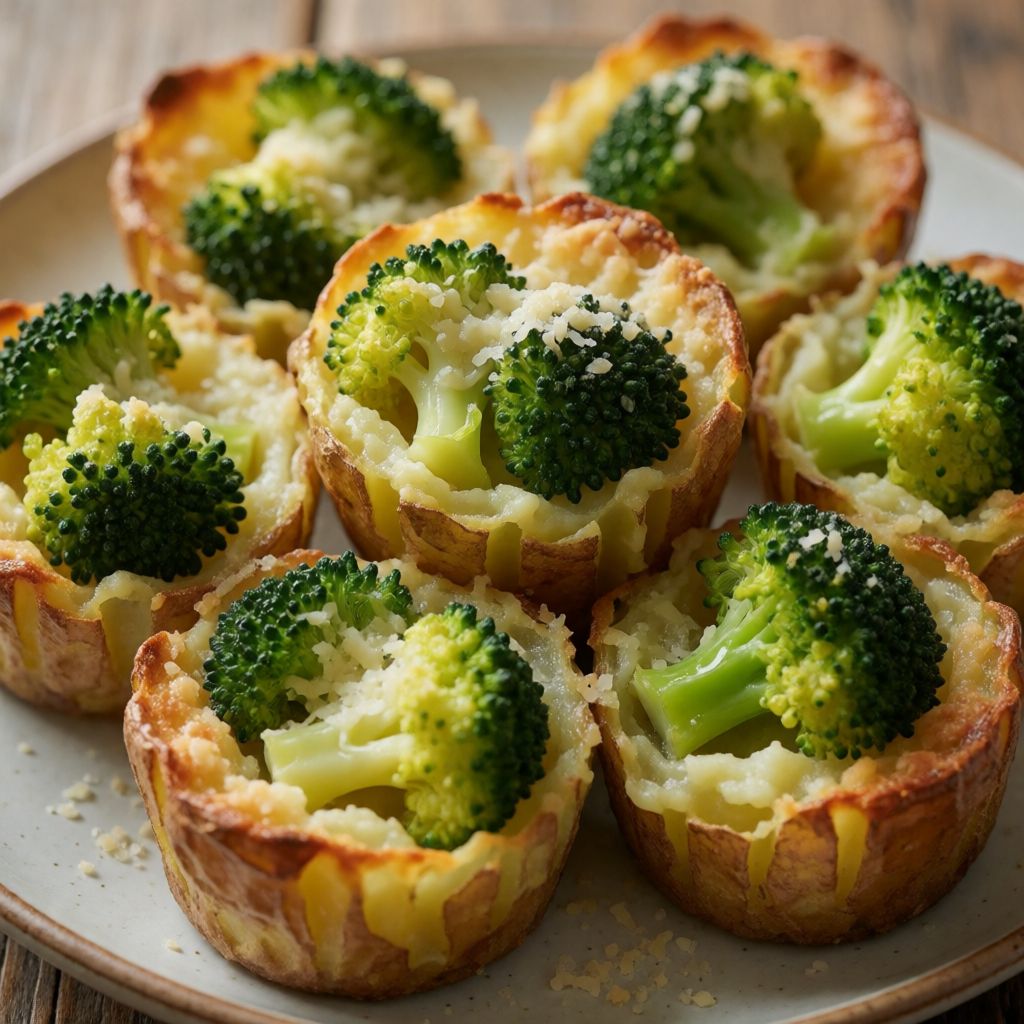
 AI photo
Baked Potato and Broccoli Cups
Comforting baked potato and broccoli cups finished with parmesan and mozzarella.
Labels are worked out automatically from the ingredients and can be wrong. Check the packaging if it matters to you.
Ingredients
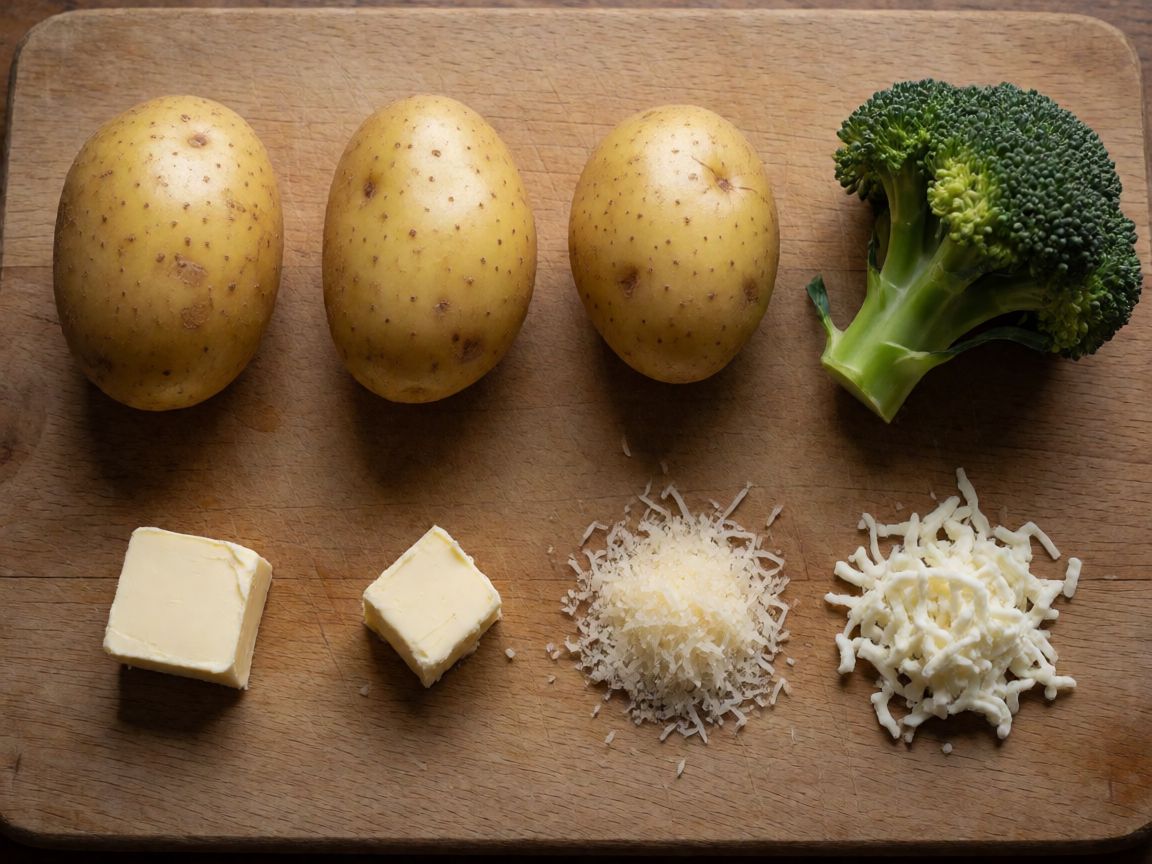
- 4 pcs Potato
- 1 pcs Broccoli
- Butter for greasing the moulds
- 2 tbsp Parmesan
- Olive oil
- Salt
- Black pepper ground
- 125 g Mozzarella







Steps
Boil the potatoes in their skins.
12 minBreak the broccoli into florets and blanch.
8 minCool the potatoes and peel them.
Mash the potatoes and mash the broccoli.
Add the olive oil, parmesan, mozzarella, salt and pepper, and mix well.
Grease the moulds with butter, fill with the mixture, and sprinkle with parmesan.
Bake at 180°C.
Grill for 5 minutes.
5 minRemove from the oven, let cool, then turn out onto plates.
These are not a potato cake and not a soufflé — they're mash with enough backbone to stand on its own once it's cold. You cook two vegetables separately, mash them separately, bind the mixture with cheese instead of egg, pack it into small moulds, bake it until it sets, and only then try to turn it out. The whole method rests on one fact: cheese that has melted and then cooled behaves like glue — but only after it's had time to go solid again.
Whether it works turns on three things. How dry the mash is going into the mould — wet mash never stands up, it slumps on the plate. How evenly the cheese is worked through — a pocket of mozzarella is a weak spot, not a strong one. And whether you let the cups sit after the oven before unmoulding — turn them out hot and they fall apart in your hand, because the fat hasn't gone firm yet.
Some say a potato bake needs an egg to hold together. Not this one — you don't need it, because mozzarella does the same job once it cools: it sets into a soft, elastic mesh around the potato and broccoli, and that mesh is what gives you a cup instead of a heap on a plate. An egg would just make the thing heavier and turn a side dish into a bake.
Treat the five minutes under the grill as colour, not cooking. The inside is already done from the oven; the grill is there only to brown the parmesan on top. Watch it rather than trust the clock — parmesan goes from gold to bitter black faster than you'd think, especially in a domestic oven where the grill element sits close to the food.
Start with the potato, because it decides whether you have mash or paste. Boil it in its skin, not peeled — the skin is a barrier that keeps the boiling water out of the flesh. Peel first and the potato drinks water while it cooks, and you end up folding that water into your mash, which is exactly the wetness that stops these cups standing up. Peel after, while it's still warm enough to skin easily but cool enough not to burn your thumbs. Use a floury potato — the kind sold for baking rather than for salads — because it has less water and more starch to begin with; a waxy new potato will give you a wetter, denser mash whatever you do to it.
The broccoli gets blanched, not boiled soft, and that's deliberate. A short dip in boiling water, then straight out, stops the vegetable's own enzymes before they turn it grey and start releasing the sulphur smell that overcooked broccoli is famous for. Some say you should boil broccoli until it's properly tender, soft enough to mash without effort. No — because by the time it's that soft it's already bitter and dull-coloured, and you're folding that into your mixture. Blanch it until it just bends, not until it goes limp. No broccoli in the house — cauliflower does the same job, or frozen florets, which come pre-blanched and just need squeezing dry so you don't add their thaw-water to the mash.
Butter on the moulds is there for release, not flavour — a thin film so the mixture doesn't weld itself to the metal while it bakes and shrinks slightly as it cools. Any fat with no strong taste of its own will do the same job — a flavourless oil, a scrape of lard. In this country a muffin tin or a set of ramekins stands in perfectly well for the little moulds a restaurant kitchen would use; you likely already own one, which is the real reason this recipe travels so easily into an ordinary kitchen.
The two cheeses are doing different jobs, and that's worth knowing before you shop. Parmesan is dry and salty and concentrated — it seasons the mash and, scattered on top, it's what browns under the grill. Mozzarella is the actual structure: buy the firm, low-moisture block sold for pizza, not the soft ball sitting in brine, because the wet ball never properly sets once it cools — it stays slack and the cups won't hold their shape. If you only have cheddar, it will bind in much the same way through its own fat, you'll just lose the mild, milky background mozzarella gives and gain a sharper, more coloured one.
Olive oil goes in for moisture that doesn't carry water — it loosens the mash without wetting it the way more butter or milk would. Any oil without a smell of its own does the same thing; use it if you don't want the olive flavour showing through, sunflower or rapeseed oil are both fine here. Season with salt carefully — parmesan is already salty, and cheese tightens as it bakes, so what tastes right in the bowl can taste sharp once it's set.
Last thing, and it's the one people skip: let the cups cool before you turn them out. That cooling isn't dead time, it's the step doing the actual binding — the cheese is going from liquid back to solid, and you're giving it room to do that. Rush it and you get a plate of nicely flavoured mash with no shape at all, which tastes the same but isn't the dish you set out to make.