
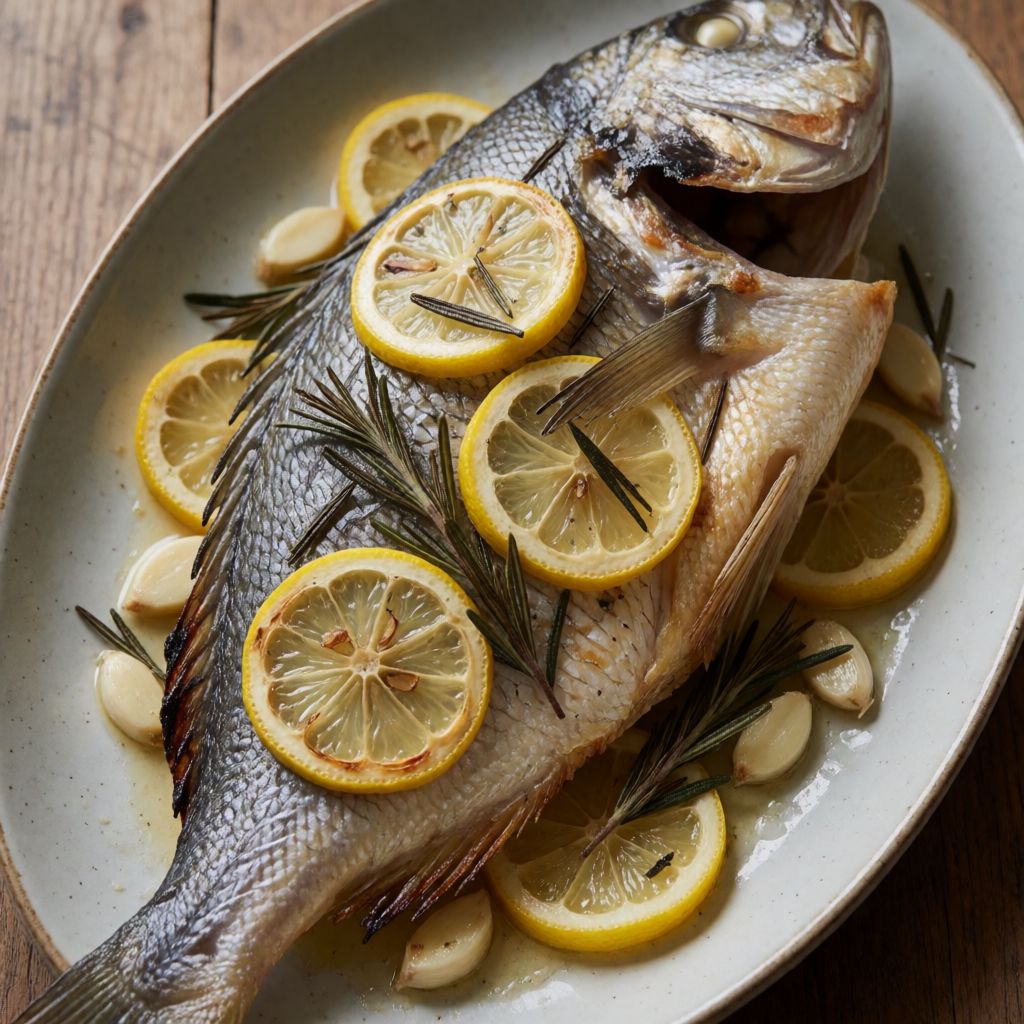
 AI photo
Oven-Baked Sea Bream
A whole sea bream baked with lemon, garlic and rosemary, served with new potatoes.
Labels are worked out automatically from the ingredients and can be wrong. Check the packaging if it matters to you.
Ingredients
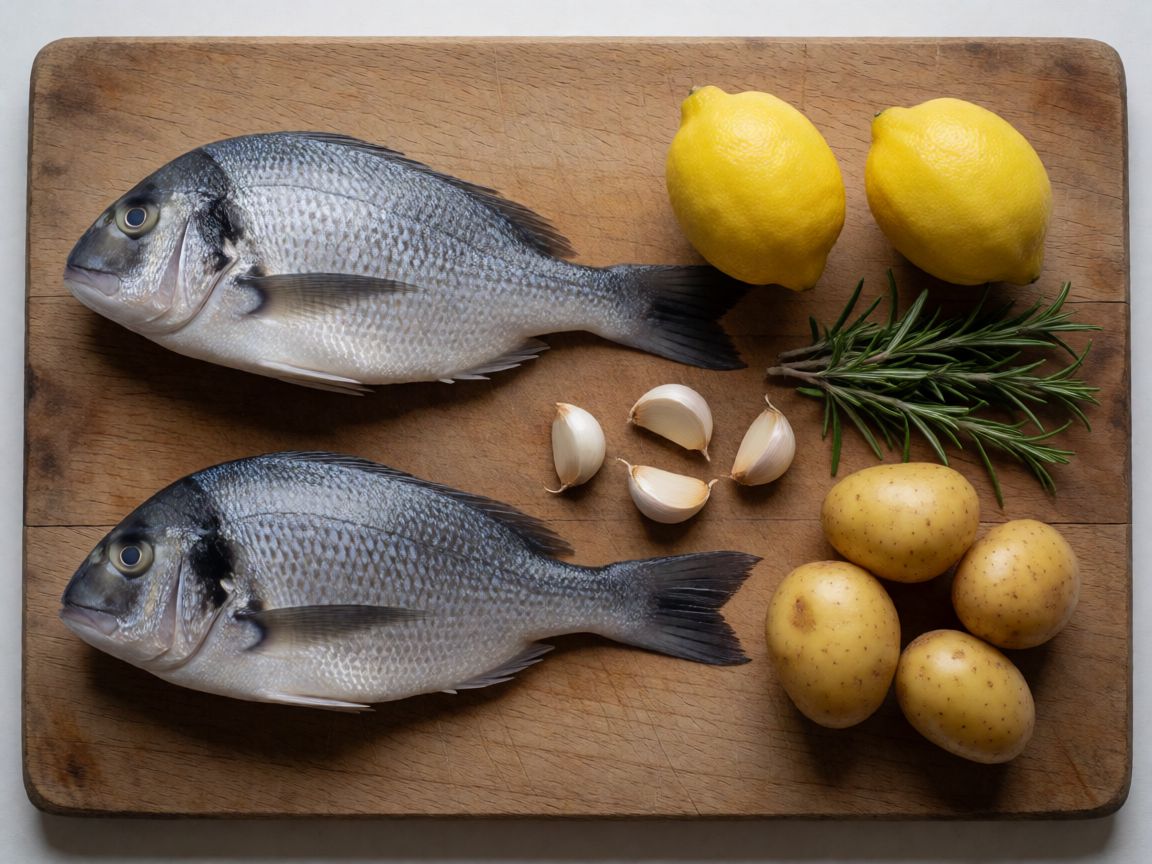
- 2 pcs Sea Bream
- 2 pcs Lemon
- 1 bunch Rosemary
- 3 clove Garlic
- Salt to taste
- Black Pepper to taste
- Olive Oil to taste
- 1 kg New Potatoes








Steps
Remove the guts from the sea bream by making a cut only in the belly. Rinse the fish well and pat dry with a paper towel.
5 minWash and dry the lemons, then cut into thick slices about 7-8 mm.
5 minSeason the sea bream with salt inside and out, then fill the cavity with a few lemon slices, garlic strips and rosemary sprigs.
5 minWash and thoroughly dry the new potatoes, then toss them with olive oil, salt and garlic.
10 minBrush the sea bream with olive oil and garnish the surface with lemon slices and rosemary sprigs.
5 minPlace the fish on a greased baking tray and arrange the potatoes, halved or cut into wedges, around it.
5 minBake the sea bream at 200°C until done; the fish is ready when it reaches an internal temperature of 63°C.
35 min
This is a whole fish roasted the way coastal cooks have always roasted fish: on one tray, with the vegetable that fills the plate cooking alongside it, so you light one oven and wash one dish. It's the Mediterranean answer to the Sunday roast you already know — tray in, tray out, everything ready at once. Two bream, a kilo of potatoes, two people fed with leftovers for a sandwich tomorrow if the fish were any bigger.
What decides whether it works is drying, twice, before any oil goes near anything. Wet skin against hot oil doesn't crisp, it steams — the oil can't get past the water film to actually brown the surface. That's why the fish gets patted down with paper towel and the potatoes get dried after washing, not just tossed straight into the bowl dripping. Skip this and you get grey, slightly rubbery skin on the fish and pale, boiled-looking potato skins that never catch colour, no matter how long they sit in the oven.
Forget minutes for knowing when the fish is done — 35 minutes is where to start checking, not where to stop the clock. Pull the little dorsal fin near the backbone: in a cooked fish it slides out with almost no resistance, because the connective tissue holding it has relaxed. The flesh along the spine, if you peek, has gone from translucent and grey-pink to opaque white. 63°C internal is just the number behind that change — the proteins have set enough to hold shape but not so much that they've squeezed all the moisture out.
Sea bream, whole, gutted through the belly only — that detail matters because a fish split open from head to tail loses its shape and the cavity you need for stuffing. Look for clear eyes, gills that are still red rather than brown, and flesh that springs back when you press it rather than leaving a dent. If bream isn't at the counter, any round, firm-fleshed whitefish that holds together whole will do the same job — sea bass, red snapper, even a smaller trout at a pinch. What you're choosing for is structure: a fish that stays intact through an hour in a hot oven, not one that falls apart into flakes the moment it's touched.
Lemon does two jobs here and they're not the same job. The slices inside the cavity steam gently in their own enclosed heat and perfume the flesh from the inside — this is the only way citrus oil actually reaches the middle of a whole fish, since you're not going to inject it. The slices on top are mostly there to stop the skin drying out in patches and to look like something was done on purpose. Any citrus with real acid works as a substitute — lime, even a sharp orange — but skip anything bred for sweetness; you want sourness, not sugar, near hot oil.
Rosemary is chosen because it's woody enough to survive 200°C without turning bitter and collapsing to mush, which is exactly what would happen to basil or soft parsley in that cavity. Thyme does the same job if that's what's in the cupboard. Garlic goes in whole or in strips rather than crushed, because oven heat is slow and indirect — it has time to soften and sweeten the clove rather than needing it minced to release flavour fast, the way a hot pan would.
Olive oil earns its place by flavour, not by function — at 200°C you don't need a high smoke point, so this is one of the few times the oil itself is an ingredient you can taste, not just a medium for heat. Use one with a flavour you'd happily drink off a spoon; a flavourless vegetable oil will cook the fish and potatoes just as evenly but you'll have quietly removed one of the two or three flavours the dish actually has.
New potatoes are the right choice because they're waxy — they hold their shape through the full roasting time instead of collapsing into mash at the edges, which is exactly what a floury baking potato would do if you swapped it in, especially cut into wedges. Their skins are thin enough that scrubbing is enough; peeling would be wasted effort and would also strip away the part that goes crisp first. If a tray in a UK oven is on the small side — and most are — give the potatoes the outer edges, where the heat is fiercer, and keep the fish toward the centre; crowding the tray is the single fastest way to end up with soft potatoes and a fish that's steamed rather than roasted, because trapped steam from overcrowded vegetables has nowhere to go but up, into the fish skin you worked to dry in step one.