
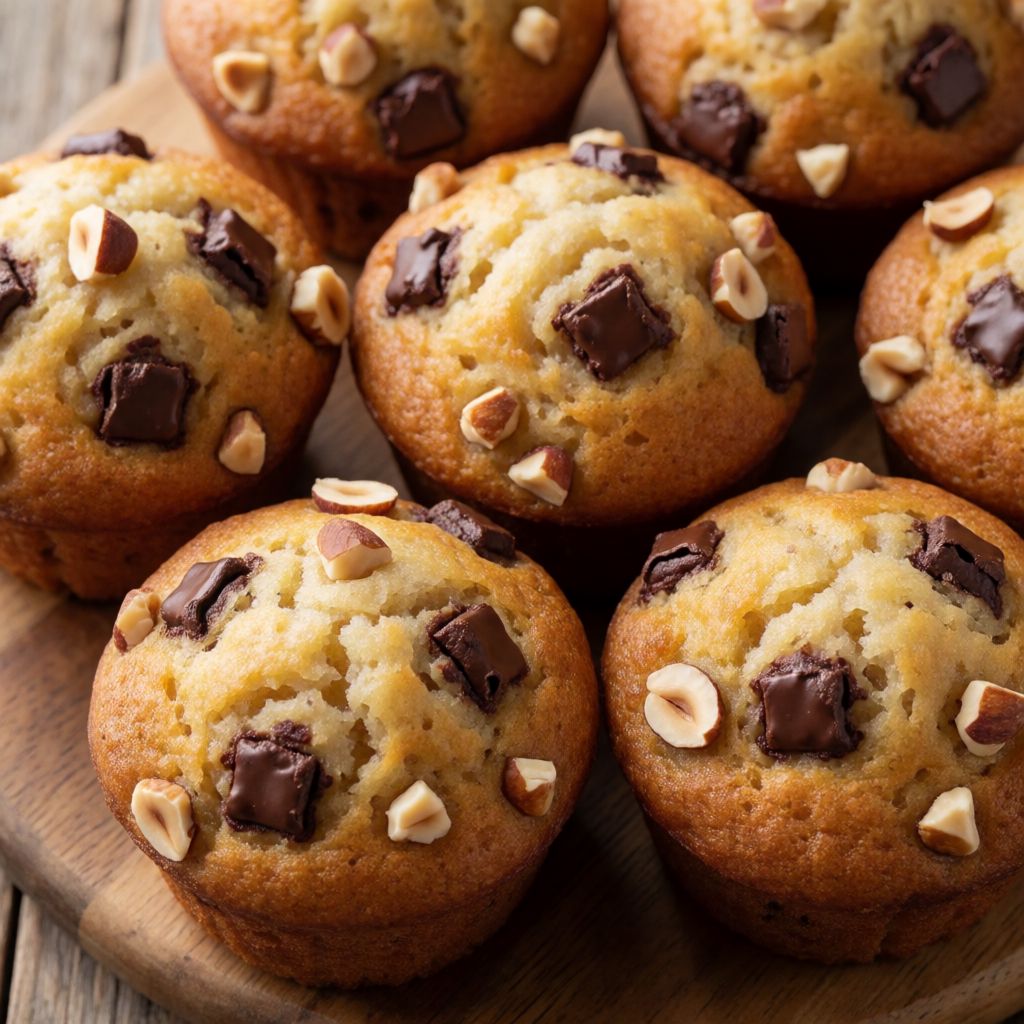
 AI photo
Banana Muffins with Chocolate and Hazelnuts
Moist banana muffins studded with dark chocolate and toasted hazelnuts.
Labels are worked out automatically from the ingredients and can be wrong. Check the packaging if it matters to you.
Ingredients
- 75 g Hazelnuts
- 110 g Butter softened, at room temperature
- 125 g Caster sugar
- 3 pcs Eggs
- 110 g Plain flour
- 1 tsp Baking powder
- 1 pinch Salt
- 2 pcs Banana ripe
- 80 g Dark chocolate chopped






Steps
Spread the hazelnuts in an oven preheated to 150°C and roast for 15 minutes, until the skins become brittle and start to crack.
15 minTip the nuts onto a clean cloth and rub to remove the skins. Roughly chop the nuts.
5 minBeat the butter with the sugar until light and fluffy, then beat in the eggs one at a time, continuing to whisk.
3 minMix the flour, baking powder and salt, sift into the butter mixture and stir until the batter is smooth.
2 minMash the bananas with a fork and fold them into the batter along with the chocolate and hazelnuts. Mix well until evenly combined.
2 minDivide the batter among muffin cases and bake in an oven preheated to 175°C for about 18 minutes, until the centres are cooked through.
18 minCool on a wire rack before serving.
This is banana bread's smaller, sweeter cousin, not a cupcake. The banana is doing structural work, not just flavouring — its starch holds the water, its own sugar means the added sugar can be modest for a bake this size. One batch gives you twelve, enough for a flat's worth of breakfasts, or dessert after two Sunday roasts if nobody's watching portions.
What decides whether these come out right is the order of operations, not the clock. Beating butter and sugar together traps air into the fat — that's your real leavening, not just the baking powder. Baking powder on its own, with no air already worked in, gives you something flat and dense in the wrong way. Everything that follows — eggs added one at a time, flour folded rather than beaten, banana and chocolate stirred in last — exists to protect that trapped air long enough for the oven to set it before it escapes.
Some say you want bananas gone black and weeping for banana bakes. No — you want them ripe: skin freckled brown, flesh soft to a thumb but not collapsing. Fully black bananas have started to ferment; the taste turns sour-sweet and the flesh turns to paste, which throws off the exact moisture balance this batter was built around. Underripe, pale-yellow bananas are the opposite fault — not enough sugar, not enough give, and you'll taste raw starch.
Butter softened at room temperature isn't a nicety — it's the whole mechanism of step one. Cold butter won't hold air when you beat it with sugar; it just gets pushed around, dense and unyielding. Any neutral fat that's soft enough to cream will do the same job, which is why margarine turns up in cheaper versions of this bake, but butter brings a flavour the batter is otherwise short of, since there's no oil and no spice doing that work here.
Caster sugar earns its place by being fine enough to dissolve into the butter as you beat, rather than sitting in it as grit. Granulated will work if that's what's in the cupboard, but it won't cream as smoothly, and you'll feel the difference as a faint crunch in the finished crumb rather than see it.
Eggs added one at a time, not tipped in together, is about keeping the butter-sugar mixture from splitting. Butter is fat; egg is mostly water. Add all three eggs' worth of water at once into fat that's only just been aerated and the mixture can curdle — you'll see it go from fluffy to grainy and loose. Adding them gradually, beating between each, lets the mixture absorb the water a little at a time and stay emulsified. If it does start to look curdled, a spoonful of the flour stirred in will usually bring it back; that's a rescue, not a step you should plan to need.
Plain flour plus baking powder rather than self-raising gives you control over how much lift you're putting in — self-raising flour's built-in ratio is tuned for lighter batters than this one, which already has banana's moisture and weight to lift against. The pinch of salt isn't there to make anything taste salty; it's there so the sugar and chocolate taste more like themselves. Leave it out and the muffin won't be wrong, just a shade flatter on the tongue.
Dark chocolate chopped by hand, rather than bought as chips, is worth the two minutes with a knife: chips are formulated to hold their shape in the oven, so they stay as neat little domes in the finished muffin, whereas hand-chopped pieces melt unevenly, some into streaks through the crumb, some staying as soft pockets — more interesting to bite into, and it means you can use whatever bar you've got, so long as it's genuinely dark rather than a sweetened milk chocolate that would tip the whole thing too sweet against the banana.
Hazelnuts bring a bitterness under their own fat that balances the banana's sweetness — that's their job here, not crunch for its own sake. Any other oily nut will do the same work: walnuts, pecans, even almonds, though almonds skip the skin-removal step altogether since their skin isn't bitter the same way and most people leave it on. Some recipes tell you to blanch hazelnuts in boiling water to loosen the skins before rubbing them off — no need. Dry roasting does the same job without adding water you then have to dry back out of the nut, and it toasts the flavour at the same time instead of diluting it.