
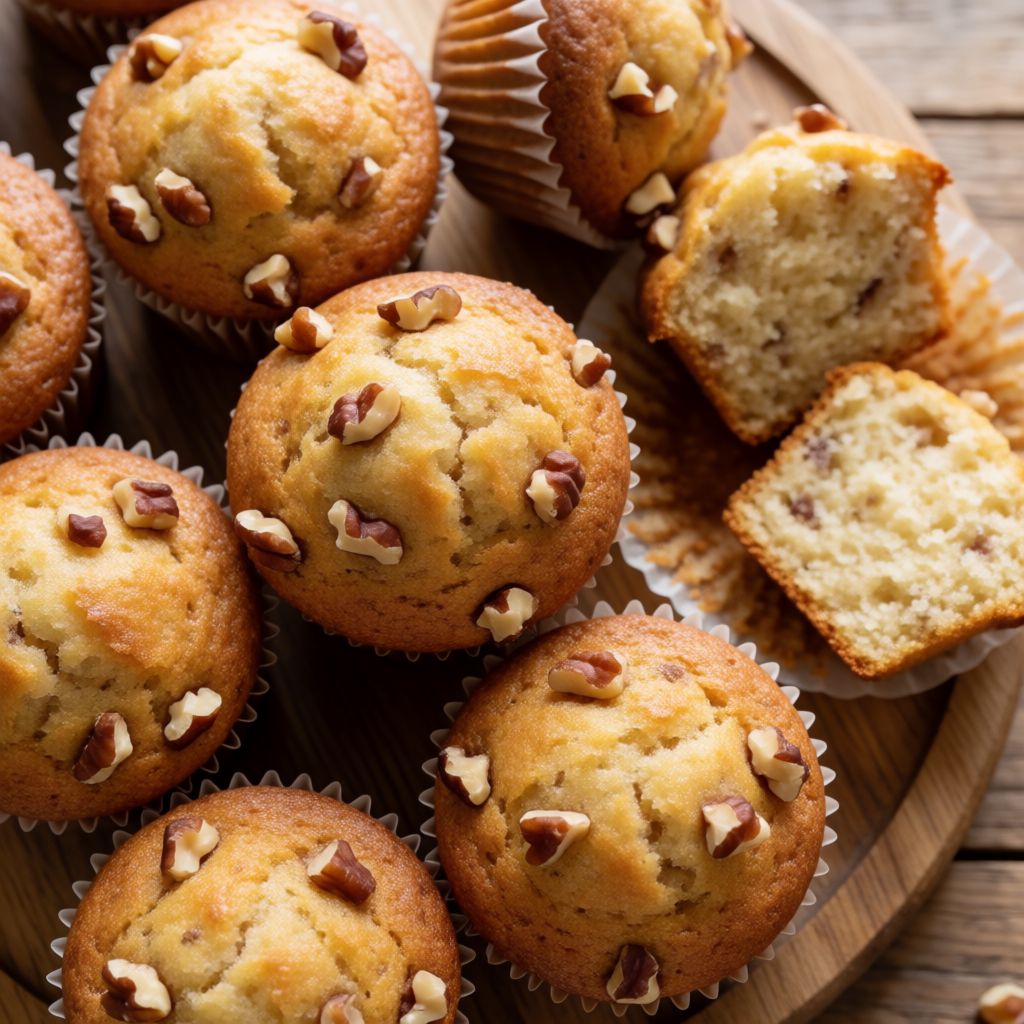
 AI photo
Walnut and Banana Muffins
Soft muffins with ripe banana, walnuts and a touch of cinnamon, ready in under an hour.
Labels are worked out automatically from the ingredients and can be wrong. Check the packaging if it matters to you.
Ingredients
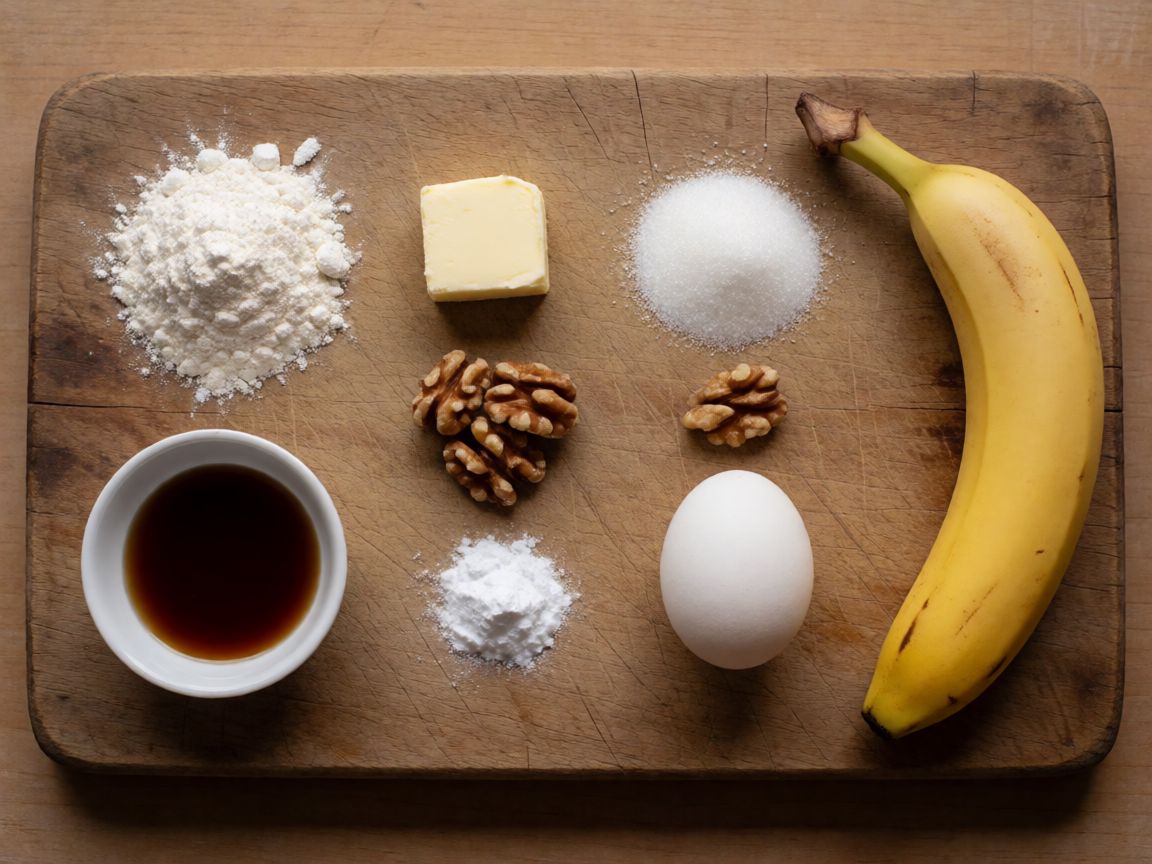
- 125 g Plain flour
- 60 g Butter
- 110 g Caster sugar
- 50 g Walnuts
- 1 pcs Egg
- 1 pcs Banana
- 1/2 tsp Vanilla extract
- 5 g Baking powder
- Cinnamon to taste
- 1 pinch Salt
- 1 pinch Bicarbonate of soda









Steps
Put the diced butter in a bowl, add the sugar and beat with a mixer until light and fluffy.
Mash the ripe banana with a fork until smooth, add the egg and mix well.
Stir the vanilla extract and a pinch of cinnamon into the banana mixture, gradually adding the sifted flour.
Mix with a spoon until there are no lumps, then add a pinch of salt, the bicarbonate of soda and the baking powder.
Combine the smooth batter with the butter and sugar mixture and mix well with a spatula or mixer.
Roughly chop the walnuts with a knife and fold into the batter.
Fill paper muffin cases to about three-quarters full. Preheat the oven to 180°C.
Bake the muffins for about 25 minutes, until golden on top and cooked through.
25 minLet the muffins cool slightly before serving.
If you like, dust the tops lightly with icing sugar.
A muffin lives or dies on how much you stir it, not on what's in it. This one has two separate mixtures going in — butter beaten with sugar, banana mashed with egg — and the whole trick is in how late they meet. You cream the butter and sugar first so it traps air, little mechanical bubbles held in a fat that's gone pale and fluffy rather than oily. That's your only rising help besides the chemical stuff, so don't skip it and don't rush it: cold butter beaten too briefly stays grainy and you lose half your lift before the oven even gets a look in.
The banana isn't flavour, it's structure — it's doing the job sugar and egg usually do alone, adding moisture and a bit of pectin that holds crumb together, which is why an unripe banana (starchy, dry, barely mashable) is the wrong banana. You want one gone soft and faintly speckled, verging on "too far for the fruit bowl." That's not a shortcut, that's the ingredient working.
The flour goes in gradually into the wet banana mixture, not the other way round, and only mixed until the lumps vanish — no further. Some say beat it well so it's "properly combined." No — overworked flour develops gluten, and gluten in a muffin gives you a tough, chewy top instead of the loose, slightly craggy crumb you actually want. A muffin batter is meant to look a little rough, almost unfinished. That roughness is correct.
The raising agents are doing two different jobs and that's why there are three of them stacked in a half-teaspoon of powder and a pinch of soda. Baking powder is slow and even — it's already got its own acid built in, so it keeps producing gas steadily through the mix and into the oven. Bicarbonate of soda is fast and needs an acid to react against; here that's the banana and the brown edges of caramelising sugar. The soda gives you a quicker first lift and a touch of browning on the crust, the powder carries the rest of the bake. Leave the soda out and the crumb stays pale and slightly flatter on top — not wrong, just different, denser at the crown.
Butter: use it diced and starting to soften, not melted, not fridge-hard. Melted butter won't hold air when beaten — you're back to syrup, not foam. If you're out of butter, a neutral oil with no smell of its own (sunflower, not olive) will still make a muffin, but you lose the creaming step entirely and the texture goes denser and more cake-like, closer to a loaf than a muffin. That's a fair swap in a hurry, not an equal one.
Walnuts chopped by knife, not food processor — a processor pulverises some and leaves others whole, so you get dust in the crumb and then a sudden crunchy lump two bites later. A knife gives you irregular but consistent pieces, and that's what you want biting into: texture, not surprise. Any nut with a similar oil content works instead — pecan is the obvious one, nearest in fat and sweetness; hazelnut if toasted first, since raw it's flatter in flavour.
The cinnamon and vanilla aren't there to be tasted on their own — they're there to round off the banana, which on its own can taste a bit flat and starchy once cooked. "To taste" for the cinnamon is honest advice, not vagueness: too much and it fights the banana instead of backing it up.
On an ordinary UK domestic oven, 180°C fan or not makes a real difference — fan ovens run hotter in practice and can take these to golden-brown a few minutes early, so treat the 25 minutes as the floor, not the target. Look for the tops springing back when pressed lightly and the edges pulling slightly from the paper case — that tells you more than a clock. A skewer coming out clean works too, but don't keep testing every two minutes by stabbing them, or you'll let heat escape the oven and slow the whole bake down out of impatience.
Letting them cool slightly before eating isn't fussiness — a muffin straight from the oven is still setting its crumb structure as it cools. Cut into it too soon and it collapses slightly under the knife, feels gummier than it is. Ten minutes of patience here is the difference between a muffin and a mess that tastes the same but falls apart in your hand. With your tea, that patience is well spent — there's no rushing a decent cup either.