
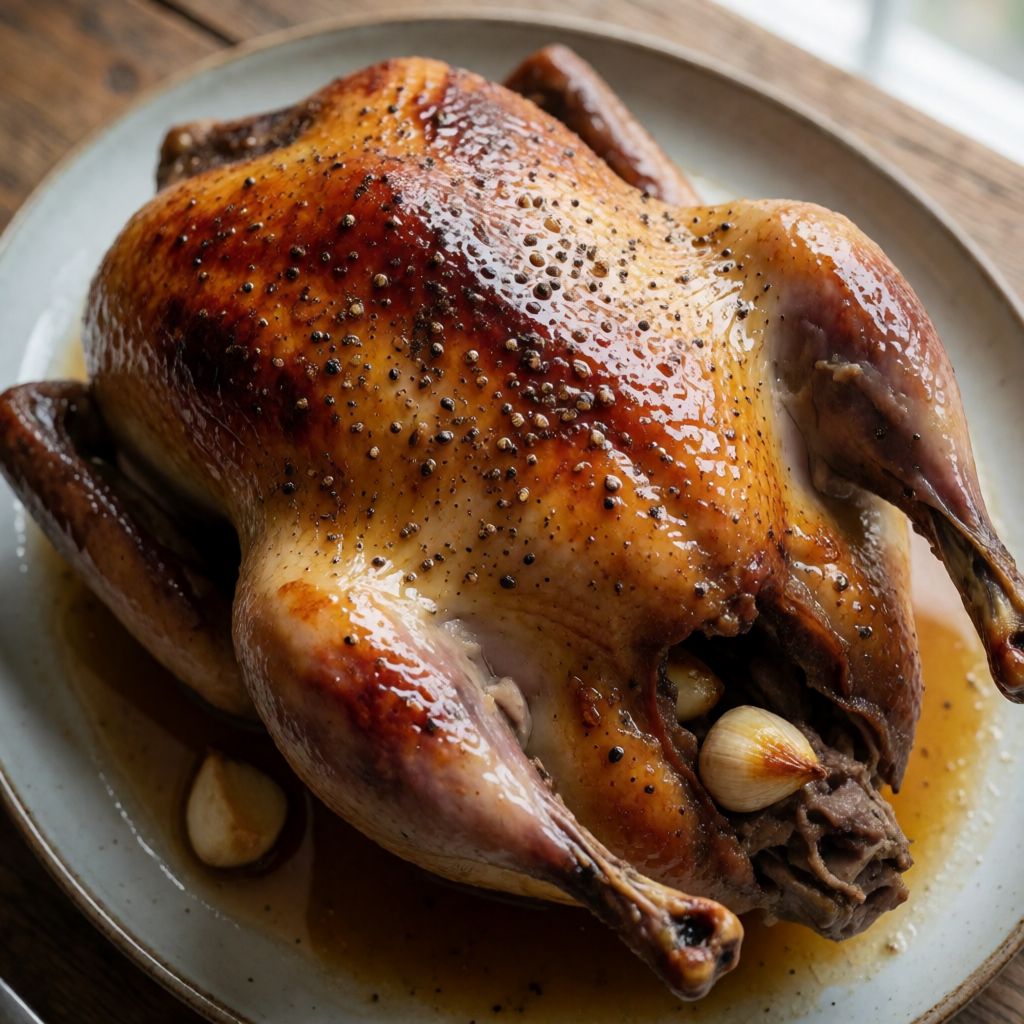
 AI photo
Guinea Fowl Baked in Beer
A tender guinea fowl marinated and baked in beer with garlic, bay leaf and rosemary.
Labels are worked out automatically from the ingredients and can be wrong. Check the packaging if it matters to you.
Ingredients







Steps
Marinate the guinea fowl, cut into pieces, in a large bowl with the beer and bay leaf
30 minFry the guinea fowl in a pan with olive oil
Add the marinade, season with salt and black pepper, and sprinkle generously with rosemary
Bake at 180°C, basting and turning frequently with the marinade, until the internal temperature reaches 74°C
60 min
This is a guinea fowl, cut into joints, given a beer bath, browned in a pan, then finished in the oven while you keep splashing the marinade back over it. Two things decide whether it comes out right: the crust you build at the start, and the thermometer reading you chase at the end. Everything else is housekeeping.
Some say marinating tenderises the meat — no. Thirty minutes in beer does not reach past the surface fibres; meat is denser than that, and liquid moves slowly through muscle. What the beer actually does in half an hour is season the outside and start a flavour exchange — the hop bitterness working against the fowl's natural leanness, which is drier and gamier than chicken. That's the whole job of this step, and it's enough.
Then you fry it. Some say searing seals the juices in — no, searing does not seal anything, meat isn't a bag. What frying gives you is the Maillard crust: the brown, nutty flavour that only happens dry and hot, which the later wet baking stage could never produce on its own. Skip the fry and you get a pale, boiled-looking bird that tastes of nothing you built yourself.
Guinea fowl is the bird you reach for when chicken feels too safe. It's leaner, the meat is darker and closer to the bone in flavour, somewhere between a good free-range chicken and a pheasant. That leanness is a fact to work around, not ignore — it's why the beer bath and the basting matter more here than they would on a fatty roasting chicken. Cutting it into pieces before anything else happens isn't fussiness: smaller pieces mean more surface for the marinade to touch and more surface to crust in the pan, instead of one big joint doing neither job well. If you can't get guinea fowl, use chicken thighs and legs — darker, fattier cuts that forgive heat better than breast does — and expect it to need less basting, because chicken brings its own fat to the party.
The beer is not there to get anyone drunk on dinner. Its bitterness, from the hops, cuts against the gamey edge of the fowl the way a squeeze of lemon cuts against oily fish — balance, not decoration. Its sugar helps the basted surface caramelise a little more each time you brush it back on, building colour in layers rather than all at once. Any beer with real bitterness and not too much sweetness works: a dry pale ale, even a stout if you want it heavier. A sweet lager will leave the dish cloying. No beer in the house — dry cider does a similar job, or stock with a splash of vinegar and a pinch of sugar, though that's a paler imitation and you'll feel the gap.
The oil for frying needs one quality: it has to survive dry pan heat without burning or turning bitter. Olive oil works, but not the good peppery extra virgin you'd put on a salad — that smokes and sours at frying temperature. Use a light, refined olive oil, or swap for sunflower or groundnut oil, anything neutral enough to carry heat and get out of the way of the bird's own flavour.
The garlic is a single clove for a reason — it's there to perfume the background, not to announce itself. Salt and pepper go on after the fry and before the oven, not before, because seasoning raw meat straight into a wet marinade just rinses the salt off the surface before it can do anything. Bay leaf sits in the beer bath quietly, the cheapest aromatic there is, which is exactly why it's been in kitchens for centuries — it earns its place by costing almost nothing and surviving long cooking without falling apart. Rosemary you use generously because it's a tough, resinous herb that can take an hour of oven heat and still taste of something at the end; a soft herb like basil would've scorched to nothing twenty minutes in.
In a British kitchen this sits comfortably next to a Sunday roast — same tin, same oven, same instinct to keep an eye on it. The one thing worth buying if you don't have it is a meat thermometer, because domestic ovens run hotter or cooler than their dial admits, and "until done" on a lean bird like this is a short window between right and dry. Patience here isn't about waiting — it's about getting up from the table every so often during that hour to baste, because a fowl this lean punishes you for leaving it alone.