
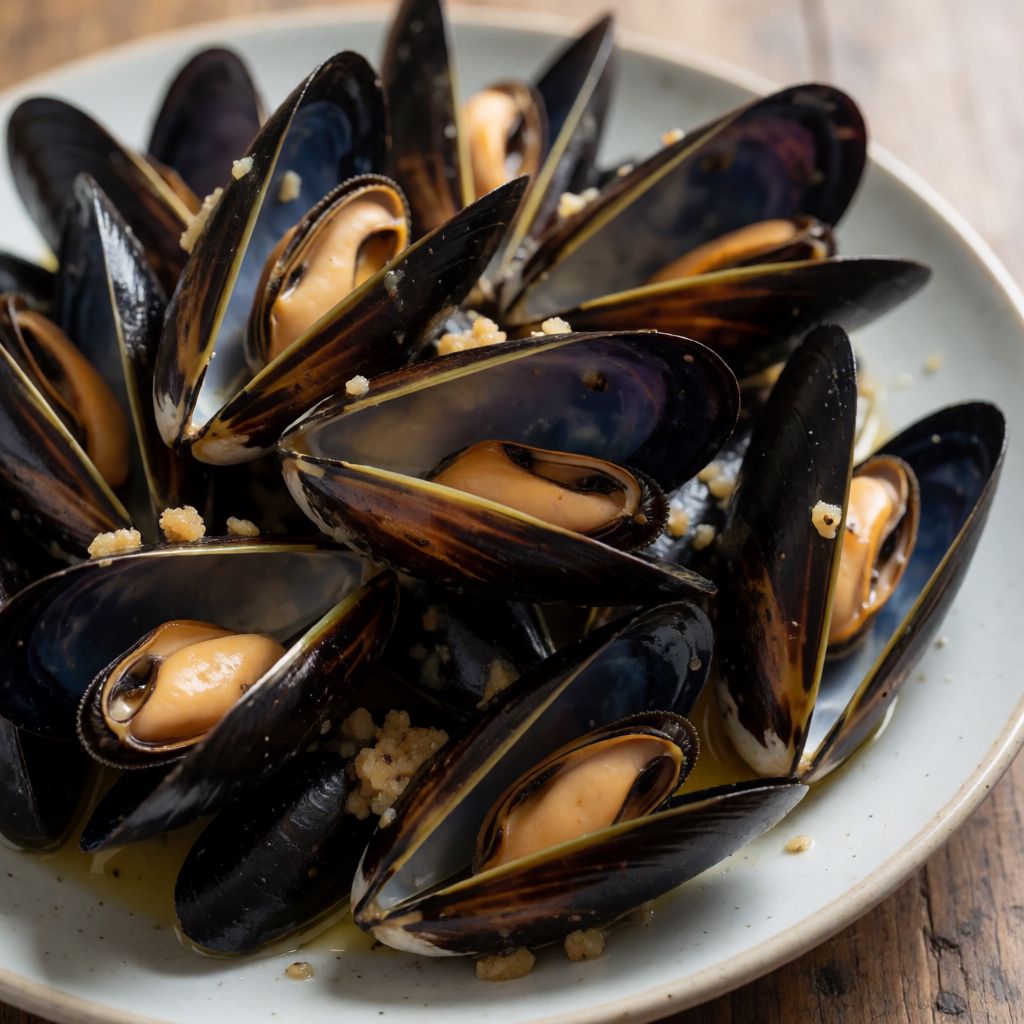
 AI photo
Mussels in Black Pepper
Mussels cooked with garlic and olive oil, finished with black pepper and served with bread.
Labels are worked out automatically from the ingredients and can be wrong. Check the packaging if it matters to you.
Ingredients
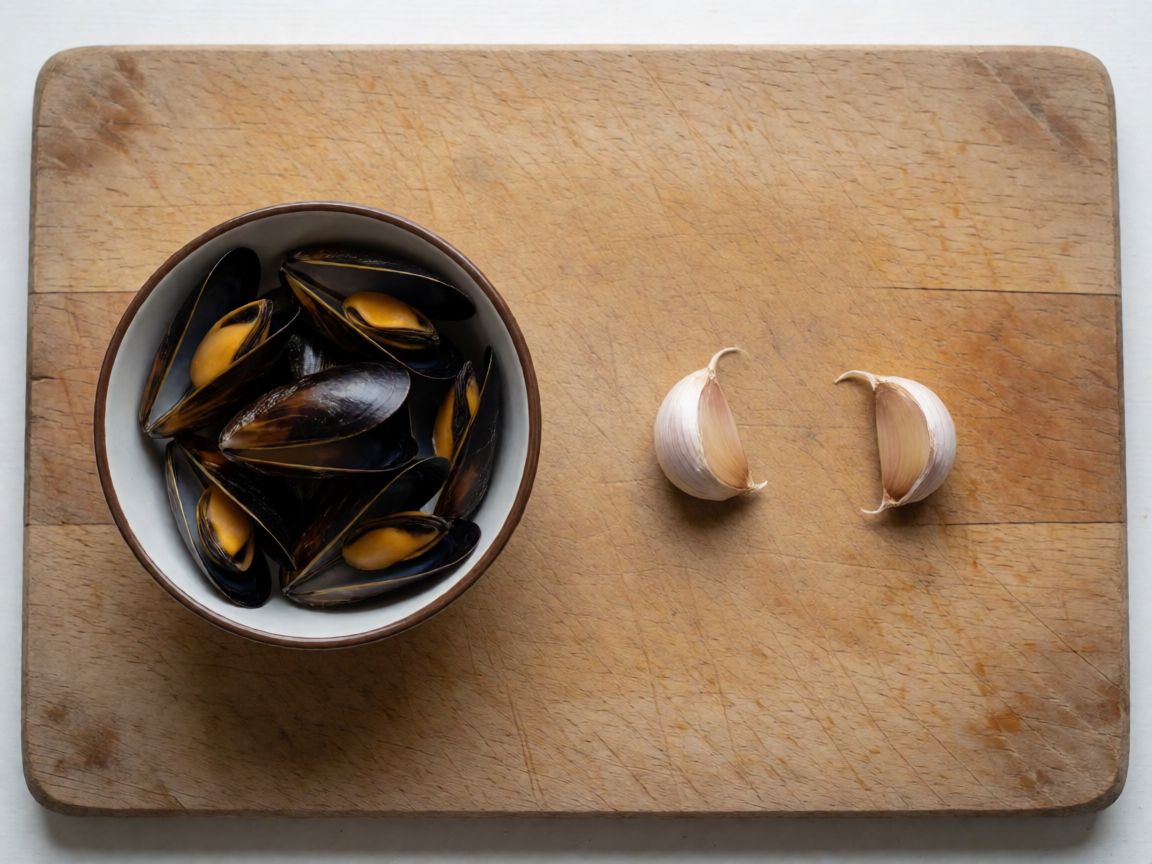
- 1 kg Mussels
- 2 clove Garlic
- 4 tbsp Olive oil
- 1 pinch Black pepper to taste




Steps
Pour 4 tbsp of olive oil into a large deep frying pan and heat well.
Add the 2 cloves of garlic and fry.
Add the mussels and mix well with the garlic.
Cover the pan with a lid and occasionally give it a gentle toss to mix.
Cook until the mussels start to open, then add black pepper.
Transfer the mussels to a plate, pour over the juices that have formed and add a little more pepper.
Serve with slices of bread.
Mussels in black pepper is not a sauce dish pretending to be simple — it is actually simple. Oil carries garlic's smell into itself, the mussels go in, the lid goes on, and from that point the dish cooks itself on the liquid the mussels were already carrying inside their shells. You add nothing wet. That is the whole trick, and also the whole risk: if you don't trust the mussels to make their own broth, you'll be tempted to add wine or water, and then you've made a different dish, a wetter, blander one.
What decides whether this works is not the garlic, not the pepper, not even the oil. It's the mussel itself — alive going in, and dead going out, in that order, and you need to know how to tell the difference at both ends. A mussel that's open and won't close when you tap it before cooking is already dead and has been for a while; it goes in the bin, not the pan. One that stays shut after everyone else has opened just hasn't caught up yet — give it another minute of heat before you condemn it.
The lid does one job: it traps the steam that the opening shells release, and that steam is what finishes the ones that are slower to open. Lift the lid every so often and give the pan a shake instead of stirring with a spoon — a spoon bruises the open ones, a shake just resettles the pile so the mussels at the bottom get their turn near the heat.
Mussels: buy them the day you're cooking them, or the day before at the latest — they're alive, and like anything alive they don't keep. Smell the bag before you open it: clean mussels smell of the sea, nothing more. If they smell of anything else, don't argue with your nose, just don't cook them. Before they go in the pan, scrub off the grit on the shells under a cold tap and pull away the little wiry beard some of them still trail — that's the thread they use to anchor themselves to a rope at the farm, and it's inedible, gritty, and no fun to find in your mouth. Discard any with cracked shells and any open ones that won't shut when you squeeze them gently; a healthy mussel clamps shut defensively, a dead one has no muscle left to do that with. This is also why mussels are cheap and always have been — they're farmed on ropes hung in the water, feeding themselves on whatever drifts past, no one has to feed them grain or walk them anywhere. That's the whole economics of this dish: expensive flavour from an animal that costs almost nothing to raise.
Garlic: two cloves, sliced or just crushed flat with the side of a knife, your choice — the point is only that it sits in hot oil long enough to give the oil its smell, and not a second longer than that. Burnt garlic turns bitter and that bitterness doesn't cook out, it just spreads through every mussel in the pan. Watch the colour, not the clock: pale gold and fragrant is where you stop, before it darkens.
Olive oil: four tablespoons is there to carry the garlic's flavour and later to pool with the mussel juice into something you'll want the bread for. The only real requirement for any oil in a recipe like this is that it has no voice of its own loud enough to argue with the garlic and the sea — a light, mild olive oil does that honestly; a very grassy, bitter one will compete with the mussels rather than support them. If olive oil isn't in the cupboard, any plain vegetable oil manages the same job, just without the faint fruitiness olive oil leaves behind.
Black pepper: added at the very end, and this timing is not fussiness, it's chemistry you can smell. Pepper's sharpness comes from oils that are the first thing to cook away — stew pepper in the pan from the start and by the time the mussels open you've only got the dull heat left, none of the perfume. Crack it fresh if you can; the pre-ground tin loses that same perfume just sitting on a shelf for months.
In a flat kitchen, a wide, deep frying pan does the kazan's job here well enough — it's really the lid that matters more than the pan's shape, because what you're after is trapped steam, not a particular vessel. If your biggest pan has no lid that fits, a large plate set on top works, or even a double layer of foil pressed down at the edges; the mussels don't care what's keeping the steam in as long as something is.
Bread, finally, isn't a garnish here — it's the only utensil equal to the job of mopping up oil, garlic, mussel liquor and pepper off the plate once the shells are empty. Choose something with a crust sturdy enough to drag through that liquid without falling apart in your hand; a soft supermarket loaf will just dissolve. And give the whole thing patience on both ends — patience to let the oil actually get hot before the garlic goes in, and patience to watch the shells rather than a clock once the lid is on. Neither patience costs you anything. Rushing either one costs you the dish.