
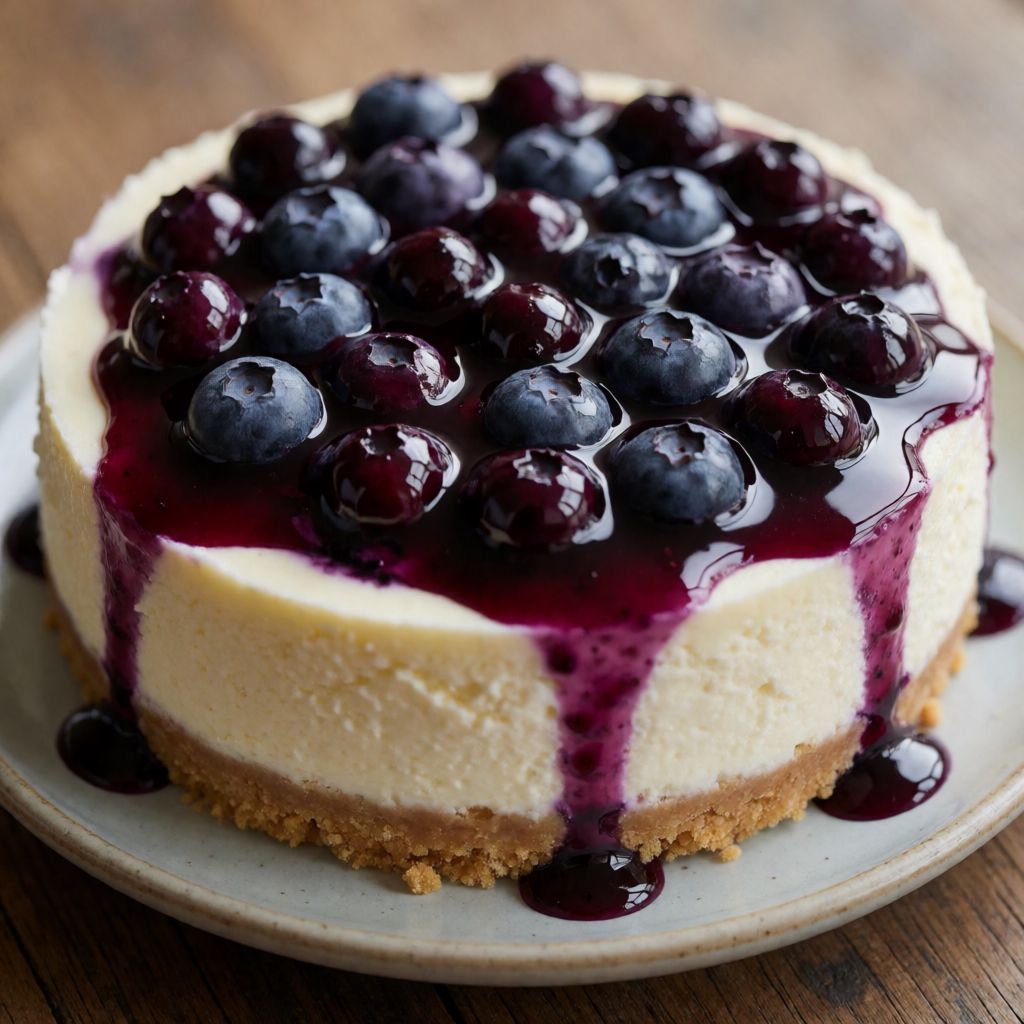
 AI photo
Blueberry Cheesecake
A creamy no-bake blueberry cheesecake with a buttery biscuit base.
Labels are worked out automatically from the ingredients and can be wrong. Check the packaging if it matters to you.
Ingredients
- 320 g Digestive biscuits
- 150 g Butter melted
- 500 ml Double cream unsweetened, for whipping
- 130 g Icing sugar
- 250 g Ricotta
- 300 g Blueberries
- 20 g Caster sugar
- 15 g Gelatine
- Blueberries to taste, for decoration
- Mint to taste, for decoration







Steps
Crush the digestive biscuits and mix with the melted butter until you get an even, crumbly mixture.
Press the mixture into a 22 cm tin, packing it down with a spoon and smoothing the surface.
Put the tin in the fridge.
15 minSoak the gelatine in cold water.
10 minCombine the blueberries with the caster sugar and cook over a low heat, stirring constantly.
4 minTransfer the mixture to a bowl and blend with a hand blender until smooth.
Set aside about 50 g of the purée, squeeze out the gelatine and add it to this portion, stirring until dissolved.
Leave both portions of purée to cool.
Beat the ricotta until soft, add the cooled blueberry purée without gelatine and mix.
Add the blueberry mousse with the dissolved gelatine and mix.
Separately, whip the double cream with the icing sugar until thick and fluffy.
Gently fold the whipped cream into the ricotta-blueberry mixture in stages.
Spread the cream over the chilled base and smooth the surface with a spatula.
Put the cheesecake in the fridge.
240 minBefore serving, decorate with fresh blueberries and mint leaves.
This is a no-bake cheesecake, which is really just two separate problems solved and then stacked: a base that stays crisp, and a filling that sets without an oven. Everything that can go wrong with it goes wrong in the fridge, not on the hob — there's barely any cooking here, just melting, whipping and waiting.
The base is biscuit and butter, nothing more, and the ratio is the whole trick: too little butter and it crumbles when you cut a slice, too much and it turns greasy and slumps. 320g biscuit to 150g butter is roughly two parts to one, which is about as much fat as crushed biscuit can absorb before it stops being a biscuit and starts being wet sand. Pressing it down hard with the back of a spoon isn't decoration — it's what gives you a base that holds its shape under a knife instead of scattering.
The filling's structure comes from three different thickeners doing three different jobs: whipped cream for air and lightness, ricotta for body and a slight tang against the sweetness, and gelatine for the backbone that lets you cut a clean slice instead of watching it spread across the plate like a sauce. Splitting the blueberry purée in two — one part with gelatine, one without — is the clever bit. It means the gelatine's setting power goes exactly where it's needed, into the mousse that has to hold the whole cake together, without stiffening the ricotta mix into something rubbery.
Biscuits: digestives are the obvious choice in a British kitchen because they're already slightly salted and not too sweet, which balances a filling that's getting plenty of sugar from elsewhere. Any plain, dry biscuit that crumbles rather than bends will do the same job — a rich tea works, a ginger nut works and adds its own warmth, Graham crackers if you can find them. Avoid anything soft or filled; you need dry crumb that can soak up butter and then go hard again in the cold.
Butter: melted, not softened, because melted butter coats every crumb evenly and then re-solidifies in the fridge, gluing the base into one piece. This is the same chemistry as a flapjack base — fat as mortar.
Double cream and icing sugar: double cream whips because it has enough fat to trap air in a stable structure; anything leaner (single cream, whipping cream at a stretch) either won't hold peaks or will hold them for a much shorter time, and the mousse will sit heavier and wetter. Icing sugar rather than caster here because its fine texture and small amount of cornflour dissolve into the cream without any grittiness and help it hold its whip a little longer — useful since you're folding it, not eating it straight away.
Ricotta: it's there for weight and a faint sourness, not sweetness. It's also forgiving — if yours is a bit wet, drain it in a sieve for twenty minutes first, or the filling will be looser than you want and take longer to firm up. Mascarpone is the obvious substitute if you want something richer and don't mind losing the slight tang; cream cheese works too but bring it to room temperature first or it'll sit in lumps when you try to beat it soft.
Blueberries and caster sugar: cooking them down isn't about making jam, it's about breaking the skins and releasing juice so the blender actually gives you a smooth purée instead of a seedy, chunky one. Low heat, stirred the whole time — you're watching for the berries collapsing and the liquid around them turning from watery to syrupy, not for a clock. If you don't know the signs of a mechanism going wrong here, trust your eyes: burnt sugar smells sharp and acrid, and you'll know immediately if you've gone too far.
Gelatine: bloomed in cold water first so it swells evenly and dissolves without clumping — drop it straight into something warm and you get little rubbery threads instead of a smooth set. 15g for this volume of liquid gives a filling that's firm enough to slice but still yields under a spoon; use less and you risk a mousse that won't support its own weight once you lift a slice, use noticeably more and it turns bouncy, more jelly than cheesecake. If you only have leaf gelatine, soak the sheets in cold water until floppy, squeeze them out, and use roughly the same weight — the method is identical.
The four hours in the fridge at the end is not a suggestion, it's the actual setting time the gelatine needs to form its network through all that cream and ricotta — rush it and you get a filling that looks set on top but slumps the second you cut into it. This is the one ingredient in the whole dish that is pure patience: there's no shortcut, no higher setting on the fridge that speeds it up, you just have to leave it alone.