
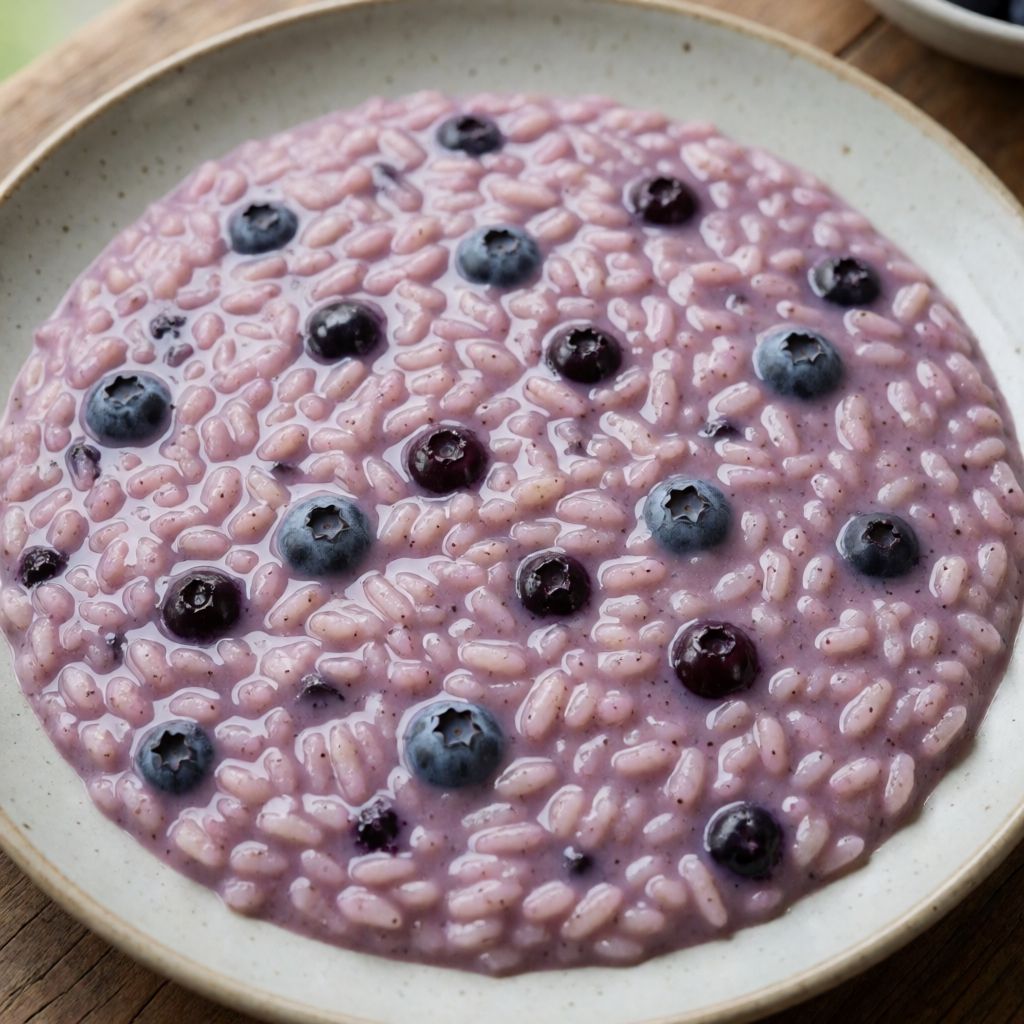
 AI photo
Blueberry Risotto
A creamy risotto with sweet blueberries, finished with cream and Parmesan.
Labels are worked out automatically from the ingredients and can be wrong. Check the packaging if it matters to you.
Ingredients
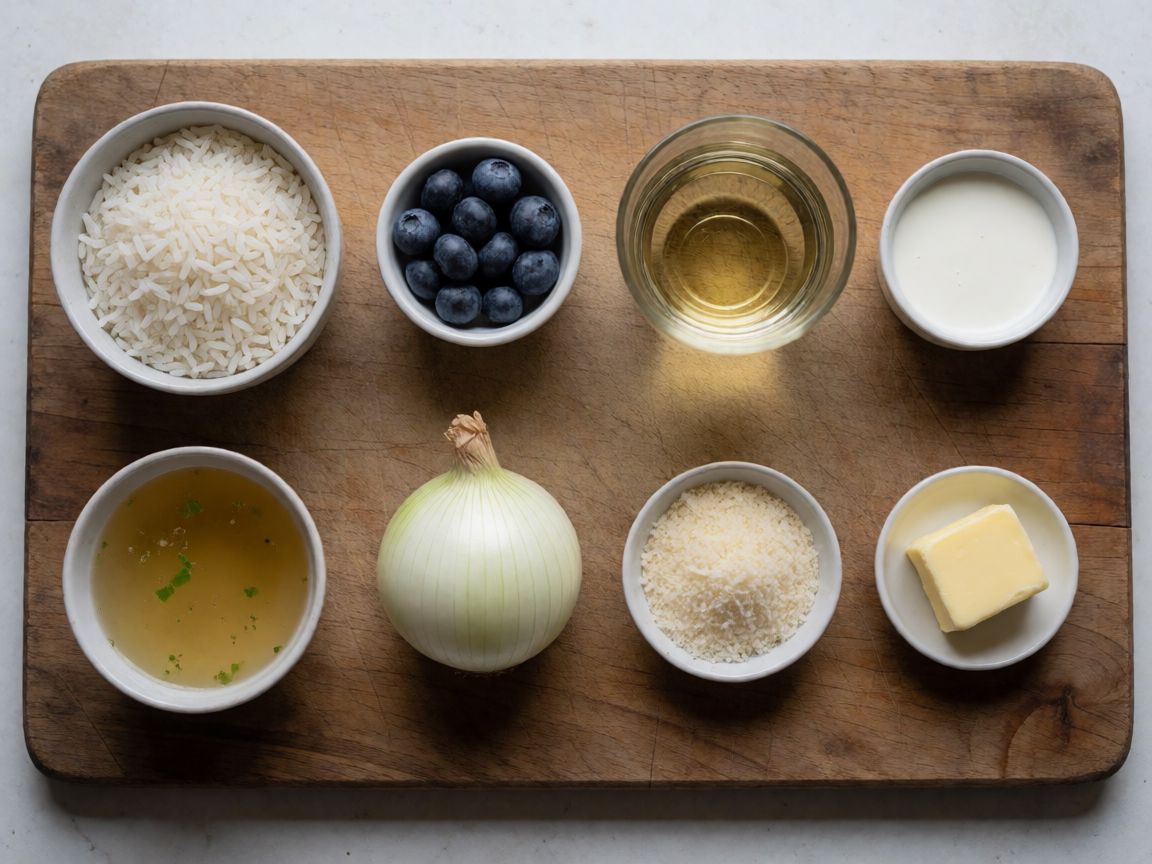
- 320 g Rice
- 200 g Blueberries
- 250 ml White wine
- 125 ml Double cream
- 1 pcs Onion
- Vegetable stock as needed
- 40 g Parmesan grated
- 40 g Butter
- Salt to taste
- Black pepper to taste










Steps
Melt the butter in a saucepan, add the finely chopped onion and sauté until translucent.
5 minAdd the rice and toast it, stirring with a wooden spoon, until it has absorbed the butter and is lightly toasted.
3 minPour in the white wine and let it evaporate over low heat, stirring occasionally.
3 minAdd the blueberries, setting aside two tablespoons for garnishing the finished dish.
2 minPour in the hot vegetable stock. Cook the risotto, gradually adding more stock as the rice absorbs it.
20 minSeason with salt and black pepper to taste.
1 minPour in the cream and mix well so all the ingredients come together.
2 minRemove the saucepan from the heat and stir in the grated Parmesan. Spoon the risotto onto plates and garnish with the reserved blueberries.
2 min
Risotto isn't a rice dish, it's a starch-release dish — and blueberries here aren't decoration, they're acid and sugar doing a job that tomatoes or saffron do in other versions. What decides whether this works is the same thing that decides any risotto: whether you let the rice talk to the liquid one ladle at a time, or whether you drown it and walk away.
Some say risotto needs a kazan-wide pan and constant stirring like a religious duty — no, because what you're actually managing is starch coming off the rice grain slowly enough to thicken the stock into sauce, not water evaporating fast enough to make you sweat. A normal UK saucepan does this fine. What it won't do is hold heat evenly if you crank it high, so keep it at a gentle, steady simmer-bubble — the kind where the surface just trembles — not a boil. Boil it and the outside of the grain turns to mush before the centre cooks: you get rice with a bald, collapsed edge instead of rice with a creamy coat and a slight bite in the middle.
The blueberries go in before the stock, not after, because you want their skins to split and bleed a bit of colour and acidity into the fat and wine already in the pan — that's the base the stock will build on. Save two spoonfuls back, as the recipe says, because cooked blueberries turn soft and jammy; the raw ones on top give you a cold, bursting contrast against the hot, creamy rice. That contrast is the whole point of a garnish — it's not just for the photo.
Rice first. Use a short, round-grained variety that's bred to shed starch — Arborio or Carnaroli, the names you'll find in any UK supermarket next to the "risotto rice" label. Long-grain rice (basmati, jasmine) won't do this; its structure is built to stay separate and fluffy, the opposite of what you want. If all you have is long-grain, you won't get risotto, you'll get a rice pilaf with blueberries in it — still edible, just not this dish.
Toasting the rice in butter before any liquid touches it isn't a flourish, it's insurance: a thin seal of fat on the outside of each grain slows down how fast it drinks liquid later, which is what gives you time to control the texture instead of the rice doing it for you. Butter is right here because its flavour is meant to be noticed — if you want a neutral stand-in, any oil with no smell of its own works, sunflower or a mild vegetable oil, not olive oil, which fights with the cream and Parmesan at the end.
The wine's job is acid, not flavour alone — it lifts the fat and starch that's built up in the pan and keeps the rice from tasting flat and starchy-dull. Any dry white you'd actually drink will do; sweet wine will throw off the balance against the blueberries, who are already supplying sugar. No wine in the house — a splash of stock with a squeeze of lemon does the same acid job, just without the aroma.
Stock has to go in hot, ladle by ladle, because cold stock shocks the pan's temperature down each time and stalls the starch release — you end up simmering instead of coaxing, and the whole process takes twice as long for a worse result. Keep a small pan of stock warm alongside, which in a UK kitchen usually means a second ring going at the same time — that's the real reason risotto asks for two hands and your attention: not ritual, just two things needing heat at once.
Blueberries, out of season or just not fancied — go for any berry that bleeds colour and has sharpness against sweetness: blackberries, even a handful of defrosted frozen blueberries work, just drain the extra juice first so you're not adding unplanned liquid to your stock count.
Parmesan at the end is salt, savoury depth, and the glue that pulls cream and starch into a sauce rather than a soup. A vegetarian hard cheese of similar age and bite stands in fine if you're avoiding animal rennet; pre-grated bagged cheese won't melt the same way — it's cut with anti-caking starch and goes gritty instead of silky.
Don't rush the middle twenty minutes. That stretch where you're adding stock and watching the grain is the actual recipe — not a wait before the real cooking starts. Risotto rewards someone standing there, half-bored, half-watching, and punishes someone checking their phone across the room.