
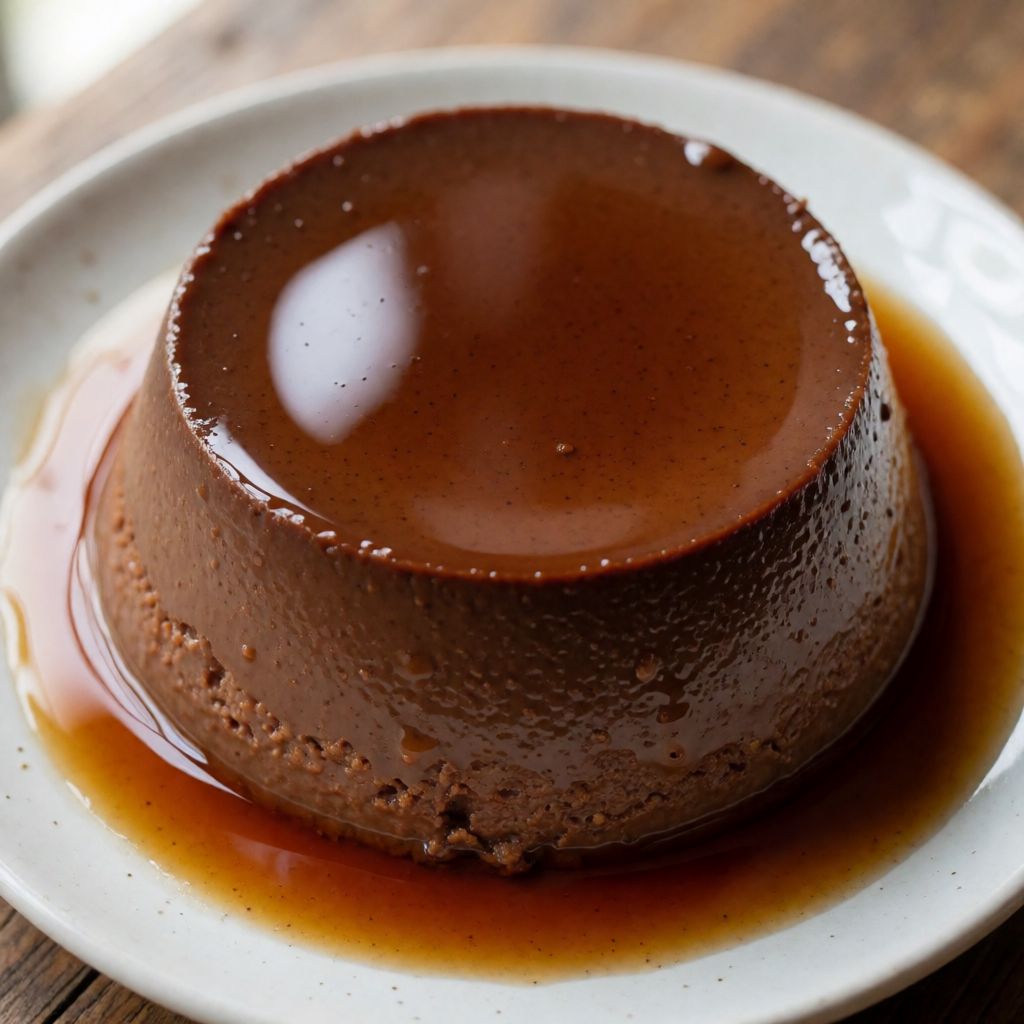
 AI photo
Bonet (Piedmontese Amaretti Pudding)
A rich Piedmontese baked pudding made with milk, cream, amaretti biscuits, cocoa and coffee.
Labels are worked out automatically from the ingredients and can be wrong. Check the packaging if it matters to you.
Ingredients
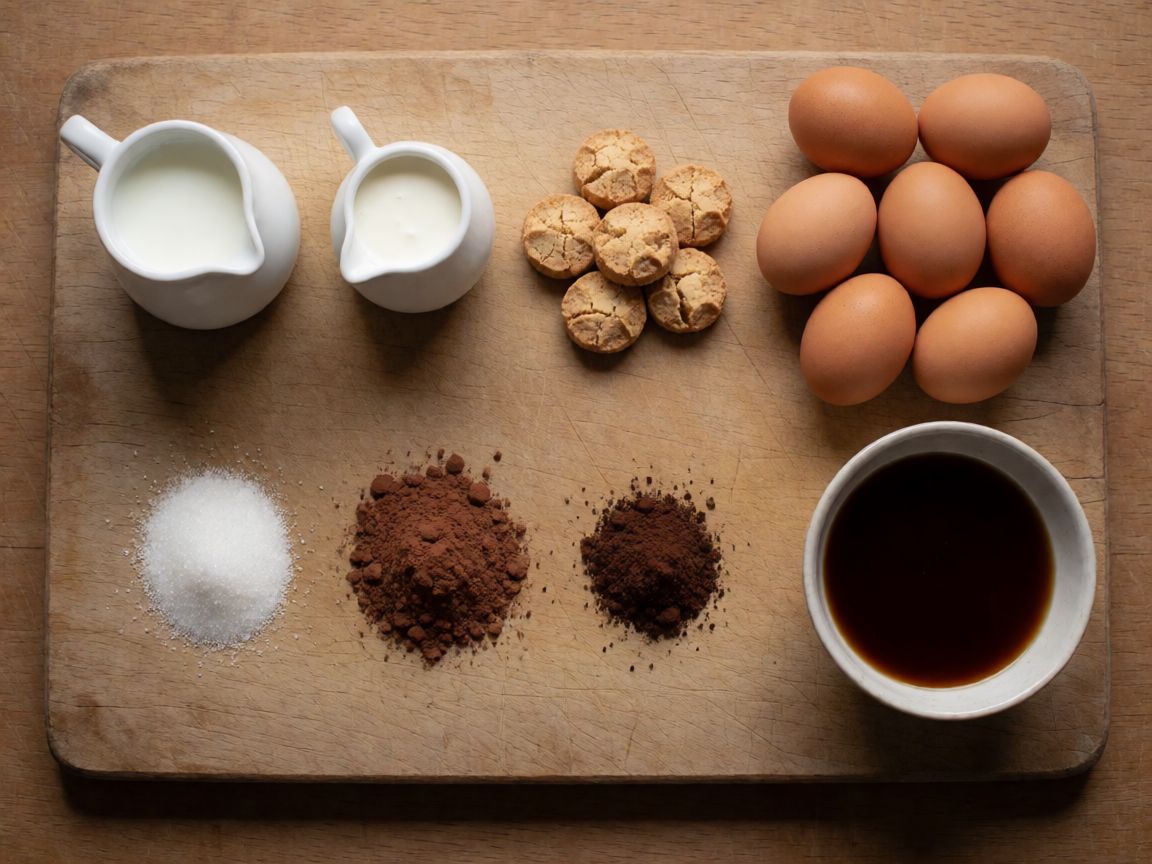
- 500 g Milk
- 300 g Double cream
- 100 g Amaretti biscuits
- 7 pcs Eggs
- 250 g Caster sugar
- 50 g Cocoa powder
- 40 g Coffee
- 15 g Rum
- 80 g Caster sugar for the caramel
- 35 g Water for the caramel









Steps
Melt the sugar (80 g) with the water over medium heat until amber, then pour the caramel into the bottom of the tin.
Pour the milk and cream into a saucepan, add the amaretti biscuits and bring to the boil.
Simmer the milk mixture with the amaretti biscuits for 5-6 minutes until the biscuits soften.
6 minBeat the eggs, add the sugar (250 g), coffee, cocoa powder and rum, and blend with a hand blender.
Slowly pour the milk-amaretti mixture into the egg mixture, blending well.
Pour the resulting mixture into the tin with the caramel.
Place the tin into a larger heatproof dish and pour in water to two-thirds of the height.
Bake in an oven preheated to 140°C for 55-60 minutes.
60 minRemove the tin from the oven and take it out of the water bath.
Cool the pudding at room temperature for at least 1 hour.
60 minChill the pudding in the fridge until ready to serve.
Run a knife around the edges to loosen from the tin, then turn out onto a serving plate.
Decorate with crumbled amaretti and serve.
Bonet is Piedmont's answer to a question nobody asked out loud: what do you do with stale amaretti and leftover egg yolks after you've made zabaglione for the hundredth time. It's a cocoa-and-coffee custard, set with egg rather than gelatine, carrying crushed amaretti biscuits and a slug of rum, sitting on a layer of caramel that becomes its sauce once you flip it out. Ten people, one tin, an hour in the oven doing almost nothing visible — which is the point.
What decides whether it works is restraint with heat, twice. First with the caramel: sugar and water taken to amber, not to black, because past amber the sugar turns bitter and you've built a dessert on a foundation that tastes burnt. Second with the custard itself: this is a baked custard, held together by egg proteins, and egg proteins curdle long before milk boils dry. The water bath isn't ceremony — it's a buffer that keeps the tin's actual temperature well below the oven's 140°C, so the custard sets by coagulation instead of scrambling. Some say a bain-marie is just tradition, fussy and skippable if you're careful. No — skip it and you get sweetened scrambled eggs with cocoa, and no amount of care with timing fixes that, because the problem is the tin touching direct heat, not the clock.
On the ingredients: milk and double cream together give you richness without making the custard too heavy to set — cream alone would be too fat-dense for the eggs to grip, milk alone would set thin and watery. If you only have single cream, it'll work, just slightly looser; don't substitute anything with stabilisers in it (some "cream alternatives" have thickeners that fight the egg-set rather than support it).
Amaretti aren't decoration, they're structure and flavour both — the almond-and-bitter-almond character is what makes bonet taste like itself rather than "chocolate pudding with a fancy name." Simmering them in the hot milk dissolves them into the base, so look for amaretti that are properly hard and dry (the kind sold wrapped in little twists of paper), not the soft chewy type — soft amaretti won't break down the same way and you'll end up with gummy lumps instead of a smooth custard carrying their flavour through it. No amaretti in the cupboard? Any dry almond biscuit with a bitter edge gets you close; a plain sweet biscuit won't, because you lose the bitterness that balances the sugar.
Seven eggs is what actually sets this pudding — there's no gelatine, no cornflour. The egg is doing structural work, which is why the water bath matters as much as it does: you need slow, even heat so the proteins link up gently into a custard gel, not a fast scorch that makes them clump into curds. Use eggs at room temperature if you can; cold eggs meeting hot milk straight from the pan narrows your margin for curdling.
Cocoa and coffee aren't both there for the same job. Cocoa gives the bitterness and colour; coffee (and this is usually strong brewed coffee or espresso, not instant granules stirred in dry) deepens that bitterness without adding its own competing sweetness — coffee here works the way it does in a good chocolate cake, as a flavour amplifier rather than a flavour of its own. Rum does similar work, lifting the amaretti's almond note; a dark rum reads traditional, but any spirit with some warmth and no overpowering flavour of its own will do — brandy, for one.
The caramel is the one place you cannot walk away. Sugar and water taken over heat that lets you watch the colour change — pale, straw, then amber — and off the heat the second you hit amber, because sugar carries residual heat and keeps darkening in the pan after you pull it. Some say you should add a splash of lemon juice or glucose to stop crystallisation; useful if you're nervous, not essential if you don't stir it obsessively and keep your eye on the pan rather than your phone.
On equipment: a proper bain-marie in a domestic kitchen means a cake tin sitting inside a roasting tray, with water poured in after both are already in position near the oven — don't try to carry a tray slopping with hot water across the kitchen. Two-thirds up the tin's height is enough; too little water and it evaporates away before the custard's set, leaving your buffer gone halfway through baking.
Patience is the real ingredient in bonet, not in the oven but after it. The bake is passive — you're not doing anything, just waiting for egg proteins to find their structure at a gentle temperature. The cooling afterward is the same discipline stretched longer: an hour at room temperature, then genuinely cold in the fridge, not a quick chill to make it "firm enough." Turn it out too soon and the caramel, still half-liquid, runs everywhere instead of coating the custard as a glossy sauce — which is the whole reason it sits at the bottom of the tin in the first place.