
 AI photo
Plaited Brioche
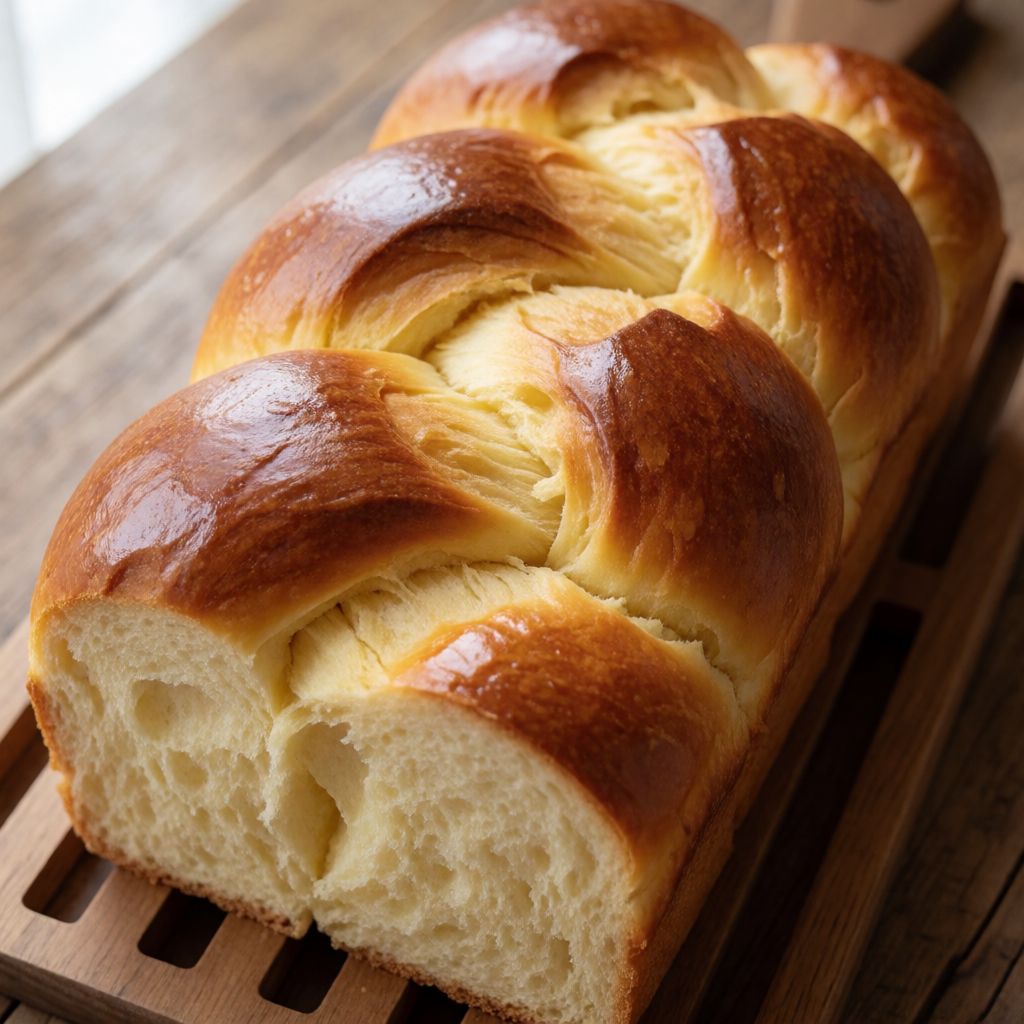
A soft, golden braided brioche, lightly sweetened with honey and finished with a sprinkle of seeds.
Labels are worked out automatically from the ingredients and can be wrong. Check the packaging if it matters to you.
Ingredients
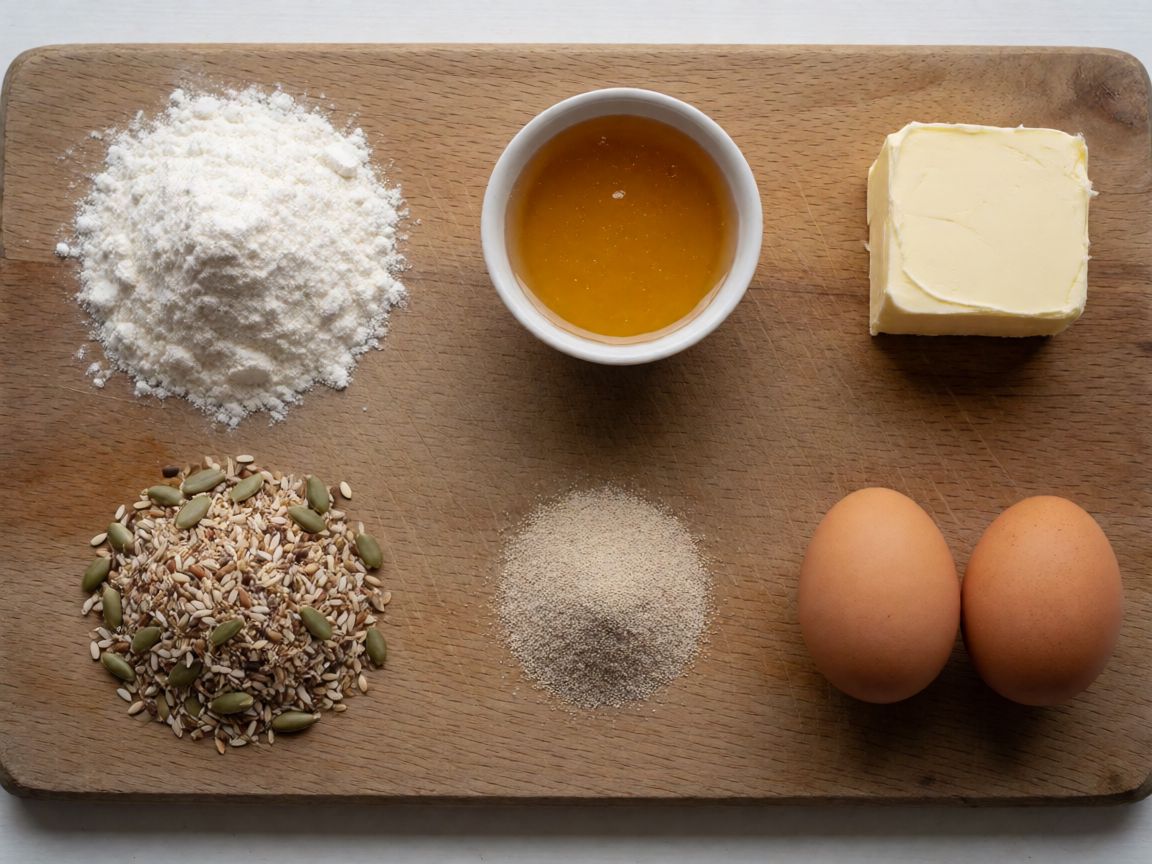
- 100 g strong white flour
- 160 g plain flour
- 2 tbsp acacia honey
- 80 g butter melted
- 2 pcs eggs lightly beaten
- pinch salt
- 12 g yeast
- 80 ml water
- 1 pcs egg for glazing
- 1 tbsp water
- pinch seed mix to taste






Steps
Sift the flour into a bowl, make a well and add the yeast dissolved in water, honey and beaten eggs, mix with a fork
Add the melted butter, keep mixing, add the salt and work in the flour from the edges
Mix with a fork until smooth
Cover with film and leave to rise until doubled
90 minTurn out onto a floured surface, divide into 3 pieces and shape into cylinders
Plait the pieces into a braid, pinch the ends and tidy the shape
Place on a parchment-lined baking tray, cover with a towel and leave to rise a second time until doubled
75 minBrush the surface with the beaten egg and water mixture and decorate with the seed mix
Bake at 180°C
Brioche is bread pretending it's cake, and the trick is all in that butter-to-flour ratio. Most loaves see fat as an afterthought; here it's close to a quarter of the dough's weight, so what you're really doing is building a dough that's halfway to pastry and asking it to still rise like bread. That tension is the whole dish.
Two flours, not one, and that's not fussiness. Strong flour gives gluten enough backbone to hold a laminated-feeling crumb together once all that butter tries to slide everything apart; plain flour softens the bite so you don't end up with something chewy and bready. Get the ratio badly wrong — too much strong flour — and you get a loaf with good structure and no softness, which defeats the point of calling it brioche at all.
The plait isn't decoration, it's function. Three strands means more surface area catching the egg wash, more crust, more places for it to colour unevenly if you rush the proof — which is why the dough needs to double twice, not once. Skip the second rise and you bake a dense braid that looks right and eats like regular bread; the yeast simply hasn't finished building the air pockets that the fat needs to sit inside.
Some say you can tell a brioche is ready by poking it, like any loaf. No — this dough is so soft and buttery that a poke just leaves a dent in fat, telling you nothing. Judge it by volume: it should look obviously, almost comically, bigger than when you shaped it, not by how it feels under your finger.
Honey instead of sugar isn't about flavour nostalgia — it's hygroscopic, it holds water in the crumb, which matters enormously in a dough this rich, because butter actively fights moisture retention by coating gluten strands and keeping them from binding water properly. Acacia honey specifically because it's mild and barely sets, so it melts into the water easily without a floral aftertaste fighting the butter. Any runny, neutral honey does the job; if you've only got set honey, warm the water slightly so it dissolves rather than sitting in lumps that scorch in the oven as dark spots.
The butter must be melted, not softened, and this is where people go wrong following plain bread instinct. Melted butter is liquid fat that can be beaten straight into the egg-and-honey mixture without tearing the forming gluten; softened butter, worked in by hand later like in a classic French brioche method, needs long kneading most home cooks and this recipe don't ask for. Here the fat goes in early and liquid precisely so you can mix with a fork and your hands stay out of it. Don't use oil as a substitute — oil has no structure once it cools, and brioche gets its sliceable, slightly springy crumb from butterfat solidifying again as the loaf cools.
Yeast dissolved in the water first, not scattered dry into the flour — that's the step that saves you from dead patches in the dough. Fresh or dried, both work, but dried yeast especially needs that few minutes in water to wake up before it meets honey and salt, both of which can slow it down if they land on it directly and in concentration. 12g sounds generous for this amount of flour, and it is — rich doughs need more yeast than lean ones, because sugar, fat and egg all make the yeast's job harder, slowing fermentation rather than speeding it as some assume "honey feeds the yeast" folklore suggests. It helps a little, but the fat is the real obstacle, which is why both rises here are long.
The two eggs in the dough and the extra egg for glazing are doing different jobs, so don't conflate them. The eggs in the dough add protein and fat that make the crumb tender and yellow — a true brioche colour, not a bleached white one. The glaze is purely surface: beaten with a spoon of water so it brushes thin and even, giving you that lacquered shine and helping the seeds stick rather than roll off onto the tray. If you've no spare egg for glazing, milk brushed on gives you some colour but none of the shine — know that going in, don't expect a mirror finish.
In a UK kitchen you've got no kazan and no steam oven, just a domestic hob and fan oven, so 180°C here means a fairly gentle, even bake that colours the crust without racing ahead of the inside — a rich dough like this scorches on the outside long before the centre sets if pushed hotter, because sugar and fat both brown fast. Keep it on a middle shelf, not top, and if your oven runs hot, trust colour over the clock: deep amber-gold, not pale, but nowhere near the mahogany you'd want on a plain loaf, because that borrowed honey sweetness darkens the crust faster than you expect.
Patience is the one ingredient not weighed in grams. Ninety minutes, then seventy-five more — that's two and a half hours before it even sees the oven, and shortening either rise is the single most common way to end up with a dense braid instead of the pillowy one you're picturing. Start it in the morning if you want it with afternoon tea; there's no shortcut that doesn't show in the crumb.