
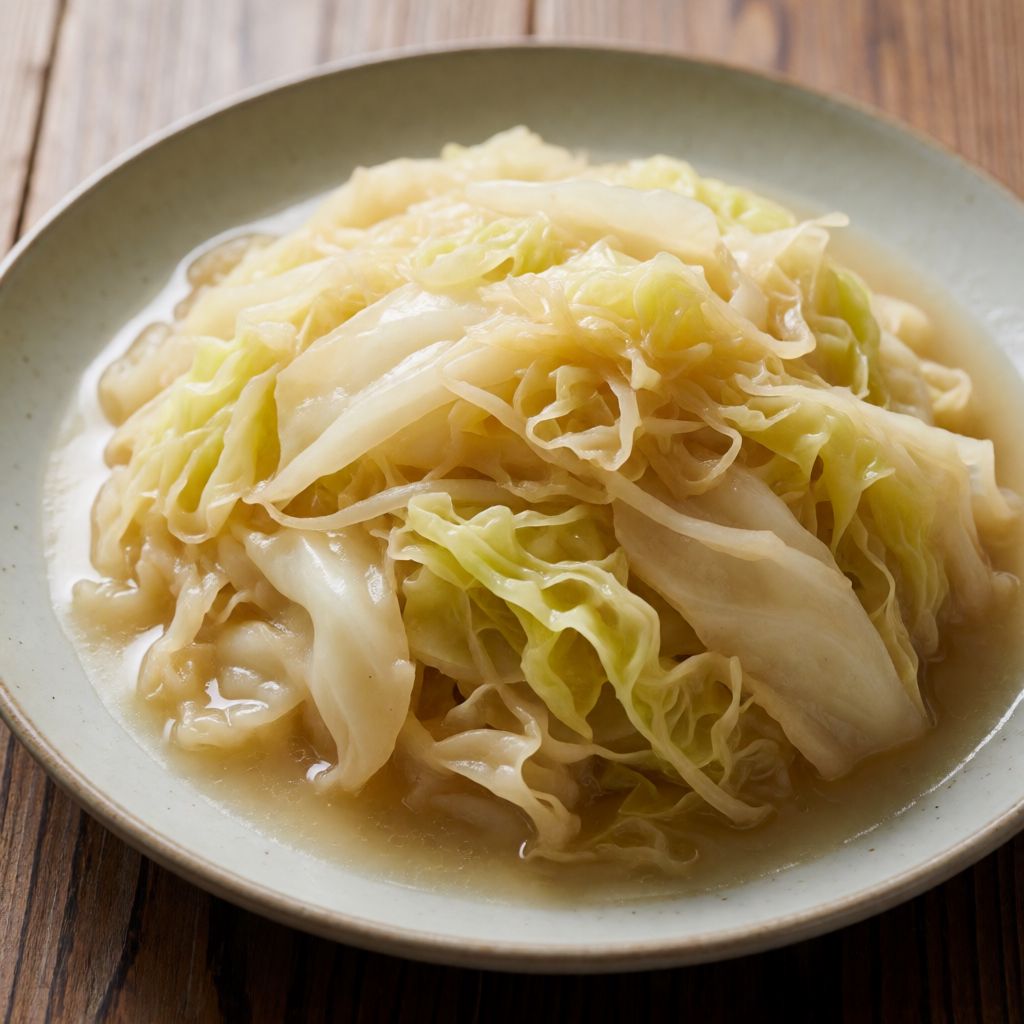
 AI photo
Braised White Cabbage
A comforting braised white cabbage in a creamy nutmeg and lemon sauce.
Labels are worked out automatically from the ingredients and can be wrong. Check the packaging if it matters to you.
Ingredients
- 750 g Cabbage cut into strips
- 300 ml Water
- 2 tbsp Butter
- 2 tbsp Plain Flour
- 200 ml Milk
- 100 ml Double Cream
- 1 pinch Nutmeg freshly grated
- 1 pcs Lemon organic, finely grated zest
- Salt
- Black Pepper freshly ground
- 1 bunch Parsley finely chopped











Steps
Cut the white cabbage into strips about 1 cm wide.
Put the cabbage, water and salt in a lidded pot and cook for 5 minutes until the cabbage softens.
5 minMelt the butter in another pot, stir in the flour, then add the milk and double cream.
Bring to the boil and adjust the sauce consistency with some of the cabbage cooking water.
Add the cabbage to the sauce and heat through well, seasoning to taste with nutmeg, a little finely grated lemon zest and salt.
Serve sprinkled with a little finely chopped parsley.
What was changed
Replaced with Double Cream, matching what UK shoppers typically buy.
This is cabbage dressed up in a béchamel, the quieter cousin of cauliflower cheese — the dish that sits next to a roast and does the job gravy usually does on its own, soaking up whatever's going spare on the plate. Nobody puts it on a menu to impress anyone. It earns its place by being the thing that makes the roast potatoes less lonely.
What decides if it works is a race you have to control, not win fast: the cabbage has to soften enough to be pleasant, and the sauce has to thicken without turning to paste or splitting into granules. Both things go wrong the same way — by someone losing patience and turning the heat up to hurry them along. A béchamel built in order, fat first, then flour, then liquid added slowly, needs no rescuing at the end. One built in a hurry needs whisking like you're angry at it, and even then it can go lumpy.
Some people believe cabbage wants a long boil to go tender. No — the opposite happens. Cabbage cooked too long doesn't get softer, it goes grey and starts smelling of sulphur, which is exactly the smell that gave boiled cabbage its bad name in every school canteen in the country. The cell walls release those compounds the longer they sit in hot water, not the shorter. Five minutes here isn't laziness, it's the whole point — you want the strips to bend, not collapse, and you want them out of the water before the smell starts.
750g is one modest head, enough for four as a side, not a main — this dish rides along with a roast, it doesn't carry dinner by itself. Cut the strips about a centimetre wide and that width is your real control over timing: thinner strips cook and soften faster, thicker ones hold their bend longer and give you more margin before they turn to rag. If your cabbage is older and tougher — the outer leaves thick and ribbed — give it slightly longer in the water, but judge it the same way, by whether it bends.
The butter-and-flour step is a roux, and the mechanism is simple: fat coats the starch granules in the flour so they separate from each other instead of clumping when liquid hits them. Cook that paste for a few seconds over gentle heat — just long enough that it smells toasted rather than raw, like biscuit dough rather than paste — but don't let it colour. Colour is for brown sauces; here you want it pale, because a browned roux tastes different and will tint your white sauce beige, which isn't a disaster, just not what you're making. Any flavourless fat does the structural job of the butter — a neutral oil works — but butter brings milk solids with it that round the sauce out, which oil can't give you back.
Milk and cream together decide the body of the sauce. The cream's fat does more than add richness — it makes the sauce more stable, less likely to split or go watery when it sits and reheats, because fat-rich liquids hold together under heat better than lean ones. If you don't have double cream, crème fraîche will do the same stabilising job, or simply use more milk and a touch more butter — the criterion is fat content, not the label on the carton.
Don't throw out the water the cabbage cooked in. It's carrying flavour the cabbage gave up, and a little starch rinsed off the cut edges, and folding it back into the sauce to loosen it means nothing from the vegetable gets wasted down the sink. Using neat milk alone to adjust consistency gives you a flatter, more generic sauce — the cooking water is what makes this taste like cabbage and not just white sauce with vegetables stirred through.
Nutmeg and lemon zest aren't there to taste of themselves — they're there to cut through all that cream, which left alone would just sit heavy. Grate the nutmeg fresh: the ready-ground kind loses its essential oils to the air within weeks of grinding and ends up tasting of brown dust, not spice. Buy whole nutmeg once and it lasts years. The lemon has to be unwaxed or organic because you're using the skin raw — conventional citrus carries a wax coating meant to survive shipping, and that wax sits between your grater and the oil you're actually after, so you get less zest flavour for more effort.
In an ordinary kitchen with a wide pan instead of a kazan, the lid matters once: use it on the pot while the cabbage cooks in its water, because you need that steam held in to soften it evenly in five minutes rather than unevenly over ten. The sauce pot doesn't need a lid at all — you're meant to be standing over it, whisking, which is the one piece of patience this recipe actually asks of you. Rush the roux and you get lumps you'll be straining out later; give it those few unhurried seconds and you won't need to. Parsley goes on raw at the very end, chopped fine, for a bit of green bitterness against all that cream — and because a plate that's entirely pale could use one thing that looks alive.