Vegetables
Cabbage
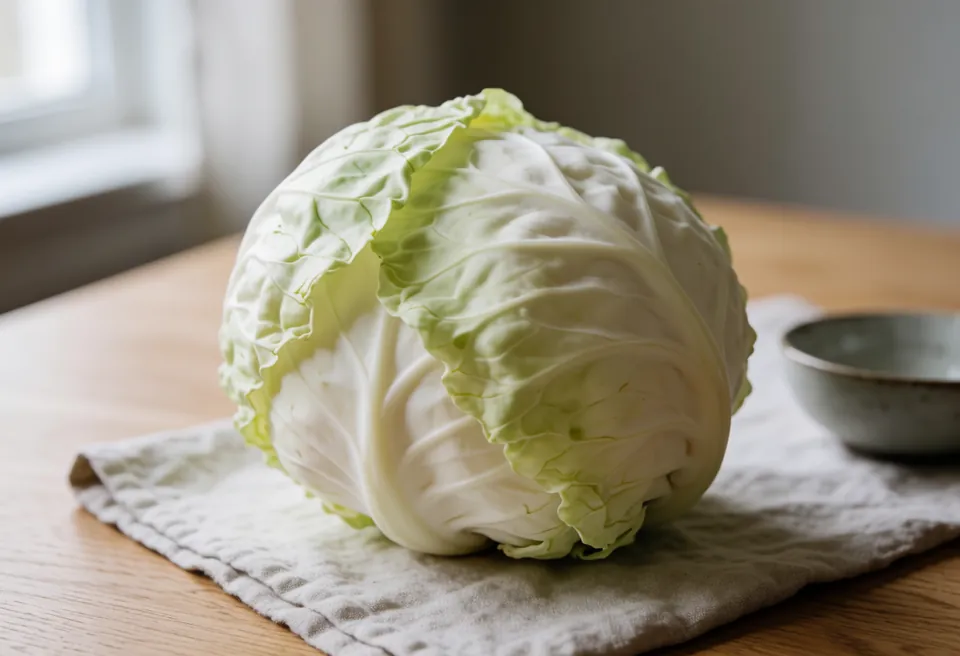
Cabbage is a dense head of crisp leaves, one of the most common vegetables in everyday cooking. It's eaten raw in salads, braised, fermented, or added to soups and stews.
31 kcal per 100 g
Nutrition per 100 g
31 kcal
| Protein | 1 g |
|---|---|
| Fat | 0.2 g |
| Carbs | 6.4 g |
Source: USDA FoodData Central, 2026-09-21. Per 100 g raw (per USDA FDC).
How many grams in a measure
Approximate weights of common measures. The exact figure depends on the product and how it is packed.
- 1 piece 1500 g
Good to know: Cabbage
Listen, cabbage is a simple vegetable, but simple does not mean primitive. A good head is heavy for its size — a piece can weigh around a kilo and a half, and that weight tells you the leaves are packed tight, no air, no waste. Take it in your hands. It should feel solid, almost like a stone wrapped in leaves. Squeeze the outer leaf gently — it should squeak. That squeak is the sound of a fresh, crisp cabbage, still full of its own crunch.
Smell the stem end. Sweet and clean, nothing sour, nothing sharp. A sharp smell means the cabbage has started to break down, and no amount of cooking will bring back what is lost.
Some people say white cabbage is only good raw, in salad, and turns to mush if you cook it long. No! Long, slow cooking is exactly what makes cabbage sweet — the fibers soften, the bitterness fades. The mistake this belief leads to is rushing the pot, pulling the cabbage out too early, and getting a dish that is neither crisp nor tender, both raw and disappointing.
Questions and answers
How many grams of cabbage are in a 1 piece?
1 piece of cabbage weighs about 1500 g.