
 AI photo
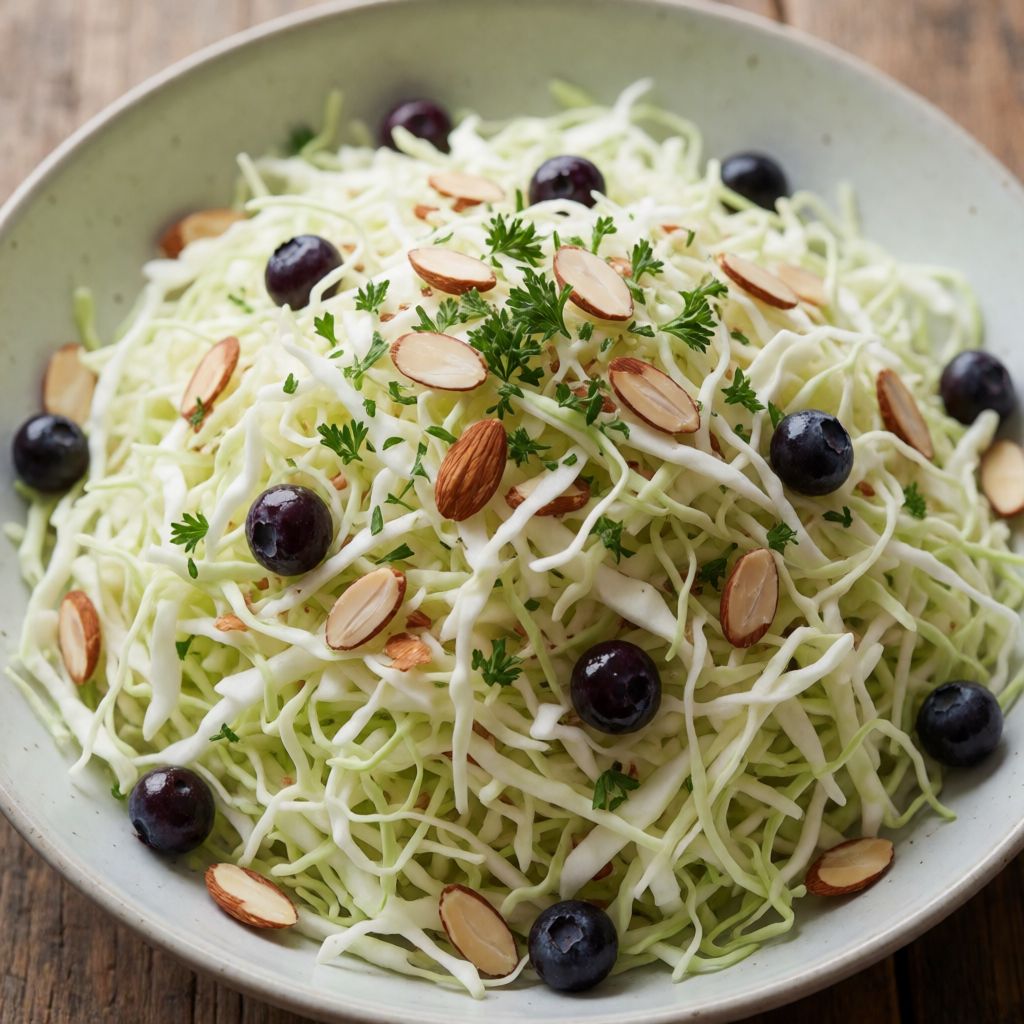
White Cabbage Salad
A crunchy salad of shredded white cabbage with toasted almonds, blueberries and a honey-mustard vinaigrette.
Labels are worked out automatically from the ingredients and can be wrong. Check the packaging if it matters to you.
Ingredients
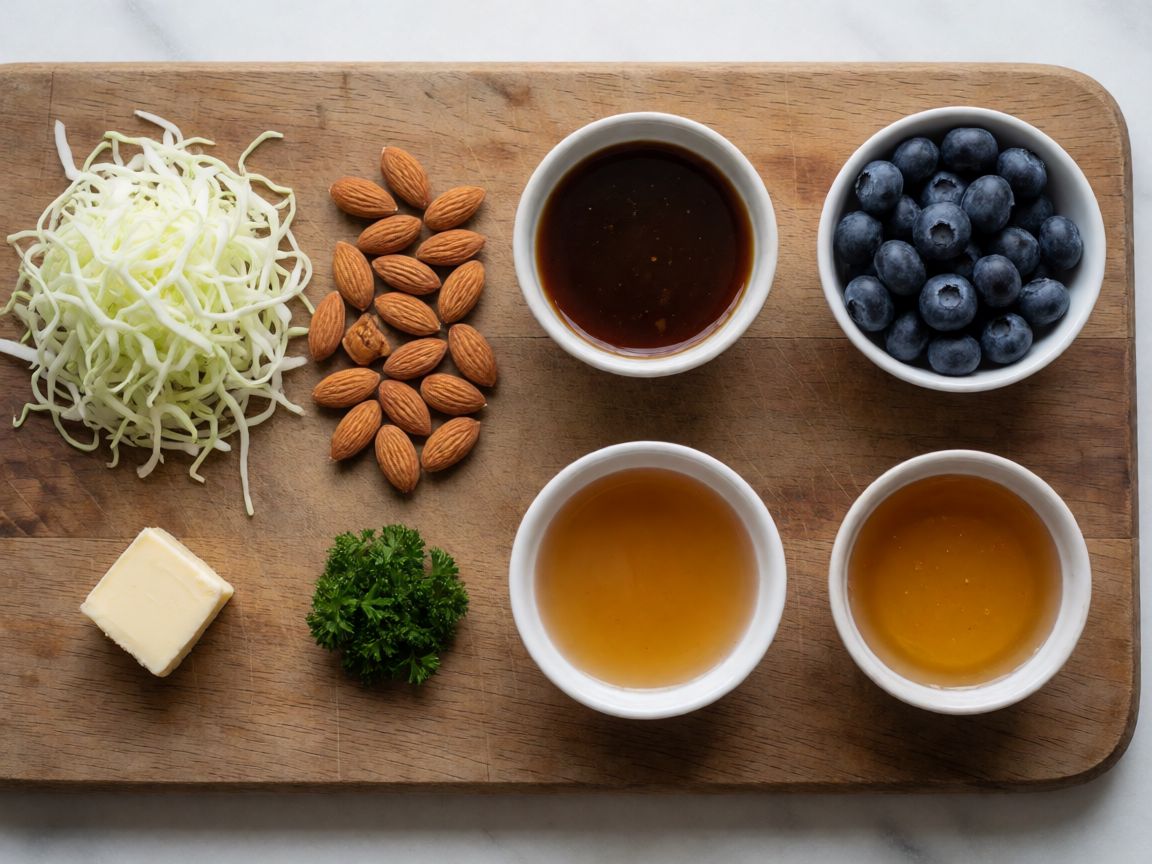
- 0.25 pcs White cabbage finely shredded
- 20 pcs Almonds
- 1 tbsp Teriyaki sauce or soy sauce
- 100 ml Blueberries
- 1 tsp Butter
- 1 bunch Parsley
- 3 tbsp Olive oil
- 2 tbsp Apple cider vinegar
- 1 tsp Honey
- 1 tsp Dijon mustard
- Salt to taste
- Black pepper freshly ground








Steps
Thoroughly toss the shredded cabbage with the vinaigrette dressing.
Heat the butter in a frying pan, fry the almonds in it, then stir in the teriyaki sauce (or soy sauce) at the end.
5 minServe the cabbage salad with the blueberries, the coarsely chopped roasted almonds, and parsley leaves scattered on top.
This isn't coleslaw. Coleslaw buries a stubborn vegetable under mayonnaise so you never have to deal with it. Here the cabbage gets persuaded instead — vinegar and salt break down the fibres before anything touches your fork, so a shred bends between your teeth instead of fighting back.
What decides whether this works is two separate clocks running at the same time, and most people run them one after the other, which is the wrong order. The cabbage needs a stretch of sitting in the dressing to stop being raw and stubborn. The almonds need a short, watched moment in the pan to turn gold without the butter burning underneath them. Start the cabbage first, let it sit while you deal with the almonds, and both finish roughly together instead of one going soggy while you wait on the other.
Some say cabbage salad should stay crisp and squeaky, straight off the board, because that's what "fresh" means. No — because raw white cabbage, cut moments ago, is bitter and chewy in a way that has nothing to do with freshness. The sulphur compounds locked inside the cell walls need time and acid to break down into something pleasant. Heat would do the same job faster but it would also cook away the crunch you're trying to keep. So you trade minutes for texture instead.
Start with the cabbage itself. You want a head that feels dense and heavy for its size, leaves tight against each other — that's the sugar and water packed in, which is exactly what the dressing needs to work on. A loose, puffy head has already started drying out in storage and won't soften properly; it'll just go limp and watery instead of tender. A quarter head, shredded thin with a knife rather than grated to shreds, is enough for four as a side — this is a companion to something else on the plate, not the main event, so don't overfill the bowl.
The vinaigrette does more work than its size suggests. Oil carries flavour and coats each shred so the vinegar doesn't just run off; olive oil is named here for its own taste, but any oil with no smell of its own will do the carrying job just as well if you'd rather the cabbage and berries speak louder. The vinegar's job is to start breaking down those fibres — apple cider vinegar for a rounder, less aggressive sourness than white vinegar, but any vinegar with real sharpness, or even lemon juice, does the same chemistry. Honey isn't there to make it sweet; it's there to blunt the vinegar's edge so you taste cabbage, not acid. And the mustard is doing a job people usually miss: it's an emulsifier, the thing that holds oil and vinegar together instead of letting them separate into a slick and a puddle at the bottom of the bowl. Any mustard with enough bite to taste will hold that bond — Dijon is just the mildest reliable choice.
Butter for the almonds, not oil, because butter's milk solids brown and smell of something — that's flavour oil can't give you. The failure here is heat that runs ahead of your attention: push it too hard and the butter burns dark and bitter before the almonds have taken any colour at all. Watch the foam — once it goes quiet and the smell turns nutty rather than sharp, the almonds are getting what they need. Add the teriyaki or soy only once you're pulling the pan back, because its sugars will catch and turn bitter almost instantly over real heat; off the heat, or close to it, is where that sauce belongs.
Blueberries go in raw and whole, right at the end, because cooking them would turn this into jam instead of a counterpoint. If they're out of season or taste of nothing much — imported blueberries in a British winter often do — swap in pomegranate seeds, or a tart apple cut small; the job is sharp, cold, and sweet all at once, not specifically blue.
Parsley, scattered rather than stirred through, stays bright and doesn't wilt into the dressing before it reaches the table. Tear the leaves rather than chopping them fine — fine chopping bruises the leaf and lets out a grassy, slightly bitter juice you don't want here.
And give the cabbage its time before you plate anything. That sitting-in-the-dressing stretch isn't dead time, it's the step doing the actual work of turning a hard vegetable into something you'd choose to eat raw. Rushing it doesn't save you minutes — it just hands you a salad that still tastes like the inside of a cabbage leaf.